Most people shopping for a vibration plate fixate on motor power or price, then discover the machine they bought won’t fit under their desk, won’t support their weight, or shakes so violently they can’t stay on it. Getting vibration plate size and dimensions right before you buy prevents all three problems. The numbers below cover the footprint, platform area, height, and weight limits that actually matter, plus how to match them to your body and your room.
Key Takeaways

- Platform size matters more than overall footprint: most plates run 20–31 inches wide and 12–20 inches deep on the standing surface.
- Height ranges from about 4.5 inches for slim flat plates to 15 inches for handlebar models — measure your desk clearance first.
- Weight capacity typically runs 220–400 lb; buy at least 50 lb above your body weight.
- Deck thickness of 0.4–0.6 inches usually signals a sturdier frame than a thin 0.2-inch plate.
- Doorway and storage clearance trip up more buyers than the plate itself — check the box dimensions, not just the machine.
Why Platform Size Beats Footprint
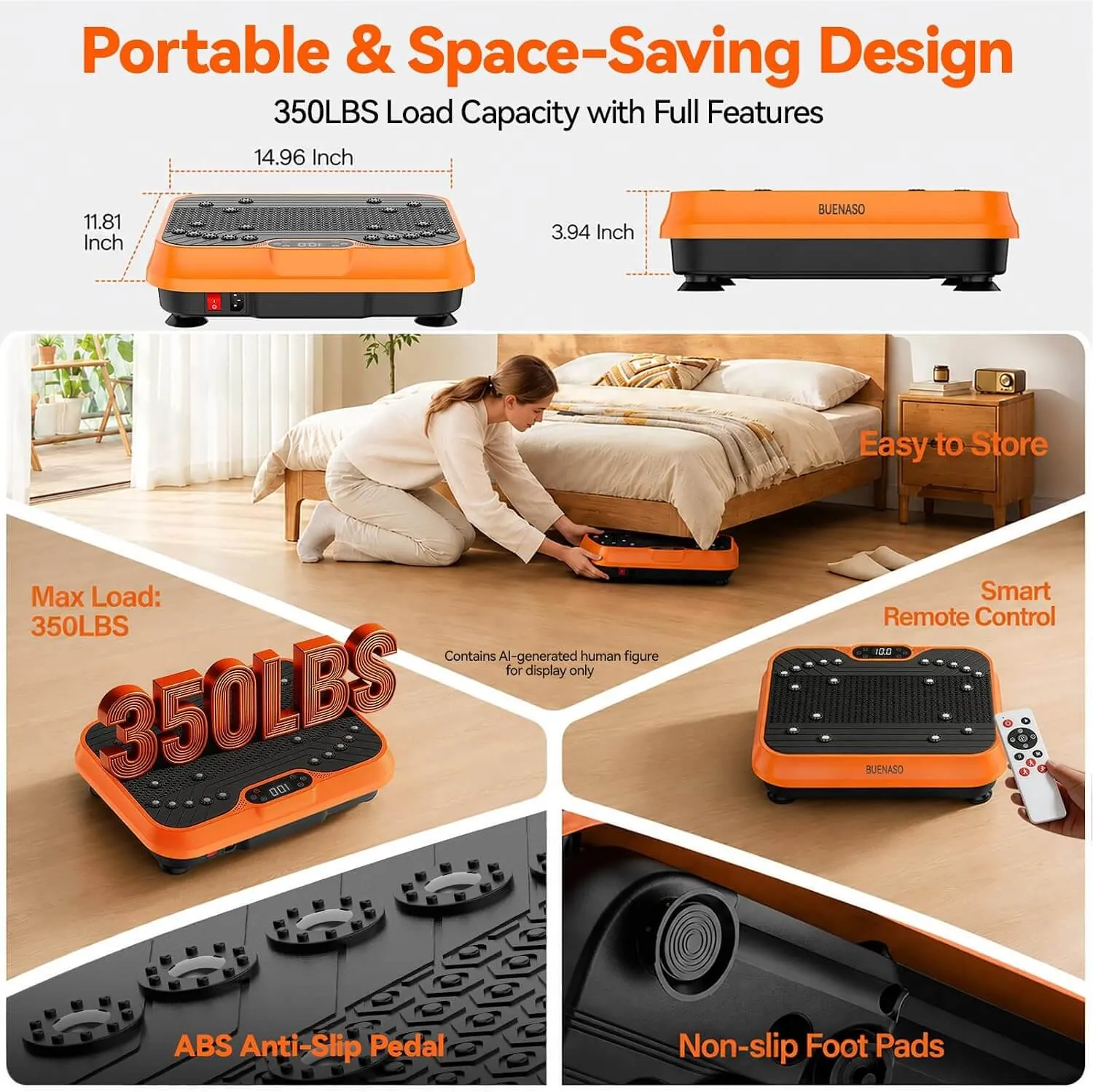
Manufacturers list two different measurements, and buyers confuse them constantly. The overall footprint is the full length and width of the base, including any handlebars or console. The platform or deck is the part your feet actually touch.
A plate can have a 30-inch footprint but only a 20-inch usable deck, because the console and frame eat the rest. If you plan to stand with feet shoulder-width apart or shift into a wide stance, deck width is the number that decides whether you’re comfortable.
Standard Vibration Plate Dimensions
The table below shows typical ranges across the three main body styles. Treat these as typical ranges, not specs for one model.
| Type | Platform (W × D) | Overall Footprint | Height | Weight Capacity |
|---|---|---|---|---|
| Compact / mini | 20–24 × 12–15 in | 24–28 × 15–18 in | 4.5–6 in | 220–265 lb |
| Full-size flat | 24–31 × 15–20 in | 28–34 × 18–24 in | 5–8 in | 265–330 lb |
| With handlebars | 24–30 × 15–20 in | 30–36 × 20–26 in | 10–15 in | 300–400 lb |
Compact plates suit small apartments and under-desk use. Full-size flat plates give you room for balance work. Handlebar models add stability for beginners and older users but demand more floor space and a higher clearance if you want to store them under furniture.
How to Measure Your Space
Do this before you order, in this order:
- Measure your standing area. You need the footprint plus roughly 12 inches of clearance on every side so you can step on and off safely.
- Measure your desk or table height if you plan to work while standing on a compact plate. Subtract the plate height from the desk height — you want at least 24 inches of legroom left.
- Measure your storage gap — under a bed, in a closet, behind a sofa. Compare it to the box dimensions, not the machine.
- Weigh yourself with shoes on and add 50 lb of headroom for the capacity figure.
- Check your doorway width if the plate has to move between rooms.
Pro Tip: Cardboard mock-ups cost nothing. Cut a piece of cardboard to the listed footprint and stand on it for two minutes. If your stance feels cramped or your heels hang off, size up.
Matching Size to Your Body and Goal

For balance and rehab work
You want a wider deck — 26 inches or more — so your feet aren’t forced together. A narrow deck makes balance exercises harder and less safe.
For under-desk use
Prioritize a low profile under 6 inches and a compact footprint. Handlebar models simply won’t fit.
For heavier users
Look for capacity of 330 lb or more and a thicker deck. A plate rated near your exact weight will run hot and wear out faster.
For travel or small rooms
Compact plates under 25 lb are the practical choice, but check that the deck still fits both feet side by side.
Height, Clearance, and Ceiling Issues
Height is the most overlooked dimension. A 15-inch handlebar plate raises your standing height by more than a foot, which matters in basements or under sloped ceilings. If you’re tall, stand on the plate before committing to a room with a low ceiling.
Also check cord length — most run 5–6 feet — and where your nearest outlet sits. An extension cord across a walking path is a trip hazard.
Weight Capacity and Deck Thickness
Capacity figures come from the manufacturer and usually reflect static load, not the dynamic load of bouncing. That’s why the 50-lb buffer matters. The U.S. Consumer Product Safety Commission maintains sports and fitness equipment guidance that covers labeling and safety expectations for this category of product.
Deck thickness is a rough proxy for build quality:
- 0.2–0.3 in: light-duty, compact plates
- 0.4–0.6 in: mid to heavy-duty, most full-size plates
- 0.8 in and up: commercial or high-capacity models
Warning: A thin deck on a high-amplitude setting can flex and crack. If the listing doesn’t state deck thickness, ask the seller before buying.
Noise, Vibration, and Floor Type
A plate that’s too small for its motor runs louder and transmits more vibration into the floor. On a second-story wood floor, that means complaints from below. A rubber mat under the plate cuts transmission noticeably. Larger, heavier plates tend to be quieter because the mass absorbs oscillation.
Quick Comparison: Which Size Fits You?
| Your Situation | Recommended Platform Width | Max Height |
|---|---|---|
| Apartment, under-desk use | 20–24 in | 6 in |
| Home gym, general fitness | 24–28 in | 8 in |
| Balance training, older adults | 26–31 in | 15 in |
| Shared space, needs storage | 20–24 in | 6 in |
Frequently Asked Questions
What size vibration plate fits under a desk?
Look for a compact plate under 6 inches tall with a footprint around 24 × 16 inches. Measure your desk’s underside clearance first — most standard desks leave 26–30 inches, so a low-profile plate leaves plenty of legroom.
Is a bigger vibration plate better?
Not automatically. A larger deck gives more standing room and stability, but it also weighs more, costs more, and needs more floor space. Match the size to your stance and room, not to a “bigger is better” rule.
How much weight can a vibration plate hold?
Most consumer models are rated 220–400 lb. Buy one rated at least 50 lb above your body weight, because bouncing creates dynamic loads higher than your static weight.
What’s the difference between footprint and platform size?
The footprint is the total floor space the machine occupies, including frame and console. The platform is the moving deck your feet stand on. Always check the platform dimension if stance width matters to you.
Do vibration plates fit in a closet?
Compact models generally do, but check the box dimensions rather than the machine dimensions — packaging adds 2–4 inches on each side. Handlebar models usually need disassembly or a dedicated corner.
Are all vibration plates the same height?
No. Flat plates run roughly 4.5–8 inches tall, while handlebar models reach 10–15 inches. Height affects desk clearance, ceiling clearance, and how easily you can step on and off.
Conclusion
Before you order anything, grab a tape measure and a piece of cardboard. Cut the cardboard to the listed platform size, stand on it in your normal stance, and check it against your desk, your storage gap, and your doorway. Five minutes with a mock-up will tell you more than any spec sheet, and it’s the cheapest way to avoid a return.

I am a certified fitness coach with over 10 years of experience helping people improve their strength, endurance, and overall health. Specializes in workout programming, weight training, fat loss, muscle building, home fitness, and evidence-based nutrition.My goal is to make fitness simple and practical through well-researched guides, honest product reviews, and actionable training advice.