Whole-body vibration platforms have moved from gym curiosity to home staple, but the spec sheets read like stereo manuals — amplitude, G-force, Hertz, and a dozen marketing terms that sound impressive and mean nothing. If you searched for vibration plate features to look for, the short answer is this: prioritize motor type and power, amplitude and frequency range, a stable build with a high user weight rating, and safety features like a safety strap and non-slip surface. Everything else — Bluetooth, preset programs, LED screens — is convenience, not performance.
Key Takeaways
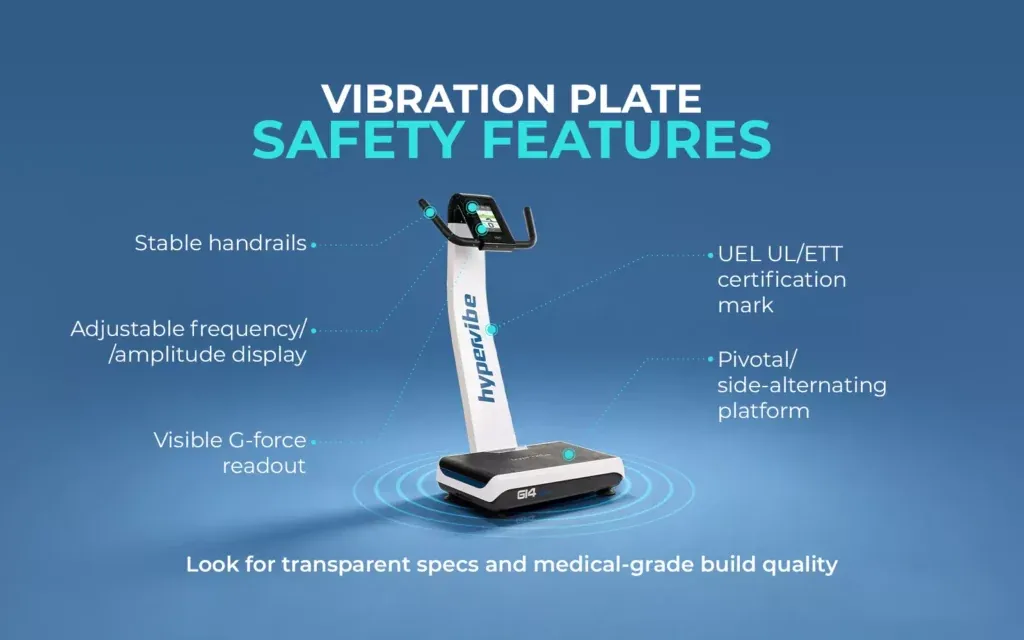
- Dual-motor plates move both vertically and side-to-side; single-motor plates typically oscillate or pivot only.
- Amplitude (the vertical travel distance) matters more than frequency for muscle activation — look for 1–2 mm on a pivoting plate.
- Frequency range of roughly 5–50 Hz covers everything from gentle lymphatic work to strength training.
- A user weight limit of at least 300 lbs signals a heavier, more stable frame.
- Safety features — strap, non-slip deck, auto shut-off — are non-negotiable, especially for beginners.
- Skip paying extra for Bluetooth speakers and app pairing unless you’ll genuinely use them.
Motor Type: Dual vs. Single
The motor is the engine, and it determines the motion pattern you feel underfoot.
Dual-motor plates (sometimes called 3D or tri-planar) drive both a vertical piston and a pivoting mechanism, producing up-and-down plus side-to-side movement. They tend to cost more and weigh more, but they offer the widest exercise variety.
Single-motor plates fall into two camps:
- Pivoting (oscillating): the deck seesaws around a center axis — like a playground seesaw. Motion is smooth and easier on joints.
- Linear (vertical): the deck moves straight up and down. Motion is more intense and jarring.
Amplitude and Frequency Explained
These two numbers do the real work.
Amplitude is how far the deck travels, usually 1–10 mm. Pivoting plates typically sit at 1–2 mm; linear plates can reach 10 mm or more. Higher amplitude means more muscle stretch and a harder workout.
Frequency is cycles per second, measured in Hertz. Most home plates run 5–50 Hz. Lower frequencies (5–15 Hz) suit stretching, circulation, and balance work; higher ranges (25–50 Hz) suit strength and power training.
| Feature | Low End | Mid Range | High End |
|---|---|---|---|
| Frequency | 5–15 Hz | 15–30 Hz | 30–50 Hz |
| Amplitude | 1–2 mm | 2–6 mm | 6–10 mm |
| Best for | Circulation, balance | General fitness | Strength, power |
Build Quality and Weight Limits
A vibrating platform endures constant mechanical stress, so frame construction matters.
Look for a steel frame rather than plastic, and check the user weight rating — 300 lbs or higher is a good benchmark for stability. Heavier machines (40–70 lbs) generally wobble less than featherweight models. Rubber feet or a weighted base reduce walking and floor vibration.
Pro Tip: If you live in an apartment, look for models marketed with vibration-dampening feet — they cut noise and reduce complaints from downstairs neighbors.
Safety Features That Matter
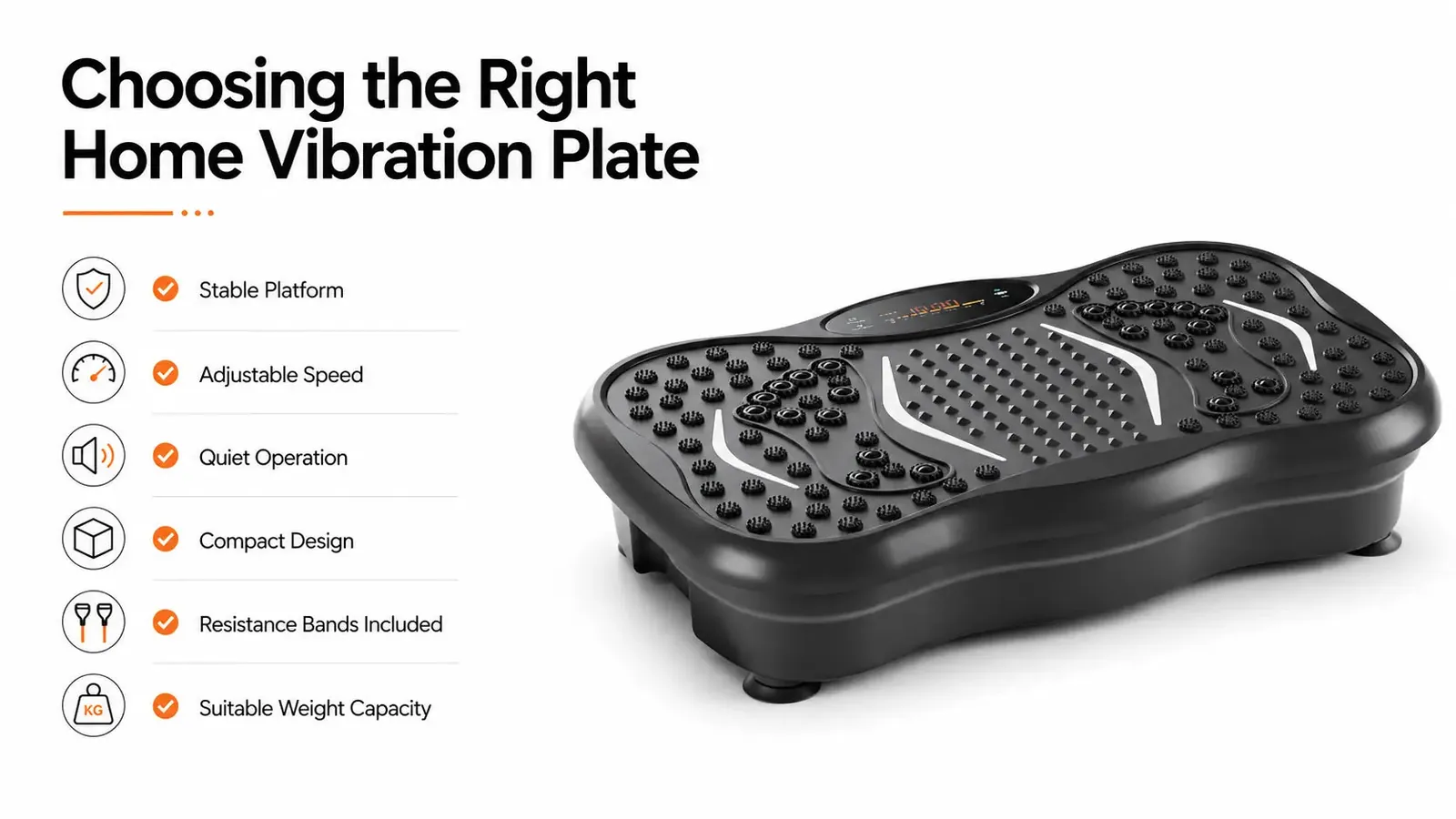
Vibration training is low-impact but not risk-free, particularly for beginners and people with joint issues.
- Safety strap or handle: essential for balance on pivoting plates.
- Non-slip deck surface: textured rubber beats smooth plastic every time.
- Auto shut-off timer: prevents overuse; most sessions should run 10–15 minutes.
- Remote control: lets you change settings without stepping off mid-session.
The U.S. Consumer Product Safety Commission maintains recall and safety information for exercise equipment, including vibration platforms, if you want to check a specific model.
Preset Programs and Controls
Preset programs are convenient but rarely essential. A basic plate with manual frequency and time controls covers most home users.
Higher-end models add:
- Preset workout modes (fat burn, toning, recovery)
- Multiple speed increments — 99 levels sounds impressive but 10–20 is plenty
- LED or LCD display showing time, speed, and program
- Remote control for hands-free adjustment
More programs don’t equal better results. Consistency does.
Bluetooth, Apps, and Smart Features
These are the features most likely to inflate the price without improving your workout.
Bluetooth speakers let you play music through the plate. App connectivity may offer guided sessions or workout tracking. Neither changes the mechanical output of the machine.
If you’ll use a guided app, it can help with adherence. If not, save the money and buy a sturdier base model.
Size, Footprint, and Storage
Measure your space before buying. Typical home plates run 20–30 inches wide and 25–35 inches long, weighing 25–70 lbs.
- Compact models (under 30 lbs) store upright in a closet but may feel less stable.
- Full-size models stay put but occupy permanent floor space.
- Foldable designs exist but are less common and often compromise rigidity.
Warranty and Motor Life
The motor is the first component to fail, so warranty terms tell you what the manufacturer thinks of its own build.
| Warranty Type | Typical Coverage |
|---|---|
| Frame | 3–5 years |
| Motor | 1–3 years |
| Parts and labor | 90 days–1 year |
A lifetime frame warranty with a 2–3 year motor warranty is a strong signal. Read the fine print: some warranties exclude commercial use, and home plates used in studios may void coverage.
Vibration Plate Features to Look For by Budget
| Tier | Typical Price | What You Get |
|---|---|---|
| Budget | $80–$200 | Single motor, basic controls, lower weight limit |
| Mid-range | $200–$500 | Dual motor options, higher weight limit, presets |
| Premium | $500–$1,500+ | Commercial-grade frame, wide frequency range, full warranty |
Frequently Asked Questions
What frequency should a vibration plate have?
Look for a range spanning roughly 5–50 Hz. Lower frequencies suit stretching, circulation, and balance training; higher frequencies suit strength and power work. A wide adjustable range gives you more workout options than a fixed single speed.
Is a dual-motor vibration plate worth it?
Only if you want multi-directional movement for varied exercises. Dual-motor plates cost more and weigh more. For basic toning, balance, and circulation work, a quality single-motor pivoting plate performs well at a lower price.
What weight limit should I look for?
Aim for at least 300 lbs, even if you weigh considerably less. A higher rating usually indicates a heavier steel frame, which translates to less wobble and better long-term durability under constant vibration.
Do vibration plates actually work?
Research on whole-body vibration shows modest improvements in balance, bone density, and muscle activation in specific populations, but results vary and it isn’t a replacement for conventional resistance training. Treat it as a supplement to, not a substitute for, a full exercise routine.
How long should a vibration plate session last?
Most guidelines suggest 10–15 minutes per session, several times per week. Beginners should start at 5 minutes on a low frequency and build gradually. Exceeding recommended durations offers no extra benefit and increases the risk of joint discomfort.
Are cheap vibration plates safe?
Budget plates can be safe if they carry a solid weight rating, non-slip deck, and safety strap. The main risks with cheap models are instability, motor failure, and poor build quality. Check for recalls before buying any used or off-brand machine.
Conclusion
Start by writing down your three non-negotiables — motor type, weight limit, and safety features — then compare models against that list rather than the marketing copy. A well-built mid-range plate with a strong warranty will serve you better than a feature-stuffed bargain that rattles apart in six months.

I am a certified fitness coach with over 10 years of experience helping people improve their strength, endurance, and overall health. Specializes in workout programming, weight training, fat loss, muscle building, home fitness, and evidence-based nutrition.My goal is to make fitness simple and practical through well-researched guides, honest product reviews, and actionable training advice.