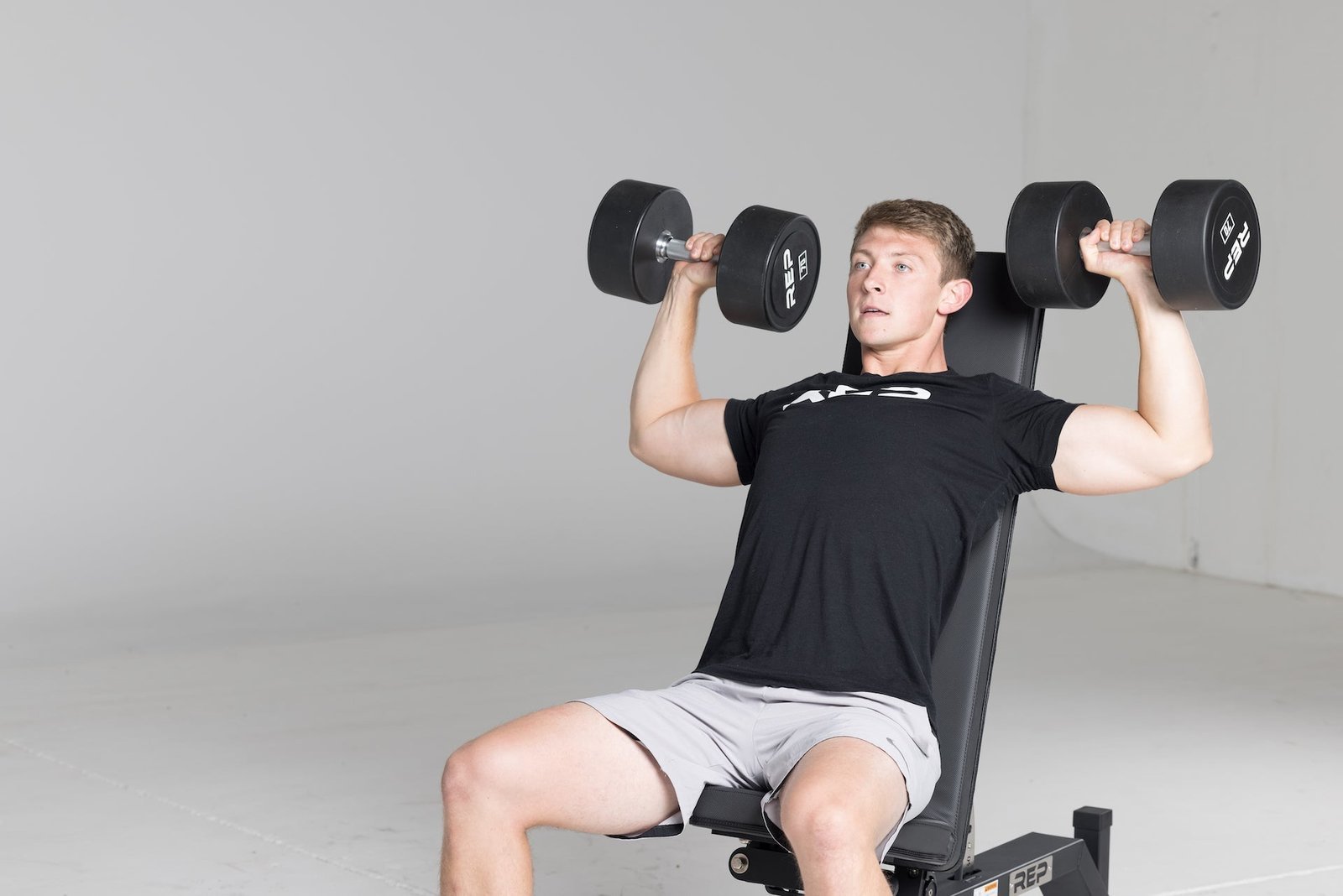
The shoulder press is an overhead push that builds strong shoulders and arms. Do 3 sets of 8-12 reps with a weight you can lift smoothly, resting 60-90 seconds between sets.
Shoulder press setup
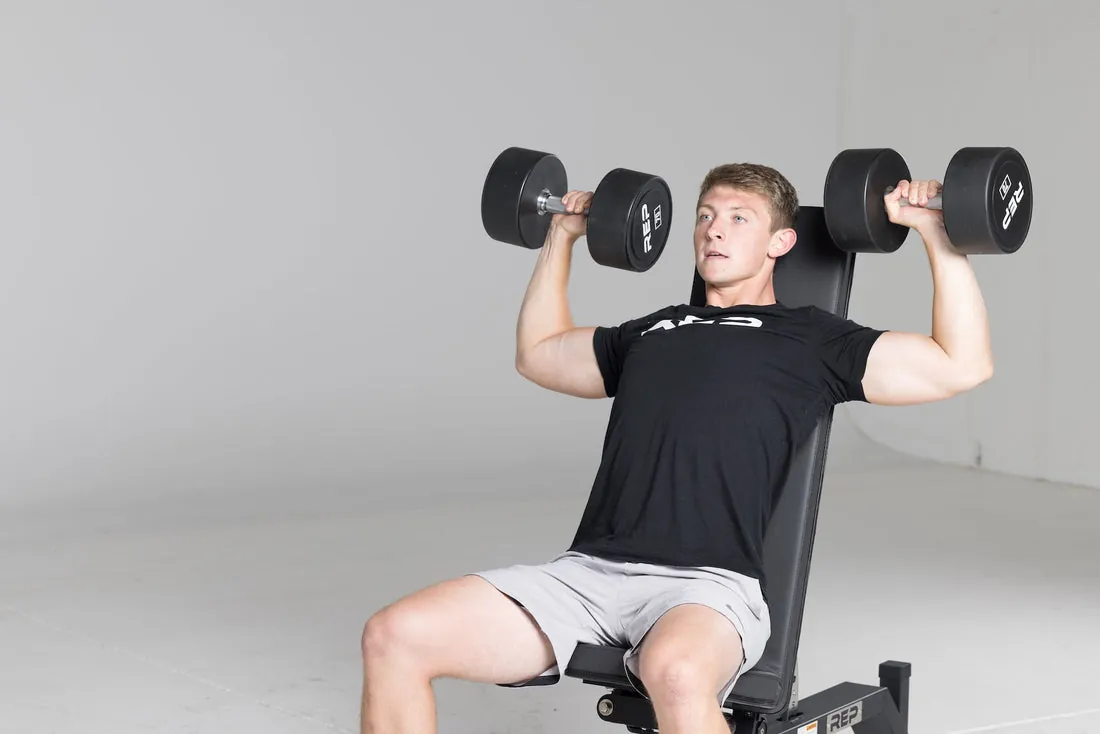
The right starting weight matters most.
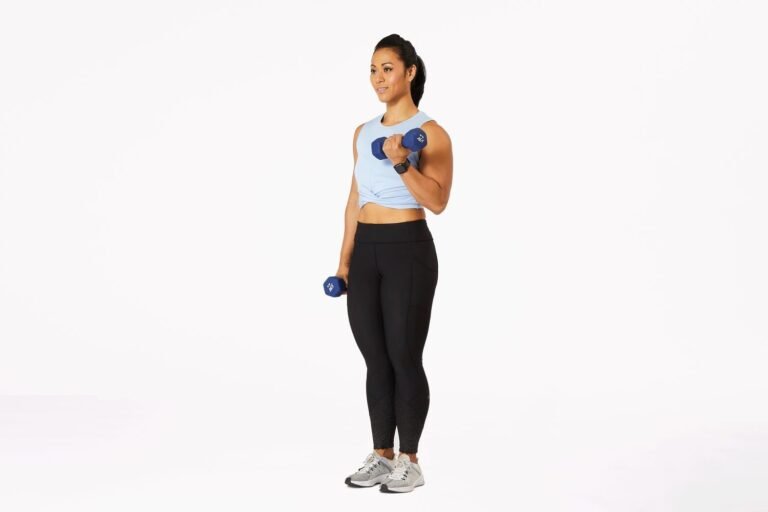
- A pair of dumbbells or a barbell — start with dumbbells you can press 8-12 times. A weight that feels light on rep 1 is usually right.
- A bench with a back rest, set to about 80-90 degrees, or a sturdy chair against a wall.
- A mirror or phone camera to check your form from the side.
- Flat, non-slip shoes — running shoes with soft heels make you unstable.
- A warm-up band for your shoulders before you lift.
- A notebook or phone app to track your sets and weights.
A resistance band works as a substitute for light days. A weight that’s too heavy to control isn’t a substitute — it’s how shoulders get hurt.
How to do a shoulder press
- Warm up for 5 minutes with arm circles and a light band pull-apart, 2 sets of 15. Cold shoulders press badly.
- Set your seat so the bench back is at 80-90 degrees. Sit tall, feet flat on the floor.
- Pick up the weights at chest height, palms facing forward, elbows under your wrists.
- Brace your core and press the weights straight up until your arms are almost locked — stop just short of straight.
- Lower slowly over 2-3 seconds back to chest height. Control on the way down builds most of the strength.
- Rest 60-90 seconds, then repeat for 3 sets of 8-12 reps.
Tip: If you can’t finish 8 clean reps, drop the weight by about 10%. If you can do 12 easily, go up slightly next time.
Careful: Don’t arch your lower back to push the weight up. If your ribs lift off the bench, the weight is too heavy.
Careful: Stop if you feel a sharp pinch in the front of the shoulder. That’s not normal muscle burn.
If you have a shoulder injury, a heart condition, or high blood pressure, talk to a doctor or a qualified trainer before you start. A physiotherapist can check your shoulder if pressing hurts.
Shoulder press variations
The weight, the reps and the rest all shift depending on where you’re starting from. Use the table as a guide, not a rule.
| Your situation | Time per session | What’s different | What to watch |
|---|---|---|---|
| Complete beginner | 15-20 min | Start with bands or 5-10 lb dumbbells | Form over weight |
| Returning after a break | 20-25 min | Drop weight by 20-30% from before | Soreness, not pain |
| Building muscle | 30-40 min | 3-4 sets, 8-12 reps, heavier | Rest 60-90 sec |
| Training for strength | 30-45 min | 4-5 sets, 3-5 reps, heavy | Use a spotter |
| Older adult, new to lifting | 15-20 min | Lighter weight, more reps | Balance and control |
Starting light and adding weight slowly is safer than guessing heavy on day one. You can always add more next session — you can’t undo a torn shoulder as easily.
Checking your form
A good press looks smooth and controlled. Your arms move together, your back stays on the bench, and the last rep looks like the first one. A poor press looks jerky — one arm lags, your back arches, or you rush the lowering phase.
The common quality problem is using momentum instead of muscle. It happens because the weight is heavier than your shoulders can control for the full range. Three things prevent it: pick a lighter weight, lower for 2-3 seconds, and stop the set when form breaks down.
Rules and what to do after
The shoulder press is a standard upper-body push movement. Warm up first, and skip it if a shoulder is injured.
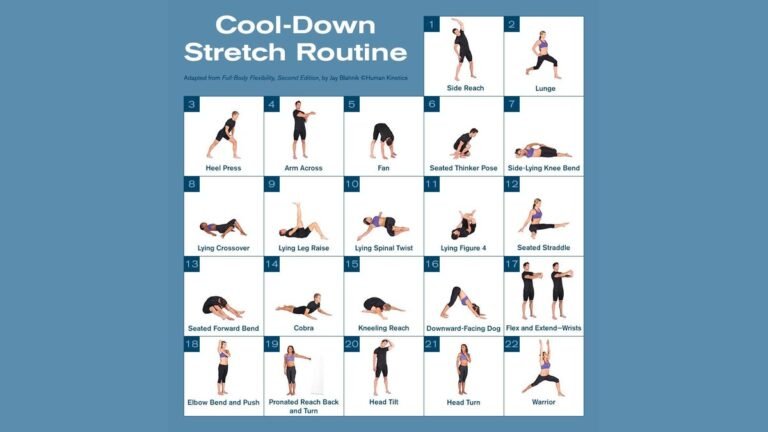
After your last set, put the weights back on the rack, wipe the bench, and stretch your shoulders gently for 30 seconds each side. Write down your weights and reps so you know where to start next time.
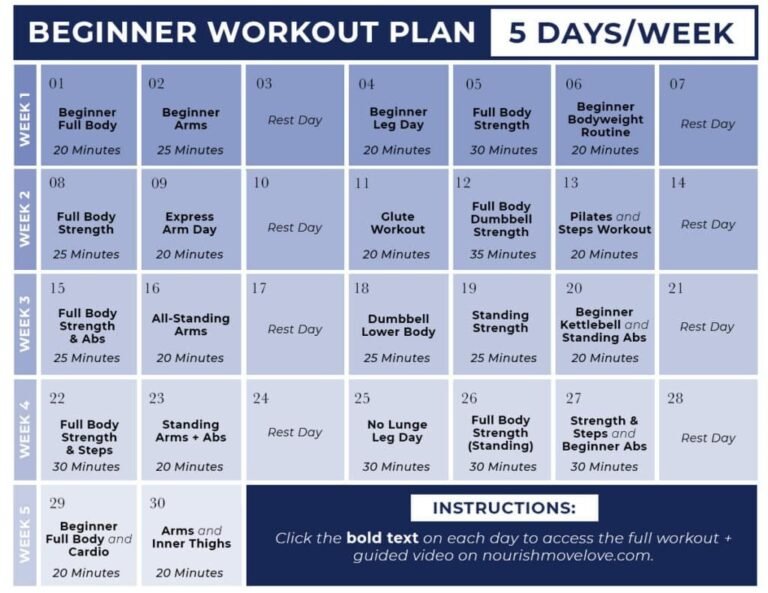
Muscles need 48 hours to recover, so train shoulders 2-3 times a week, not daily. Results build over 6-8 weeks of consistent work.
Other ways to build shoulder strength
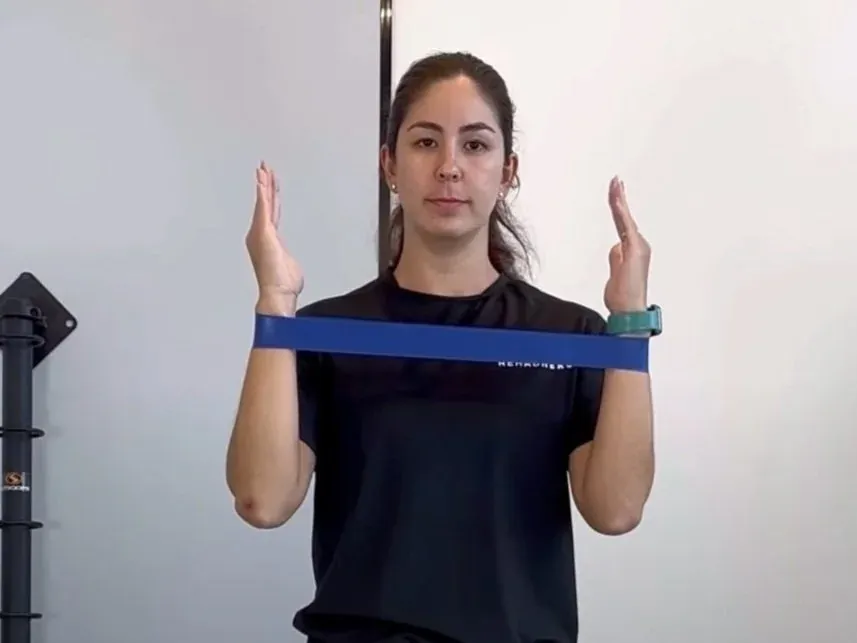
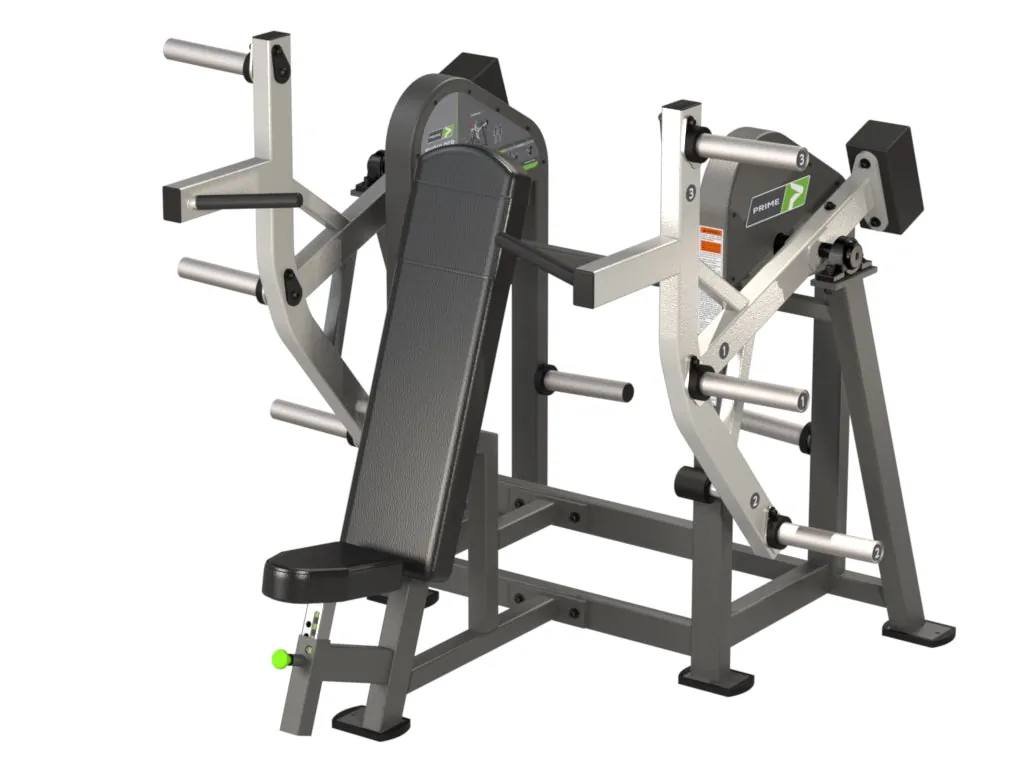
Use a machine press
A shoulder press machine fixes the path for you. It’s easier to learn and safer alone, but it works fewer stabilizer muscles than free weights.
Press with resistance bands
Bands are cheap and joint-friendly. You get more reps and less load, which suits beginners or home training with no weights.
Hire a trainer for a few sessions
A certified trainer checks your form in person. It costs more, but a few sessions can fix habits that take months to unlearn alone.
Frequently asked questions
How many shoulder presses should I do?
Do 3 sets of 8-12 reps for general strength, with 60-90 seconds rest between sets. For pure strength, drop to 3-5 reps with heavier weight and longer rest.
Can I do shoulder press every day?
No. Your shoulders need about 48 hours to recover, so train them 2-3 times a week. Daily pressing raises your risk of tendon pain and overuse injury.
Is shoulder press safe?
Yes, for healthy shoulders with good form. It’s not safe if you have a shoulder injury, so check with a doctor or physiotherapist before you start.
Why does my shoulder press hurt my neck?
You’re likely shrugging your shoulders up toward your ears as you press. Lower the weight, keep your shoulders down, and stop if the pain continues.
What happens if I use too much weight?
Your form breaks down first — arched back, jerky reps, one arm lagging. Keep going and you risk a shoulder strain that can sideline you for weeks.
How long until I see results?
Most people notice strength gains in 4-6 weeks of pressing 2-3 times a week. Visible muscle change usually takes 8-12 weeks, depending on your training and diet.
Can I shoulder press at home?
Yes, with dumbbells, bands, or a barbell and a rack. You don’t need a gym — you need enough space to press overhead safely and a weight you can control.
Conclusion
The shoulder press rewards patience more than heavy weight. Nail your form with light dumbbells first, add weight slowly, and give your shoulders the rest they need. That’s the whole method — and it works for almost anyone who starts smart.
I am a certified fitness coach with over 10 years of experience helping people improve their strength, endurance, and overall health. Specializes in workout programming, weight training, fat loss, muscle building, home fitness, and evidence-based nutrition.My goal is to make fitness simple and practical through well-researched guides, honest product reviews, and actionable training advice.