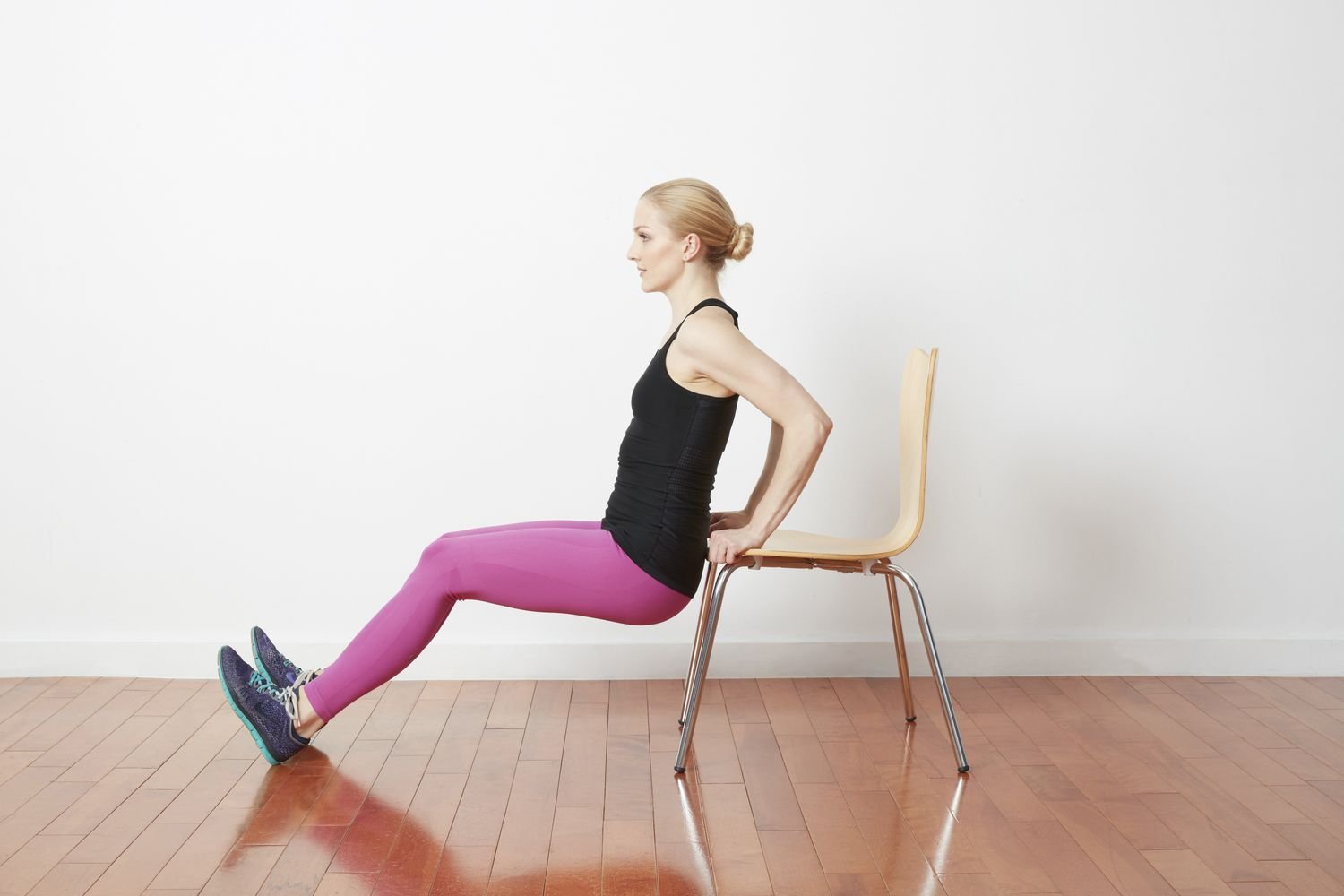
Tricep dips are a bodyweight push exercise, and most people can start with 3 sets of 8-12 reps on parallel bars or a sturdy bench. The move takes about 10 minutes and suits anyone who can already do 10 good push-ups.
What you need before you start
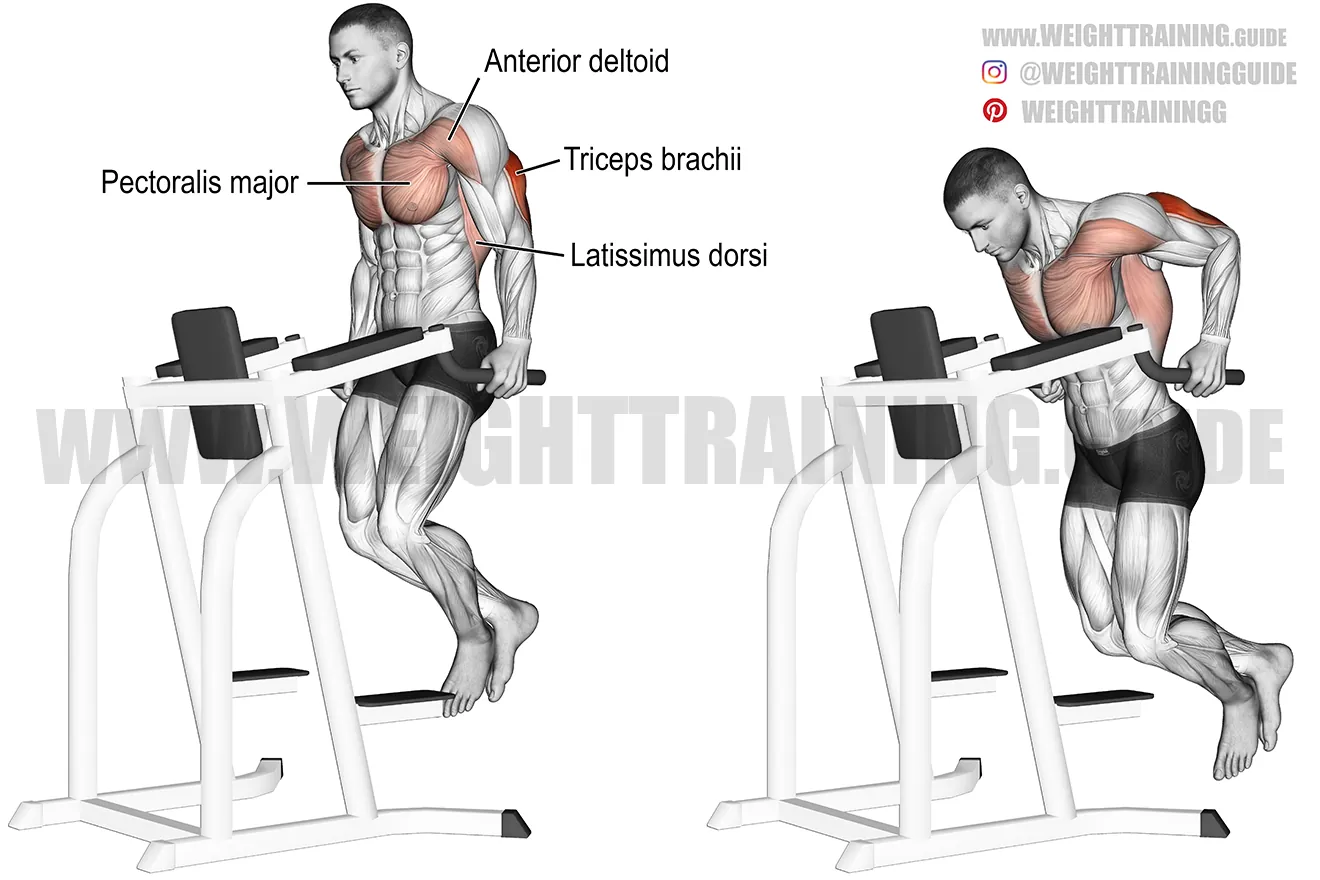
- Parallel dip bars or two sturdy benches — a kitchen chair works only if it’s heavy and won’t slide.
- A flat bench or step for the easier bench-dip version, at knee height or lower.
- A resistance band if you can’t yet lift your full bodyweight.
- Flat, non-slip shoes — socks on a smooth floor are how people slip.
- A mirror or phone camera to check your elbow angle.
- A water bottle and a 5-minute warm-up for shoulders and wrists.
A resistance band is the one swap that works well here. A wobbly chair or a soft sofa edge is the one that doesn’t — it can tip or sink under you. If you have a shoulder injury, get cleared by a doctor or physical therapist first.
How to Do Tricep Dips
- Warm up for 5 minutes with arm circles and 10 slow push-ups, so your shoulders and elbows aren’t cold.
- Set your hands on the bars or bench edge, shoulder-width apart, fingers gripping the edge.
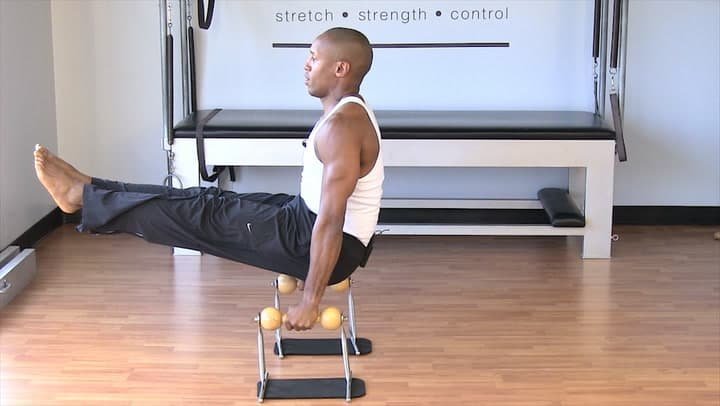
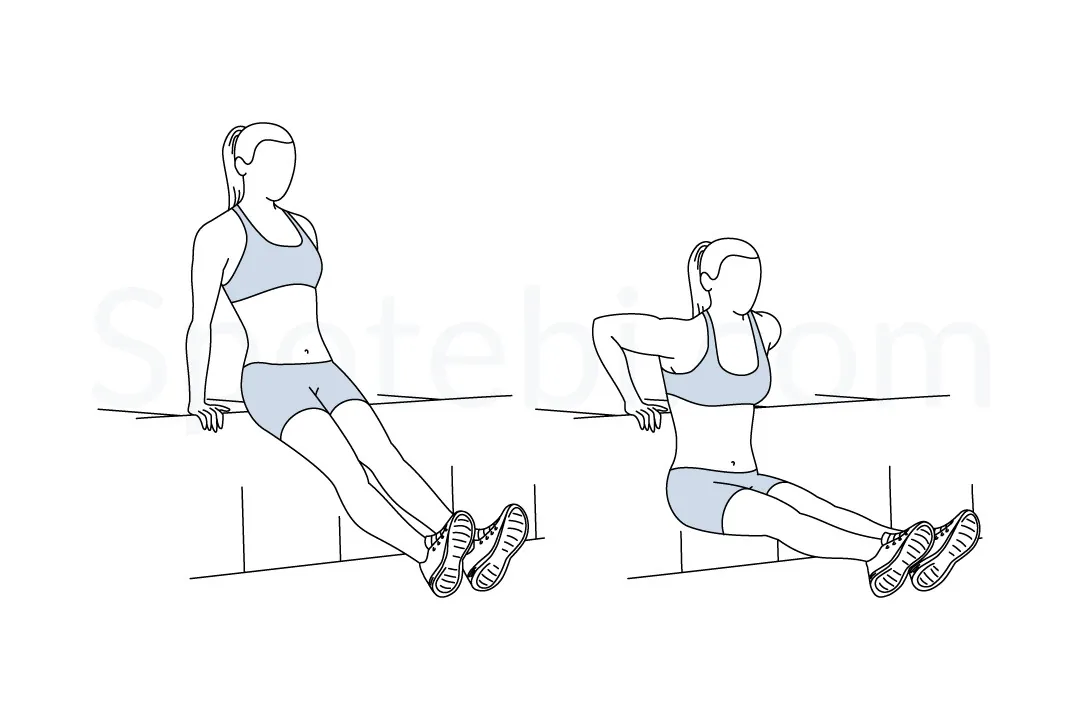
- Straighten your arms and lift your body off the floor, legs out in front for bench dips.
- Bend your elbows and lower slowly for 2 seconds until your upper arms are about parallel to the floor — roughly a 90-degree elbow bend.
- Keep your elbows pointing back, not flaring out to the sides, and keep your shoulders down away from your ears.
- Push back up for 1 second until your arms are straight but not locked hard.
- Do 3 sets of 8-12 reps, resting 60-90 seconds between sets.
- Stretch your triceps and chest for 30 seconds each side when you finish.
Tip: If 8 reps feels too hard, bend your knees and keep your feet flat on the floor — that removes some bodyweight. If 12 feels easy, straighten your legs or add a weight plate on your lap.
Careful: Going below a 90-degree elbow bend puts a lot of strain on the front of the shoulder. Stop at parallel unless a coach tells you otherwise.
Careful: If you feel a sharp pain in the shoulder or elbow, stop the set. That’s not the burn you’re training for.
How the work changes with your setup
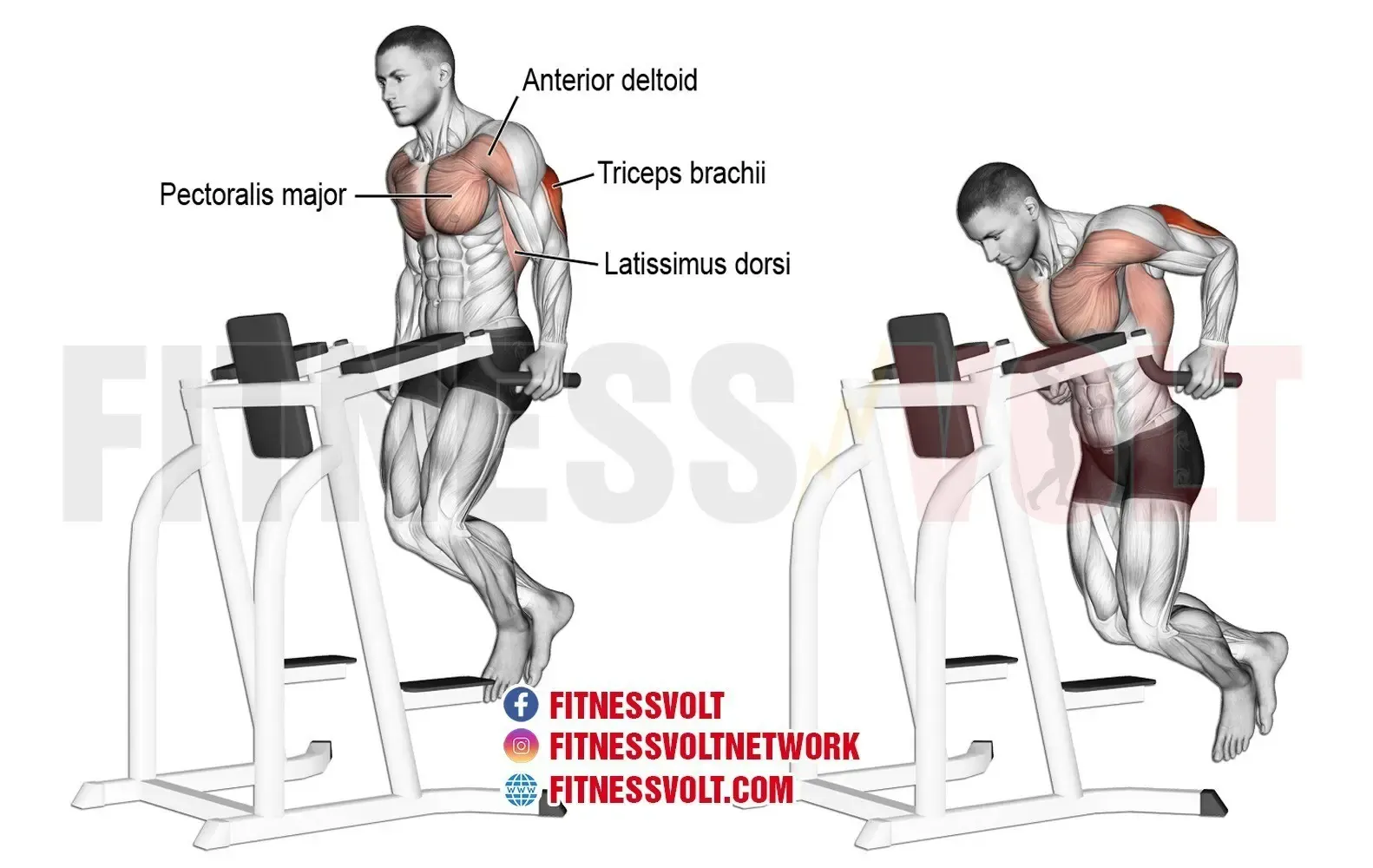
The table below shows how time and effort shift with the version you pick. Effort is what you feel in the last 2 reps of a set, not a fixed number.
| Setup | Time per set | What’s different | Watch for |
|---|---|---|---|
| Bench dips, feet on floor | 20-30 sec | Easiest; less bodyweight | Bench sliding away |
| Bench dips, legs straight | 30-40 sec | More load on the triceps | Lower back rounding |
| Parallel bars | 30-45 sec | Full bodyweight, deeper range | Shoulder pinch at the bottom |
| Weighted dips | 30-50 sec | Added plate or belt | Elbow tendon ache |
| Band-assisted dips | 40-60 sec | Band takes off some weight | Band snapping loose |
Start with the easiest version and add load only when 3 sets of 12 feel controlled.
Checking your form
A good rep looks controlled both ways, with your elbows tracking back and your shoulders staying low. A poor rep is fast on the way down, elbows flared wide, and your body sinking well below parallel.
The common quality problem here is shoulder pinching at the bottom of the movement. It happens when the elbow drops too far and the upper arm rolls forward. Three things prevent it: stop at a 90-degree elbow bend, keep your chest slightly forward, and warm up the shoulders before your first set.
Rules and what to do after
There’s no single legal standard for dip depth, but most coaches cap the range at a 90-degree elbow bend. You can check ACE’s triceps exercise library for the version they publish.
If you have shoulder pain that lasts more than a week, see a doctor or physical therapist rather than pushing through.
Other ways to build triceps
Use a resistance band at home
A band anchored at chest height lets you press down instead of pushing your bodyweight up. It’s easier on the shoulders and takes about the same time, but you’ll outgrow the resistance as you get stronger.
Ask a trainer for a form check
One session with a certified trainer costs money but fixes elbow flare fast. It’s worth it if your shoulders pinch and you can’t tell why from a mirror.
Swap to close-grip bench press
Lying on a bench with a barbell removes the balance demand and lets you load the triceps precisely. It needs a spotter and a rack, so it’s a gym option, not a living-room one.
Frequently asked questions
How many tricep dips should I do?
Start with 3 sets of 8-12 reps, resting 60-90 seconds between sets. If you can’t hit 8, bend your knees or use a band. If 12 feels easy, add weight or straighten your legs.
Can tricep dips hurt your shoulders?
Yes, if you go too deep or flare your elbows. Stop at a 90-degree elbow bend and keep elbows pointing back. Sharp pain means stop the set and get it checked.
How long do tricep dips take?
About 10 minutes for 3 sets including rest, or 5 minutes if you’re short on time and drop to 2 sets. Warm-up adds another 5 minutes.
Is it safe to do tricep dips every day?
No — your triceps need 48 hours to recover. Two or three sessions a week is enough for most people. Daily dips raise your risk of elbow tendon pain.
What happens if I can’t do a single dip?
Use a band for assistance or start with bench dips and your feet on the floor. Build to 3 sets of 12 there before moving to parallel bars.
Do tricep dips build muscle?
Yes, they load the triceps with your bodyweight, which is enough to build strength and size for most people. Add weight once 3 sets of 12 feel easy.
Why do my elbows hurt after dips?
Usually from lowering too fast or going past a 90-degree bend. Slow the lowering phase to 2 seconds and stop at parallel. If pain lasts more than a week, see a doctor.
Conclusion
Tricep dips are simple, but the details matter — a 90-degree elbow bend, elbows back, and slow control on the way down. Start with the easiest version you can do for 3 sets of 12, then add load. If your shoulders complain, drop back a level rather than pushing through.

I am a certified fitness coach with over 10 years of experience helping people improve their strength, endurance, and overall health. Specializes in workout programming, weight training, fat loss, muscle building, home fitness, and evidence-based nutrition.My goal is to make fitness simple and practical through well-researched guides, honest product reviews, and actionable training advice.