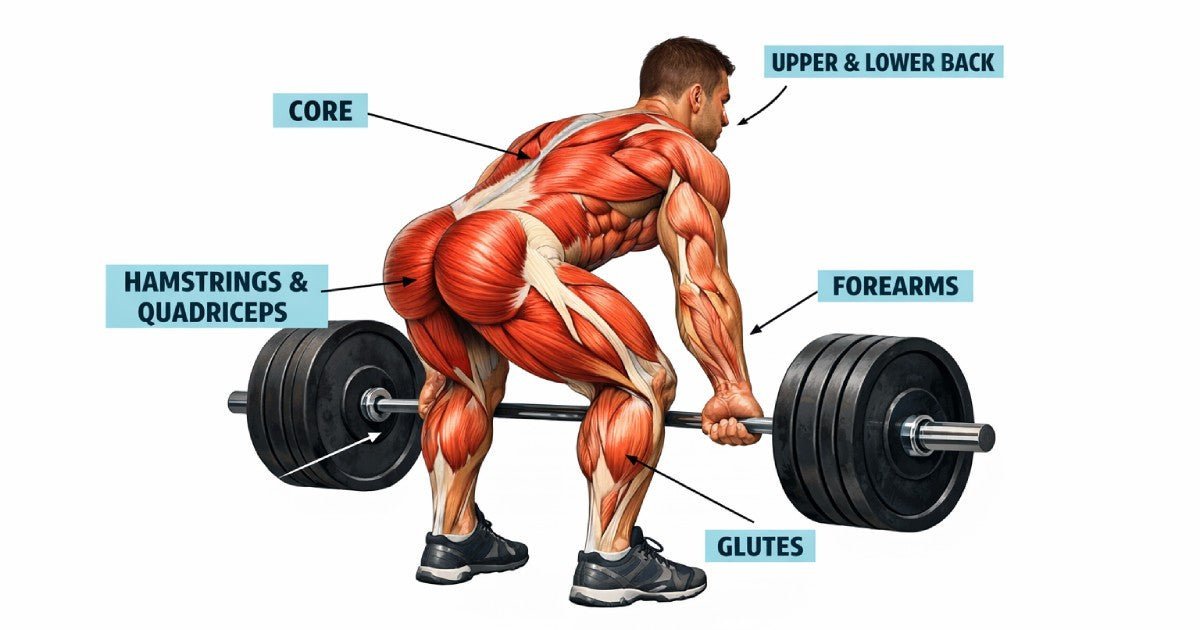
Deadlifts build full-body strength by training you to pick a heavy bar up off the floor and stand tall with it. Most people start with 3 sets of 5 reps at a weight they can lift with clean form. This method suits anyone who can hinge at the hips and hold their back straight.
Deadlift gear and setup checklist
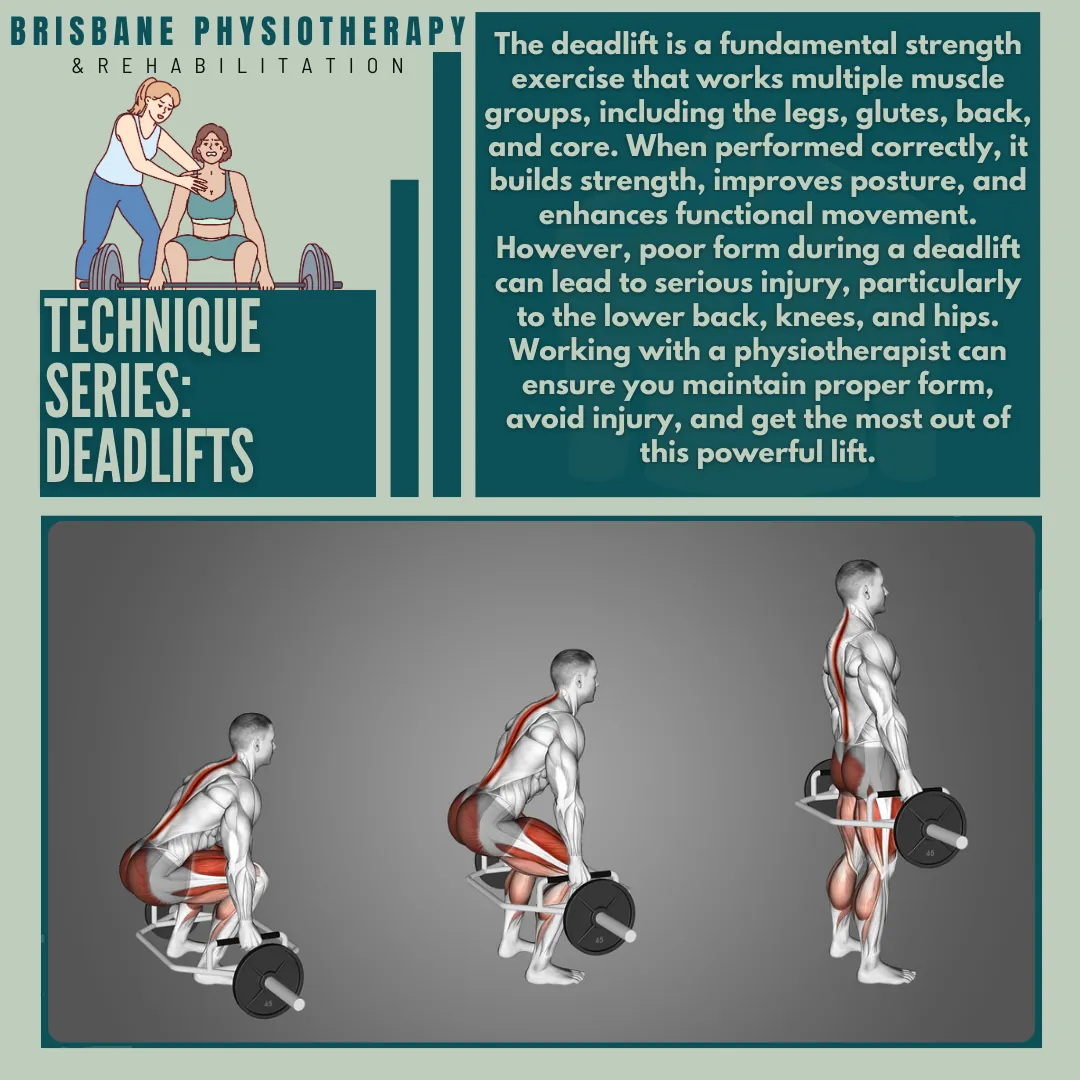
Get these in front of you before you touch the bar:
- Barbell and plates — an Olympic bar (20 kg / 44 lb) plus bumper or iron plates you can load evenly
- Flat shoes or bare feet — running shoes with soft heels tip you forward; a flat sole keeps you grounded
- Chalk or lifting straps — chalk for grip, straps only once your hands give out before your back does
- A clear platform — at least 8 feet of flat floor, no wall or rack behind you
- A phone or mirror — to check your back stays flat on the first few sets
- A training log — to record weight and reps each session
- A coach or spotter for your first heavy attempts
A trap bar works as a substitute if your shoulders or lower back complain.
How to deadlift, step by step
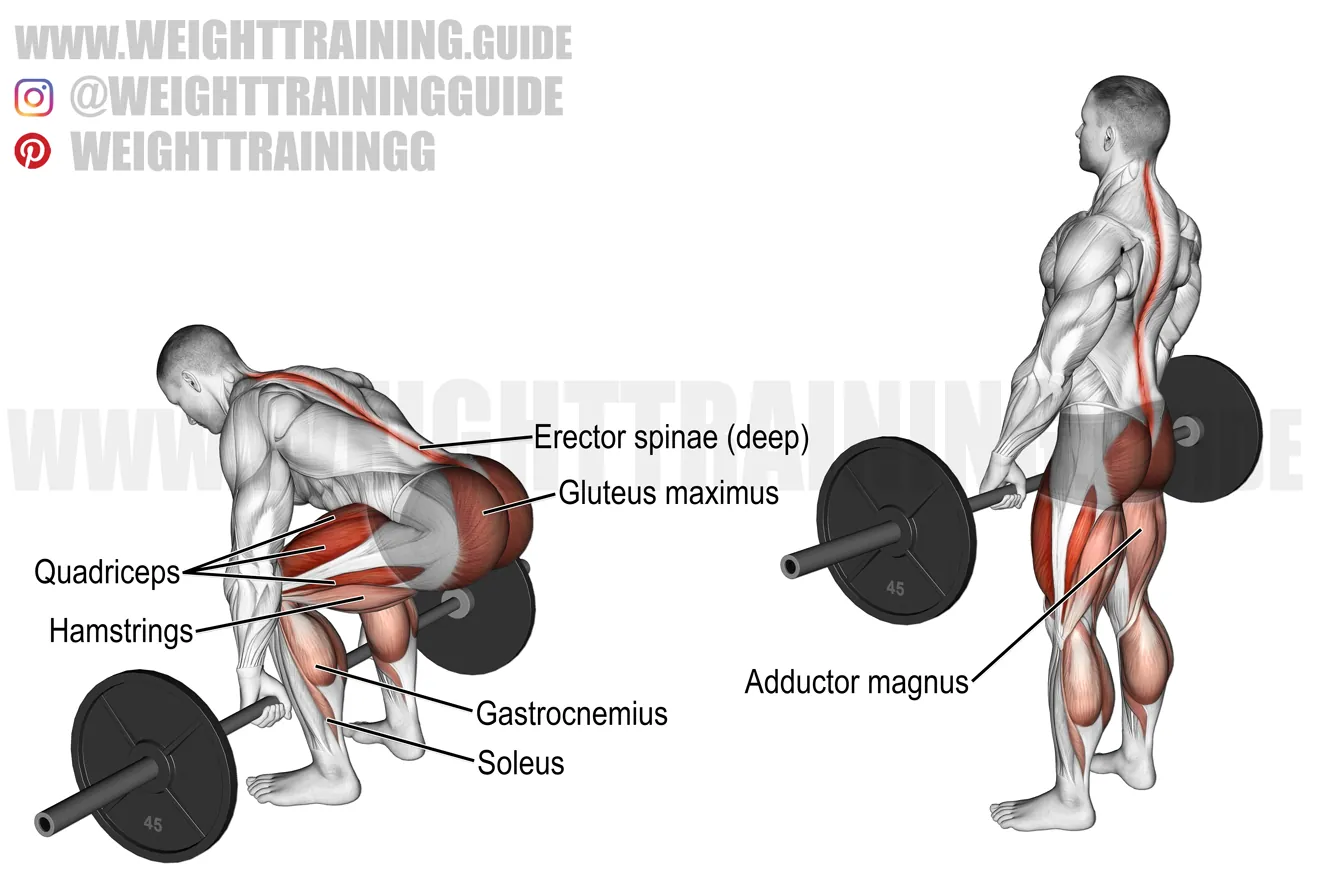
- Load the bar with equal plates per side and set it over your mid-foot, about 1 inch from your shins.
- Stand with feet hip-width apart, toes slightly out, so the bar crosses the middle of your foot.
- Hinge and grip the bar just outside your legs, hands shoulder-width, arms straight.
- Drop your hips until your shoulders sit slightly ahead of the bar, chest up, back flat.
- Take a big breath, brace your stomach like you’re about to be punched, and hold it.
- Push the floor away with your legs, keeping the bar dragging close to your shins and thighs.
- Stand tall and squeeze your glutes at the top — don’t lean back past straight.
- Lower the bar by hinging your hips back first, then bending your knees once it passes them.
- Reset your breath and position before the next rep; don’t bounce the bar off the floor.
Tip: If the bar drifts from your legs, it’s too heavy — drop 10%.
Careful: Rounding your lower back under load is the most common injury.
Careful: A belt helps at heavy weights but won’t fix bad form. Learn the movement light first.
If you have a history of disc injury, uncontrolled blood pressure, or you’re pregnant, get clearance from a doctor or physical therapist before pulling heavy. A qualified coach can check your setup in person.
How deadlift training changes with your situation
Your starting point decides your weight, volume and how fast you add load. The numbers below assume a healthy adult with no injury history.
| Your situation | Time per session | What’s different | What to watch |
|---|---|---|---|
| Total beginner | 20–30 min | Empty bar to light plates, 3×5 | Back position on every rep |
| Returning after a break | 30–40 min | Start at 60–70% of your old working weight | Soreness lasting more than 3 days |
| Intermediate lifter | 45–60 min | Heavier sets, fewer reps, 1–2× per week | Grip failing before your back |
| Training for powerlifting | 60–90 min | Periodized plan with heavy singles | Recovery between sessions |
| Older adult (60+) | 30–40 min | Lighter load, slower progression | Joint pain that doesn’t settle |
Starting light and adding weight over weeks beats loading heavy on day one. Your joints and tendons adapt slower than your muscles, so overshooting early is how people get hurt.
Checking your deadlift form
A good rep looks the same at the start and the end: bar over mid-foot, back flat, hips and shoulders rising together. A poor rep shows your hips shooting up first, the bar swinging forward, or your lower back rounding under the load.
The quality problem here is losing back position as the weight climbs. It happens because the load exceeds what your spinal erectors can hold in a neutral position. Three things prevent it: keep the bar close to your body, brace your core before every rep, and stop the set the moment your form breaks down.
Film one set from the side every few weeks. What feels flat often isn’t.
Rules, cleanup and how long progress lasts
The CDC’s physical activity guidelines recommend muscle-strengthening work on at least 2 days a week for adults. Deadlifts count toward that total.
After each session, strip the plates, rack the bar, and wipe it down. Log your weight and reps so you know where to start next time.
Strength gains stay with you for weeks if you miss sessions, but they fade over months of no training. Detraining is real — the CDC’s guidance on this is worth checking for exact figures if you want them.
Other ways to train the pull
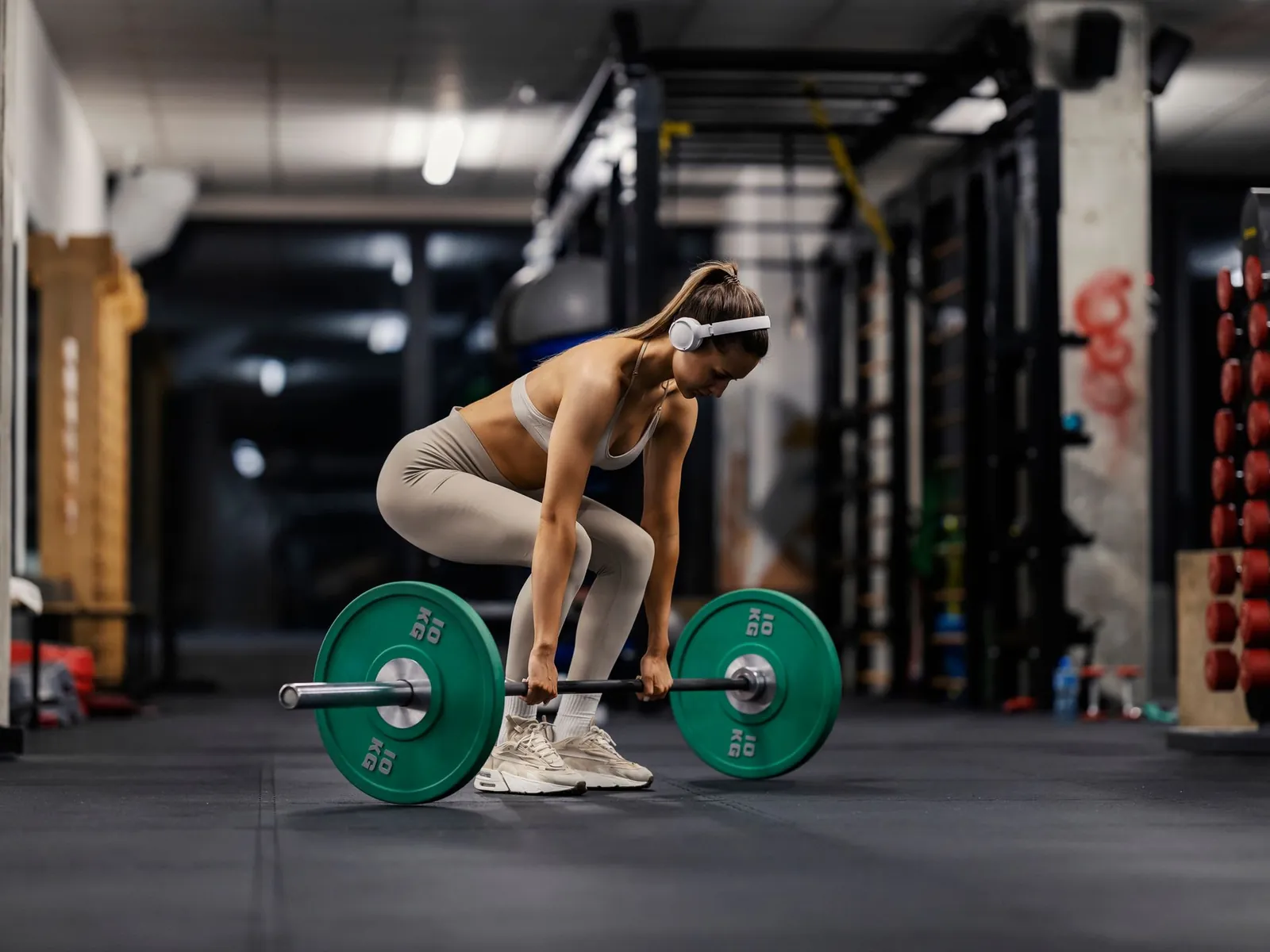
Trap bar deadlift
A trap bar puts the handles at your sides instead of in front. This reduces lower back stress and suits people with long legs or back issues. You’ll usually handle more weight than a straight bar.
Romanian deadlift
Start standing, then hinge and lower the bar to mid-shin without touching the floor. Lighter weight, more hamstring focus, less grip demand. Good as a second movement after regular pulls.
Kettlebell or dumbbell deadlift
One weight in each hand, same hinge pattern. Easier to learn at home with minimal gear, but you’ll cap out on load sooner than with a barbell.
Frequently asked questions
How often should I deadlift?
Two times a week works for most people, with at least 48 hours between sessions. Beginners can start with once a week and add a second day after 4–6 weeks.
How much should I deadlift as a beginner?
Start with an empty bar or light plates you can lift 5 times with clean form. Add 5 lb per session while your form holds, then slow down once that stops working.
Is it safe to deadlift every day?
No. Daily heavy pulling doesn’t give your muscles and nervous system time to recover. Some advanced lifters train lighter variations more often, but that needs a coach’s plan.
Why does my lower back hurt after deadlifts?
Usually it’s form — a rounding back, a bar drifting forward, or too much weight too soon. Drop the load, film your set, and see a doctor or physical therapist if pain lasts more than a few days.
What happens if I round my back during a deadlift?
A little rounding under light load is usually fine. Rounding hard under heavy load raises your injury risk. Stop the set, reset your brace, and lower the weight until your back stays flat.
Can I deadlift at home without a gym?
Yes, with a barbell, plates, and a flat floor. A trap bar or adjustable dumbbells work in small spaces. You’ll need enough weight to keep progressing, which is the main limit at home.
How long does it take to see strength gains?
Most beginners add weight to the bar within 2–4 weeks of consistent training. Visible muscle change takes longer, often 8–12 weeks, and depends on how much you eat and sleep.
Conclusion
Deadlifts reward patience more than ego. Learn the setup, keep the bar close, and add weight only when your form holds — that’s the whole game.
I am a certified fitness coach with over 10 years of experience helping people improve their strength, endurance, and overall health. Specializes in workout programming, weight training, fat loss, muscle building, home fitness, and evidence-based nutrition.My goal is to make fitness simple and practical through well-researched guides, honest product reviews, and actionable training advice.