Bicep curls are a simple exercise: hold a weight, bend your elbow, and lift. For most people, 3 sets of 8–12 reps with a weight you can control works well. This method suits anyone who wants stronger, bigger arms and can stand or sit without pain.
What You’ll Need
Gather these before you start:
- A pair of dumbbells — pick a weight you can lift 10 times with good form. If you can do 15 easily, go heavier.
- Or a barbell with plates — an EZ-bar is easier on your wrists than a straight bar.
- Or a resistance band — good for home training, but the tension increases as you stretch it.
- A bench or chair — for seated curls if standing feels unstable.
- Flat shoes — running shoes with soft soles make you wobble.
- A mirror or phone camera — to check your form.
- A notebook or phone app — to record your sets and weight.
A band works as a substitute for dumbbells, but it won’t match the steady load. If you have a heart condition or a recent arm injury, talk to your doctor before starting.
How to Do Bicep Curls Step by Step
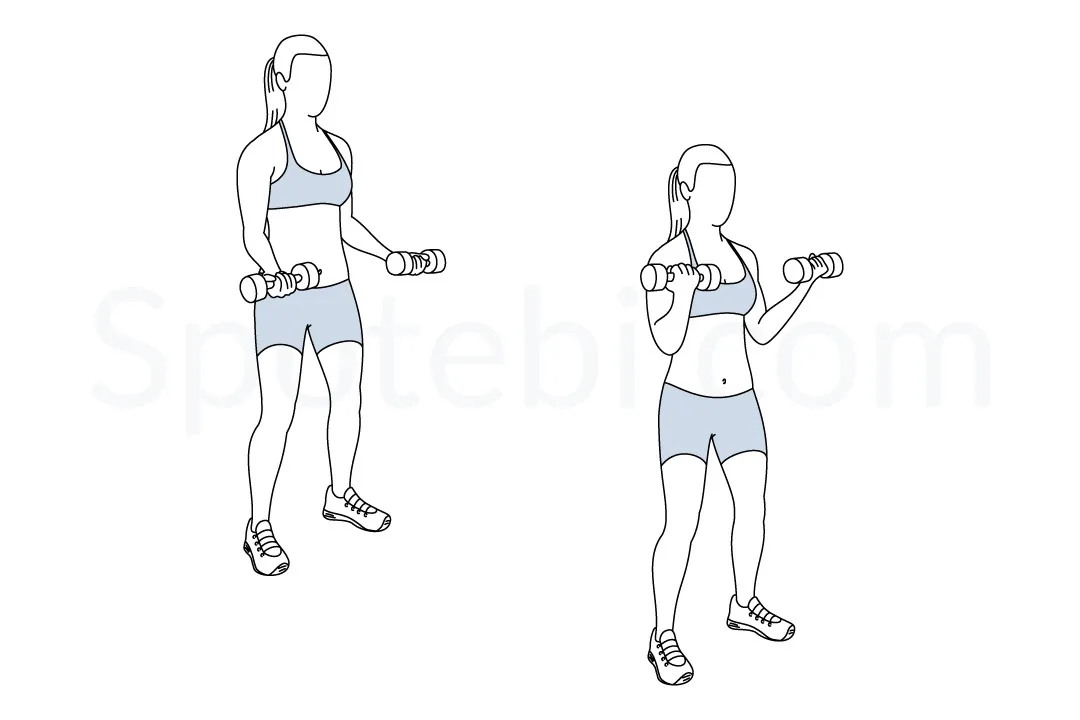
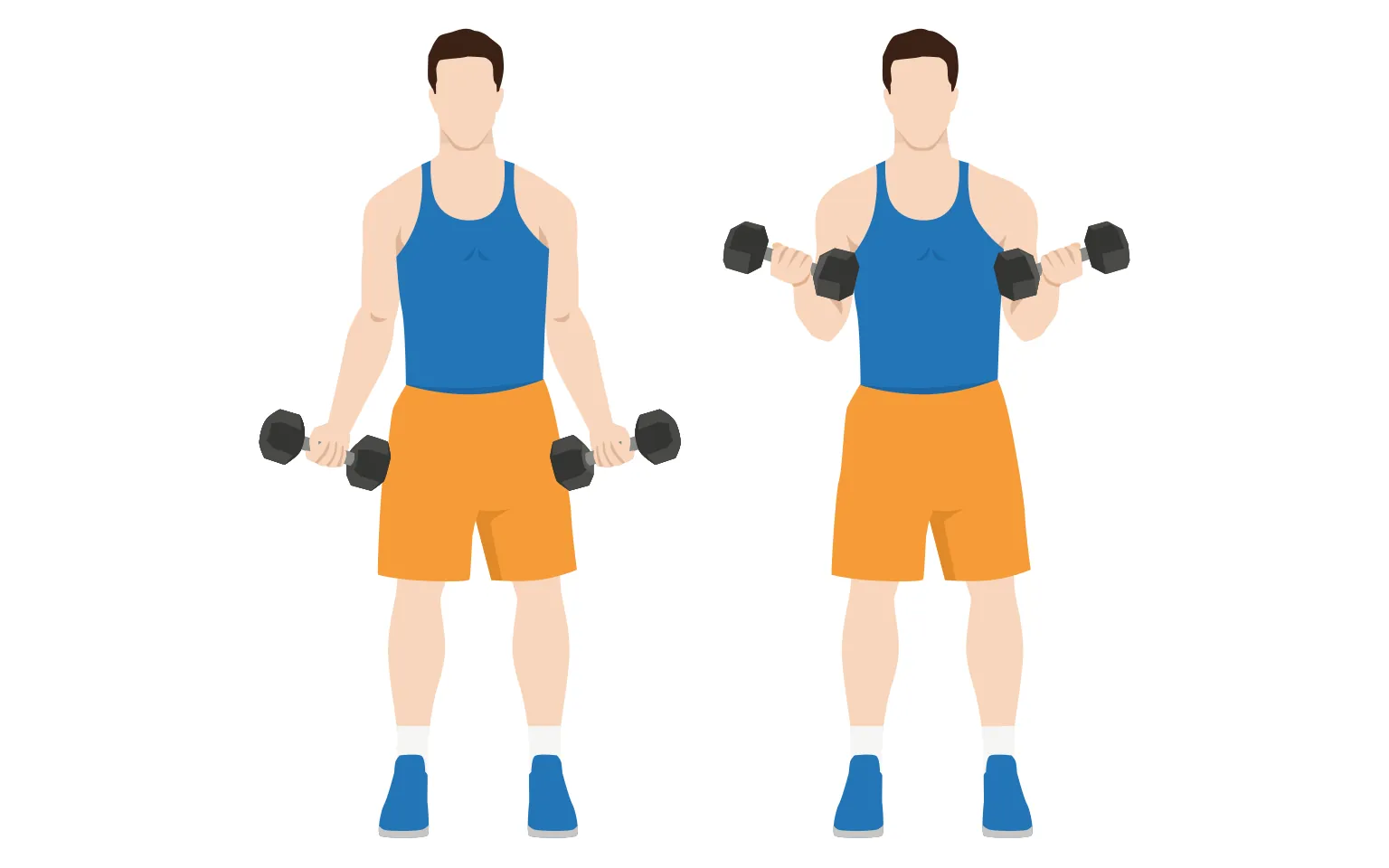
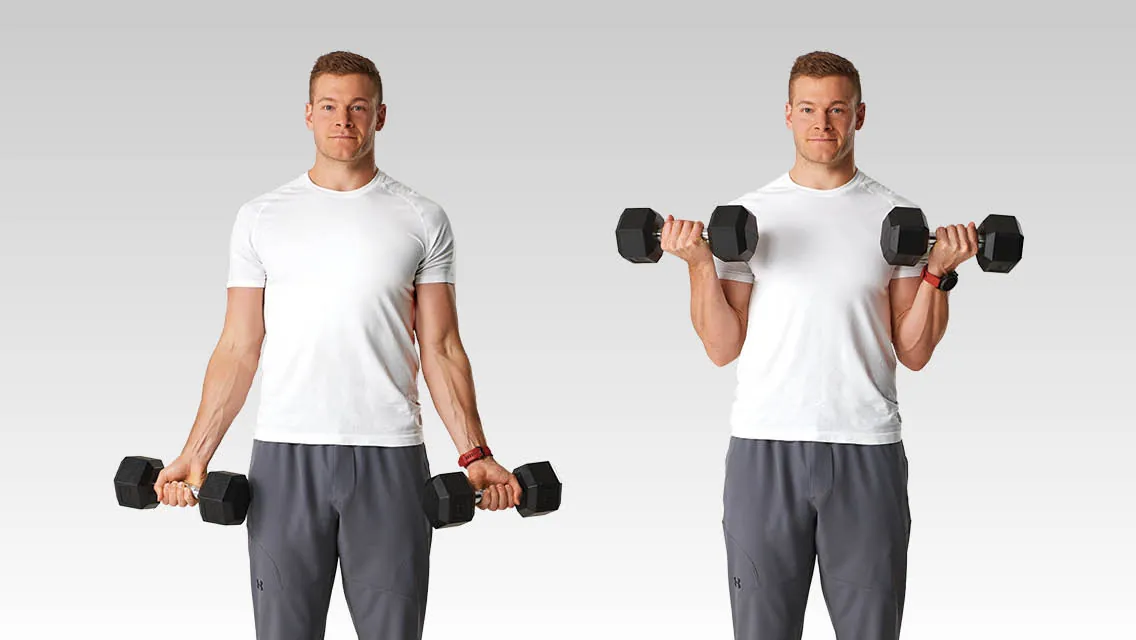
- Stand with feet shoulder-width apart, holding a dumbbell in each hand, palms facing forward. Let your arms hang straight down.
- Keep your elbows close to your sides. They shouldn’t drift forward or swing back during the lift.
- Curl the weight up by bending your elbows. Take about 2 seconds to lift. Stop when your forearm is near your upper arm.
- Squeeze at the top for 1 second. Don’t let the weight rest.
- Lower the weight slowly over 2–3 seconds. The slow lowering adds tension and helps build strength.
- Do 8–12 reps. That’s one set. Rest 60–90 seconds.
- Repeat for 3 sets total. If you finish 12 reps easily on the last set, add 2–5 pounds next time.
Tip: For lighter weights, add a 1-second pause at the top to make it harder.
Careful: Swinging your body to lift the weight means it’s too heavy. Drop the weight instead.
Careful: If you feel a sharp pain in your elbow or wrist, stop. See a doctor or physical therapist if it doesn’t settle in a few days.
Adjusting for Your Situation
Your starting point decides how long, how heavy, and how often you should train. Here’s how it shifts:
| Your situation | Time per session | What’s different | What to watch |
|---|---|---|---|
| Complete beginner | 10–15 min | Start with 3–5 lb dumbbells | Soreness for 1–2 days is normal |
| Training 3–6 months | 15–20 min | Add weight every 1–2 weeks | Elbow tendon pain |
| Returning after injury | 5–10 min | Start with no weight, just motion | Any sharp pain — stop and see a doctor |
| Older adult (60+) | 10–15 min | Lighter weight, seated position | Balance — use a chair |
Start lighter than you think you need. It’s much safer to add weight next week than to strain a tendon on day one.
How to tell you did it right
A good set feels controlled. Your elbow bends smoothly, your upper arm stays still, and the last two reps feel hard but doable. You’ll feel a mild burn in the muscle, not a sharp pinch in the joint.
A poor set looks different — you rock your torso, your elbows drift forward, and the weight drops fast on the way down. This usually happens because the weight is too heavy for your current strength. The muscle can’t lift it alone, so your back and shoulders join in.
Three things prevent this: pick a weight you can control for all reps, lower it slowly, and keep your elbows pinned to your sides. If you can’t do all three, go lighter.
Rules and what to do after
That’s the standard to follow — not every day, because your muscles need rest to grow.
After each session, put your weights back on the rack, wipe down shared equipment, and write down what you lifted. Stretch your arms gently for 30 seconds each.
Strength gains often show up within a few weeks of consistent training, with visible size changes taking longer. If you’re training for a sport or recovering from surgery, work with a certified trainer or physical therapist.
Other ways to train your arms
You don’t have to do standing dumbbell curls forever. Here are three real alternatives.
Seated dumbbell curls
Sitting on a bench removes the urge to swing your body. This makes the exercise harder at the same weight, so you may need to drop 5 pounds. Good if your lower back gets tired standing.
Preacher curls
This uses a slanted bench that locks your upper arm in place. It isolates the bicep more but feels tougher on the elbow tendon. Start light — 5–10 pounds less than your standing weight.
Resistance band curls
Stand on the band and curl the handles up. Cheap and portable, but the tension is lightest at the bottom and heaviest at the top. Not ideal for building maximum strength.
Frequently asked questions
How many bicep curls should I do a day?
None — you shouldn’t train the same muscle daily. Do 3 sets of 8–12 reps, 2–3 times a week, with at least one rest day between sessions. Muscles grow during rest, not during the workout.
How long does it take to see bigger arms?
Most people notice strength gains in 4–6 weeks and visible size changes in 8–12 weeks. The exact timeline depends on your starting strength, how much you eat, and how consistent you are.
Can I do bicep curls every day?
No. Training the same muscle every day doesn’t give it time to repair. Aim for 2–3 sessions a week. Doing more often usually leads to elbow pain, not faster growth.
Why do my bicep curls hurt my elbow?
The most common cause is lifting too heavy with a fast lowering phase. If pain continues past a week, see a doctor or physical therapist.
Is it safe to do bicep curls with a bad back?
Yes, if you sit on a bench with back support and keep the weight light. Standing curls can strain your lower back if you swing. Ask a physical therapist if you’re unsure.
What happens if I use a weight that’s too heavy?
You’ll swing your body, your form breaks down, and your elbow tendons take the strain. This raises your risk of tendinitis, which can take weeks to heal. Use a weight you can control for all reps.
Do bicep curls burn fat on my arms?
No. Spot reduction isn’t real — you can’t choose where your body loses fat. Curls build the bicep muscle underneath, but visible arm shape comes from overall body fat, which is set by diet and total activity.
Conclusion
Bicep curls work best as part of a full routine, not on their own. Train your arms 2–3 times a week, add weight slowly, and give your muscles rest days. If something hurts in a joint rather than a muscle, stop and get it checked.

I am a certified fitness coach with over 10 years of experience helping people improve their strength, endurance, and overall health. Specializes in workout programming, weight training, fat loss, muscle building, home fitness, and evidence-based nutrition.My goal is to make fitness simple and practical through well-researched guides, honest product reviews, and actionable training advice.