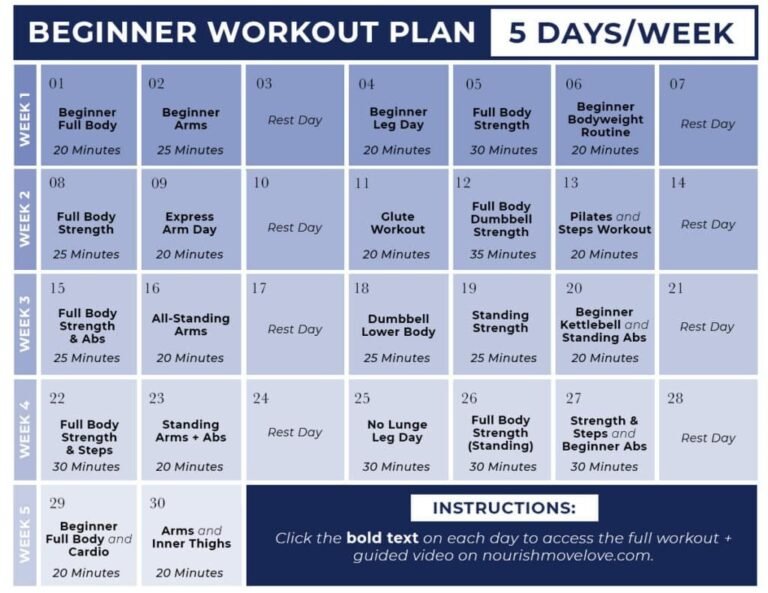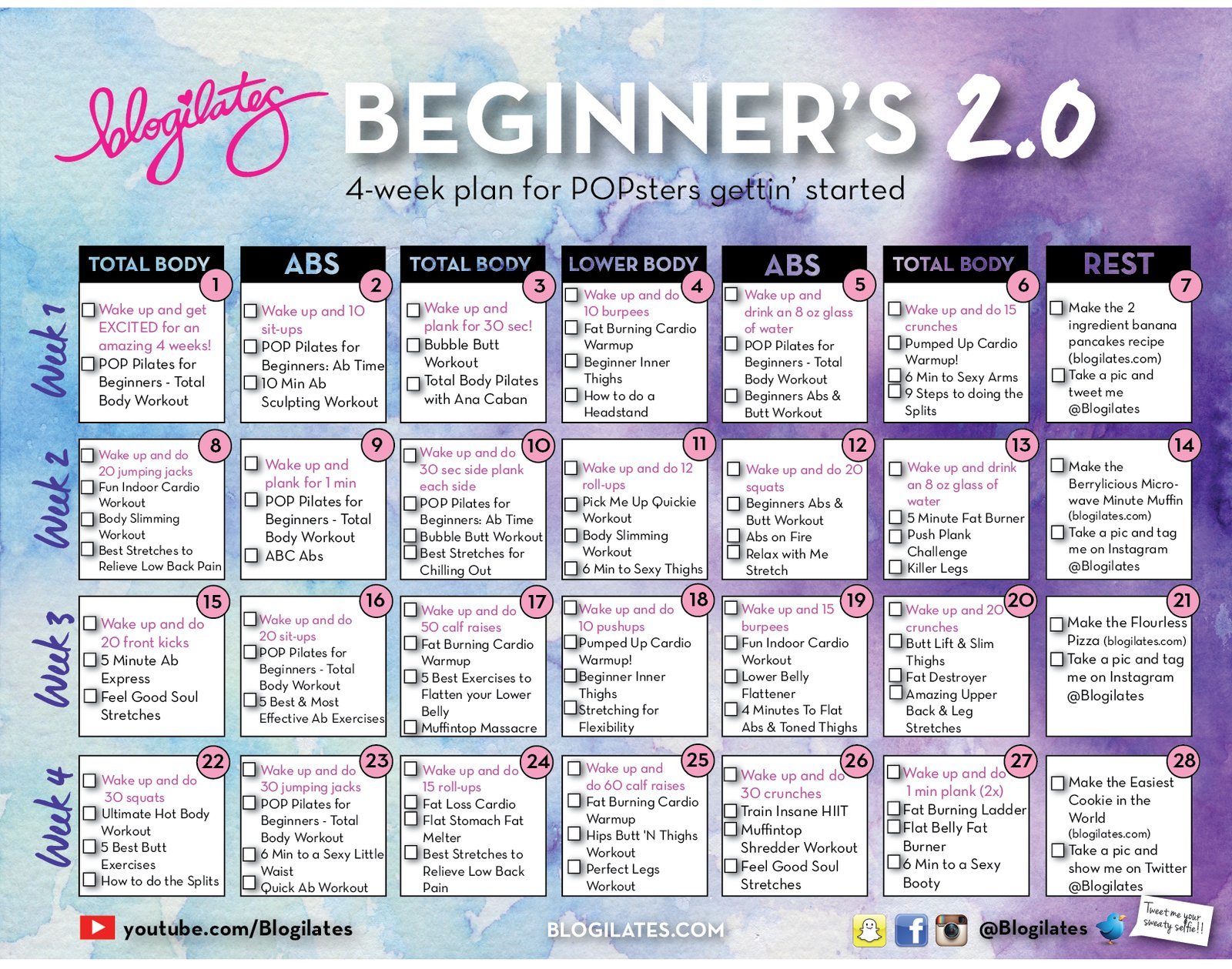
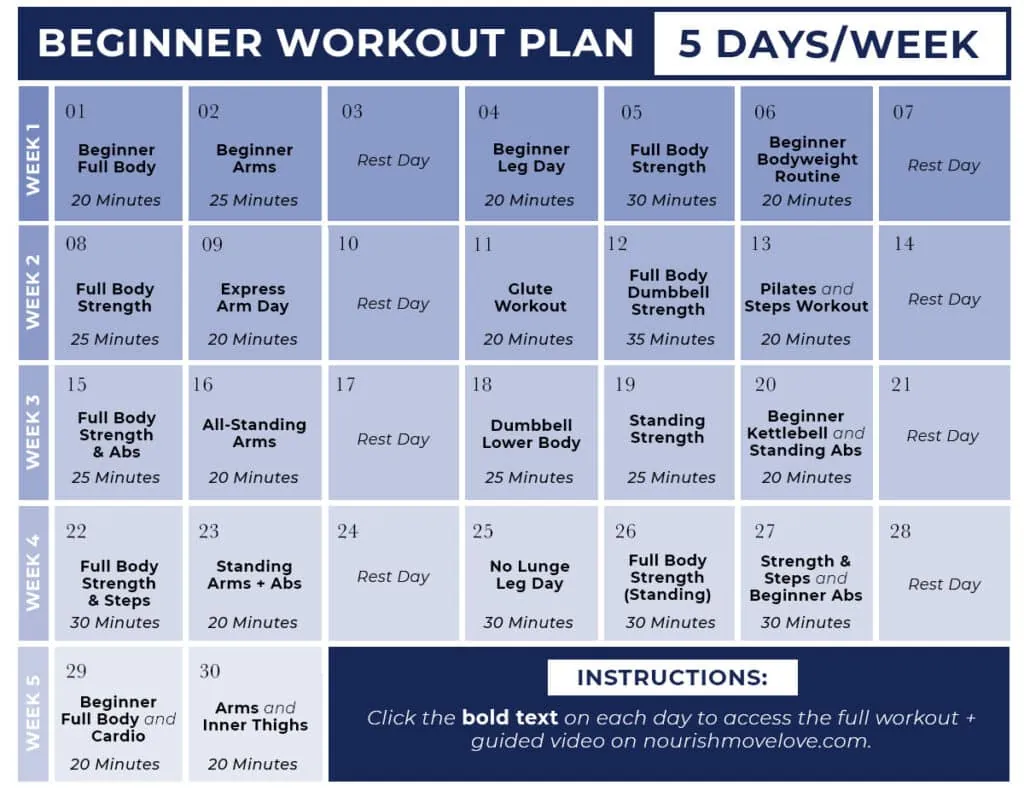
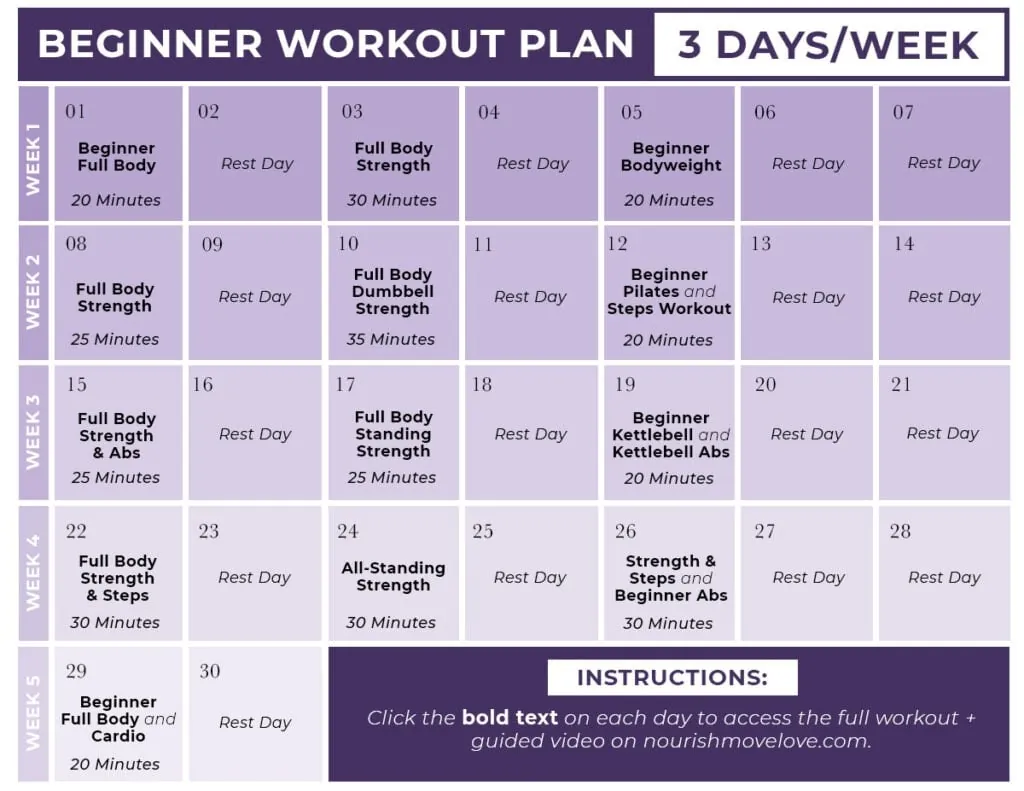
A 30-day workout plan works best as three sessions a week — 30 to 45 minutes each — mixing full-body strength and brisk walking. You’ll need no gym for the basic version, and the whole month costs you nothing but time.
Gear to gather before your workout plan starts
Most people quit in week one because they start with nothing ready. Get these in place first, and the month runs smoother.
- A calendar or phone app — 30 days, three sessions marked per week, with two rest days between them.
- Two pairs of shoes — one for walking, one flat pair for strength work. Worn-out soles cause shin and knee pain.
- A water bottle — about 500 ml (17 oz) per session, more in hot weather.
- A mat or a folded towel — for floor exercises. A hard floor without one hurts your back.
- A chair or bench — for supported squats and step-ups. It must not slide.
- Comfortable clothes — nothing tight around the knees or waist.
- A notebook — reps, sets, and how you felt. This is how you see progress.
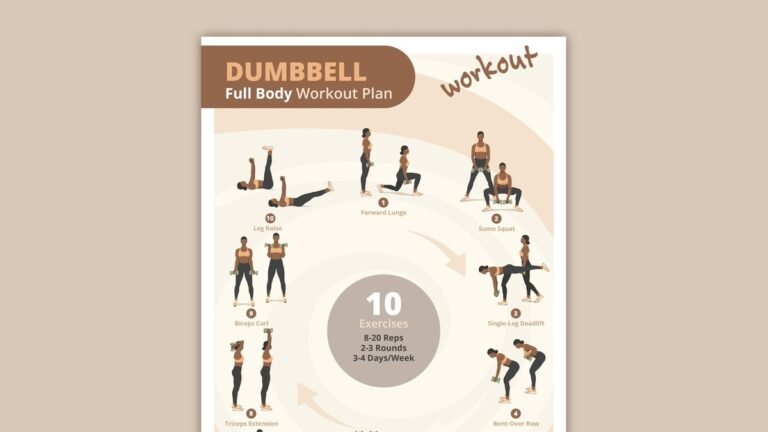
Dumbbells are optional; full water bottles or a loaded backpack work just as well. Skip heavy barbells unless a certified trainer has shown you the lifts — bad form with weight causes real injury.
How to run the 30 days
- Walk for 5 minutes to warm up. Easy pace, arms swinging, breathing steady.
- Do 2 sets of 10 squats. Sit back like you’re reaching for a chair. If your knees hurt, stop at half depth.
- Do 2 sets of 8 push-ups. On your knees or against a wall is fine. Full floor push-ups only if you can keep a straight line from head to heels.
- Do 2 sets of 10 step-ups per leg. Use a low step, about knee height. Higher steps load the knee more, so start low.
- Hold a plank for 20 seconds. Two rounds. Add 5 seconds each week until you reach 60.
- Walk briskly for 20 minutes. You should be able to talk but not sing.
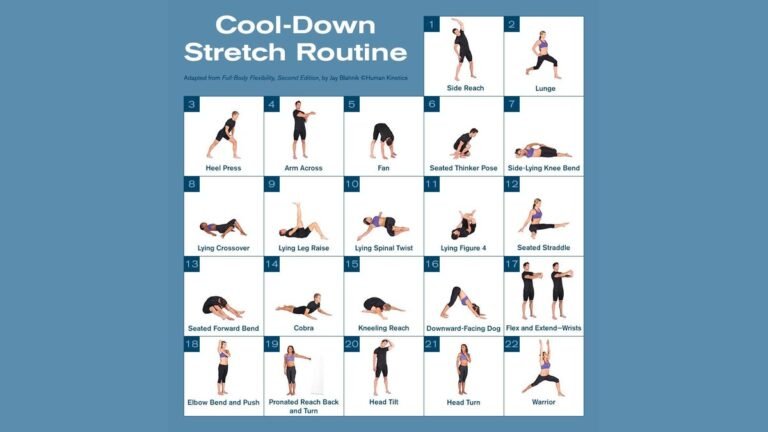
- Cool down for 5 minutes. Slow walk, then stretch your calves, hamstrings, and shoulders for 20 seconds each.
Tip: Do strength first, then the walk. You’ll lift better when you’re fresh, and the walk becomes active recovery.
Careful: Sore muscles for a day or two are normal. Sharp joint pain is not — stop that exercise and swap it for something easier.
Careful: If you have a heart condition, are pregnant, or haven’t exercised in years, see a doctor before day one. That’s not a formality; it’s how you avoid the injury that ends the month early.
How it changes with your situation
The plan above assumes you’re a healthy beginner with 30-45 minutes free, three days a week. Change any of those and the numbers move.
| Your situation | Time per session | What changes | What to watch |
|---|---|---|---|
| Complete beginner | 20-30 min | 1 set instead of 2 | Soreness in week one |
| Already active | 45-60 min | Add a 4th day, more sets | Overtraining, poor sleep |
| Short on time | 15-20 min | Strength only, no walk | Losing the cardio habit |
| Joint pain | 20-30 min | Chair support, no jumping | Swelling the next day |
| Walking only | 30-45 min | Brisk pace, 5 days a week | Foot blisters |
Start with the easier version and add work in week two. Overshooting on day one is the most common reason people stop by day five — the soreness feels like failure when it’s just too much, too fast.
Checking your own progress
A good result after 30 days looks like this: you finish all 12 sessions, your plank holds longer, and stairs feel easier.
The quality problem here is doing reps too fast. Speed hides bad form — you use momentum instead of muscle, and the joint takes the load. Slow down to about 2 seconds per rep and you’ll feel the difference immediately.
Rules and what comes after
The Physical Activity Guidelines for Americans from the U.S. Department of Health and Human Services set the standard: 150 minutes of moderate activity a week, plus strength training twice a week. This plan sits inside that. After each session, stretch, drink water, and log what you did.
Your fitness gains fade in about two to four weeks if you stop completely, so keep at least two sessions going after day 30.
Other ways to run the month
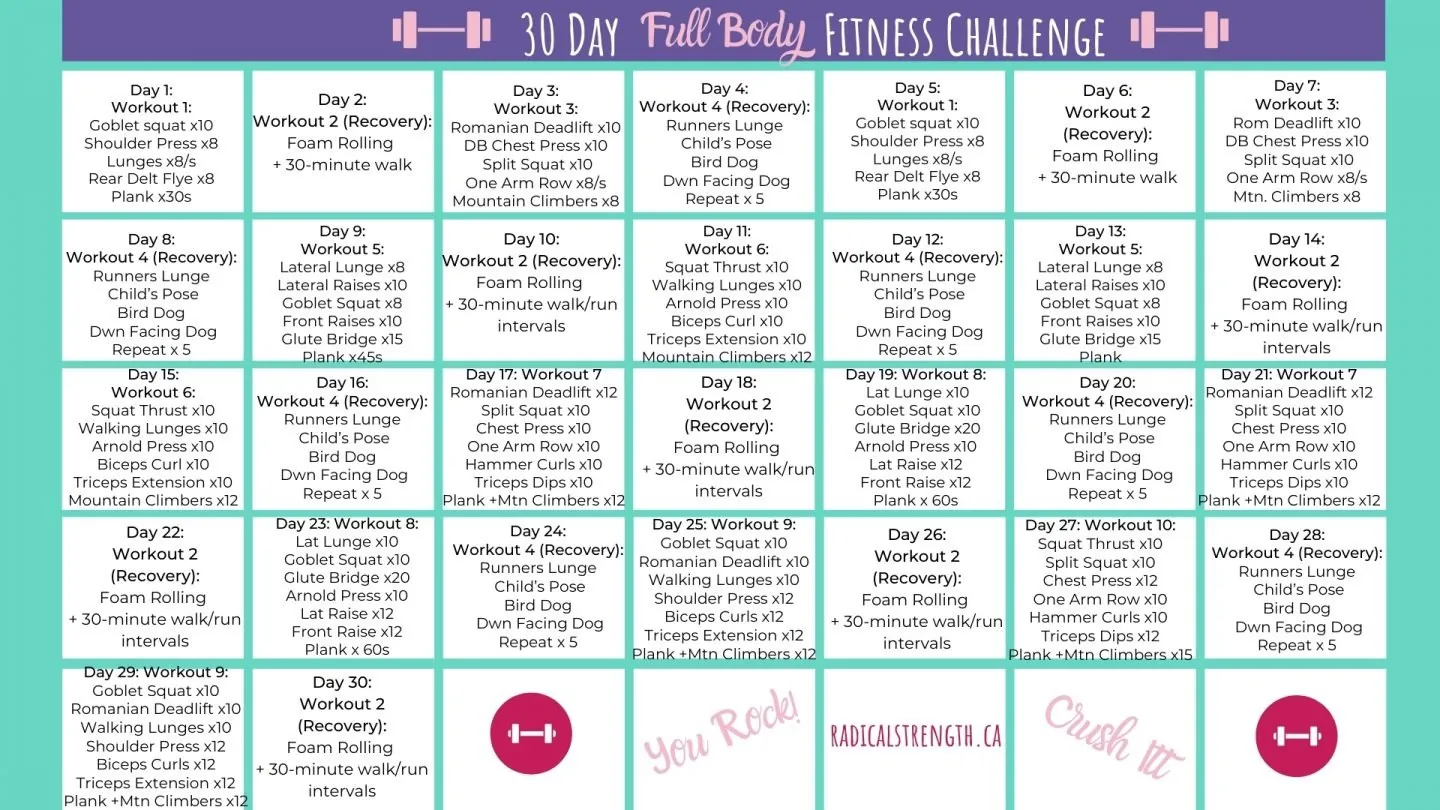
Follow a video program
A structured video series gives you a trainer counting reps and correcting form on screen.
Join a beginner class
A local gym or community class adds a coach who watches your form. Sessions run about an hour, and the cost varies by area — check locally, since prices change.
Walk-only month
Skip strength work and walk briskly 30 minutes, five days a week. It’s easier on the joints and needs no equipment, but you’ll build less muscle and see slower changes in strength.
Related guides
Frequently asked questions
How long should each workout be?
Aim for 30 to 45 minutes, three days a week, for a healthy beginner. If you’re new to exercise, 20 minutes is enough at the start — add 5 minutes each week as your body adjusts.
Can I do a 30-day workout plan at home?
Yes. Squats, push-ups, planks, and step-ups need no equipment and cover your whole body. A chair and a mat are enough to start, and you can add water bottles as weights later.
Is it safe to work out every day for 30 days?
No — your muscles need rest to repair. Train three days a week with a rest day between sessions. Walking daily is fine, but strength work every day raises your injury risk.
What happens if I miss a day?
Nothing serious. Just pick up where you left off and keep the same order of sessions. Don’t double up to catch up — that’s how people get hurt and quit in week two.
Why am I so sore after the first week?
New movement causes small muscle damage, and soreness peaks about 24 to 48 hours later. It fades as your body adapts. Sharp joint pain is different — stop and rest that area.
How much does a 30-day workout plan cost?
The basic version costs nothing beyond shoes and a mat. Gym classes and video programs add a monthly fee that varies by city and provider — check local listings, since prices change often.
Do I need to change my diet?
This plan doesn’t include a diet, and no workout plan replaces one. Eat regular meals with protein and vegetables, and drink water through the day. For personal advice, talk to a registered dietitian.
Conclusion
Thirty days won’t transform your body, and anyone promising that’s selling something. What it will do is build the habit — three sessions a week, written down, finished. That habit is the part that lasts long after day 30.

I am a certified fitness coach with over 10 years of experience helping people improve their strength, endurance, and overall health. Specializes in workout programming, weight training, fat loss, muscle building, home fitness, and evidence-based nutrition.My goal is to make fitness simple and practical through well-researched guides, honest product reviews, and actionable training advice.