Recovery tips work best when you treat rest, food, and sleep as one plan, not three separate ones. Most people need 1-2 easy days after a hard session, and 1-2 weeks after a race or a bad illness.
How often you need recovery, by how hard you train
The harder the work, the shorter the gap between easy days. A light walk needs almost nothing after it. A long race or a fever needs real time.
| How you use it | How often | What tells you it’s due |
|---|---|---|
| Easy walk or light yoga | No fixed schedule | You feel normal the next morning |
| Moderate gym, 45-60 min | 1 easy day after | Muscles still sore on waking |
| Hard intervals or heavy lifting | 1-2 easy days after | Warm-up feels heavy, pulse high |
| Long run or long ride | 2-3 easy days after | Legs feel flat on stairs |
| Race or all-out event | 1-2 weeks easy | Sleep and appetite back to normal |
| After fever or flu | Wait until symptoms gone | No chest tightness, normal energy |
What happens if you skip recovery
The first change is small. Your easy pace feels harder, and your warm-up takes longer than usual. That happens within a few days of stacking hard sessions with no easy days between them.
After a few weeks, sleep gets worse and your resting heart rate can sit higher than normal. You may notice you’re irritable, hungry all the time, or losing interest in training you usually enjoy. These are signs your body isn’t repairing between sessions.
Keep going and the body stops adapting and starts breaking down. Minor aches turn into tendon pain, and a cold you’d normally shake in a few days can drag on. The CDC guidance on sleep and chronic disease explains how poor sleep raises the risk of longer-term health problems, which is one reason recovery sleep matters as much as training load.
What eventually breaks depends on you. Check your own resting heart rate each morning, in bed, before you get up. If it’s 5-7 beats above your normal for 2 mornings in a row, that’s your signal.
Signs your recovery is overdue
- Resting heart rate up 5-7 beats — your body is still working, not repairing.
- Sore muscles that last past 3 days — normal soreness fades in 24-72 hours.
- Waking up tired after 7-9 hours in bed — sleep isn’t doing its job.
- A warm-up that feels like a workout — your easy effort is now a hard one.
- Losing interest in training you enjoy — a mood sign, not a laziness sign.
- Getting every cold going around — your immune system is stretched.
- Aches that don’t fade with a day off — this is the point to see a doctor.
What each recovery round takes
A basic recovery day takes 20-40 minutes of easy movement, plus 7-9 hours of sleep that night. It asks for patience more than effort. You’re not chasing a result — you’re letting your body catch up.
A full recovery week after a race takes more planning. You’ll want easy walks, extra water, protein with each meal, and no hard sessions at all. The cost is time and a bit of boredom, not money or equipment.
If you’re not sure how long your own recovery should run, check your resting heart rate and sleep for 3 mornings. Those two numbers tell you more than any general rule.
Tips to go longer between recovery days
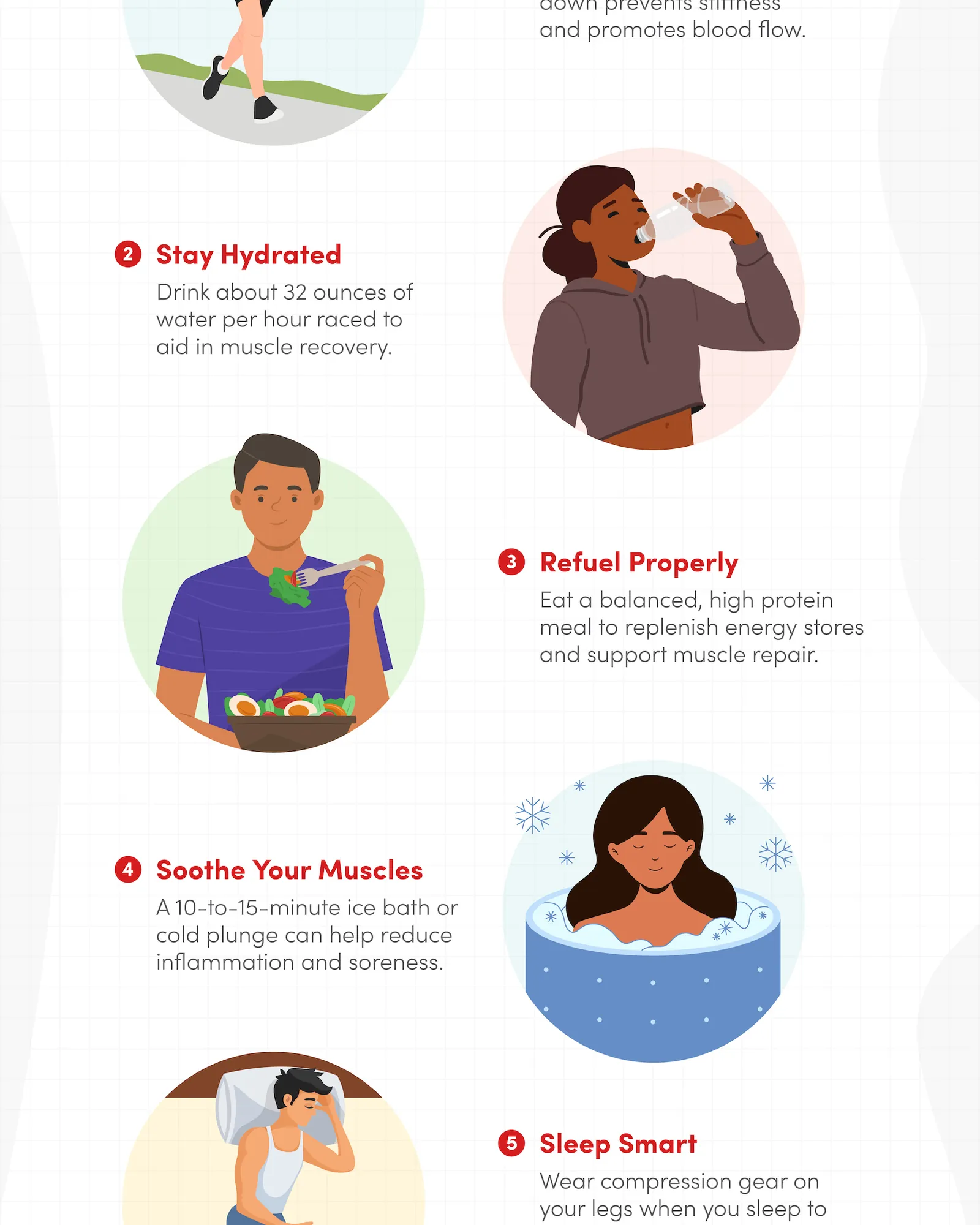
- Sleep 7-9 hours, same time each night. Sleep is when most repair happens, so a steady schedule beats a long weekend lie-in.
- Eat protein within an hour after hard work. Aim for 20-30 grams, which is roughly a palm-sized serving of chicken, fish, or beans.
- Drink water through the day, not all at once. Pale yellow urine is the simple check that you’re hydrated.
- Keep one full rest day each week. No training at all. This stops small aches from stacking up.
- Build hard weeks slowly. Add no more than 10% to your weekly training time, so your body has time to adapt.
Related guides
- 30-Day Workout Plan for Fast Results & Total Body Fitness
- Usage Guide Knee Sleeves: Maximize Support and Boost Recovery
- Benefits of Knee Sleeves: Enhance Support, Boost Recovery, Prevent Injury
Frequently asked questions
How long does recovery take after a hard workout?
Most people feel normal in 24-48 hours after a hard session. After a race or long event, allow 1-2 weeks of easy training. Your resting heart rate and sleep quality tell you when you’re ready.
Can I train while I’m still sore?
Yes, if the soreness is mild and only in the muscles you worked. Keep it easy — a walk or light movement. If the soreness is sharp, in a joint, or lasts past 3 days, rest instead.
Why am I still tired after sleeping 8 hours?
Poor sleep quality, not quantity, is usually the cause. Alcohol, late screens, a warm room, and stress all cut deep sleep. Track your resting heart rate for 3 mornings to see the pattern.
Is it safe to take painkillers to train through soreness?
No, not for training. Painkillers mask the signal your body uses to warn you. They also don’t fix the cause. Save them for genuine pain, and talk to a doctor if soreness keeps coming back.
What happens if I never take rest days?
Small aches build into tendon and joint problems over weeks. Sleep gets worse, mood drops, and you get sick more often. Performance falls even though you’re training more, not less.
Does it matter what I eat after training?
Yes. Protein helps repair muscle, and carbs refill energy stores. Aim for 20-30 grams of protein and a serving of carbs within an hour or two after hard work. Water matters just as much.
How do I know when recovery is done?
Your resting heart rate is back to normal, sleep feels refreshing, and a warm-up feels easy again. Those three signs together mean you’re ready for hard work.
When should I see a doctor about recovery?
See a doctor if you’re exhausted for more than 2 weeks, if soreness lasts past a week, or if you have chest pain, fever, or trouble breathing. Those aren’t training problems.
Conclusion
Start with one full rest day this week and 7-9 hours of sleep each night. Within a few days, your warm-up should feel easier and your morning heart rate should drop back to normal. If you’re still exhausted after 2 weeks of rest, or you have chest pain or fever, stop and see a doctor.
I am a certified fitness coach with over 10 years of experience helping people improve their strength, endurance, and overall health. Specializes in workout programming, weight training, fat loss, muscle building, home fitness, and evidence-based nutrition.My goal is to make fitness simple and practical through well-researched guides, honest product reviews, and actionable training advice.