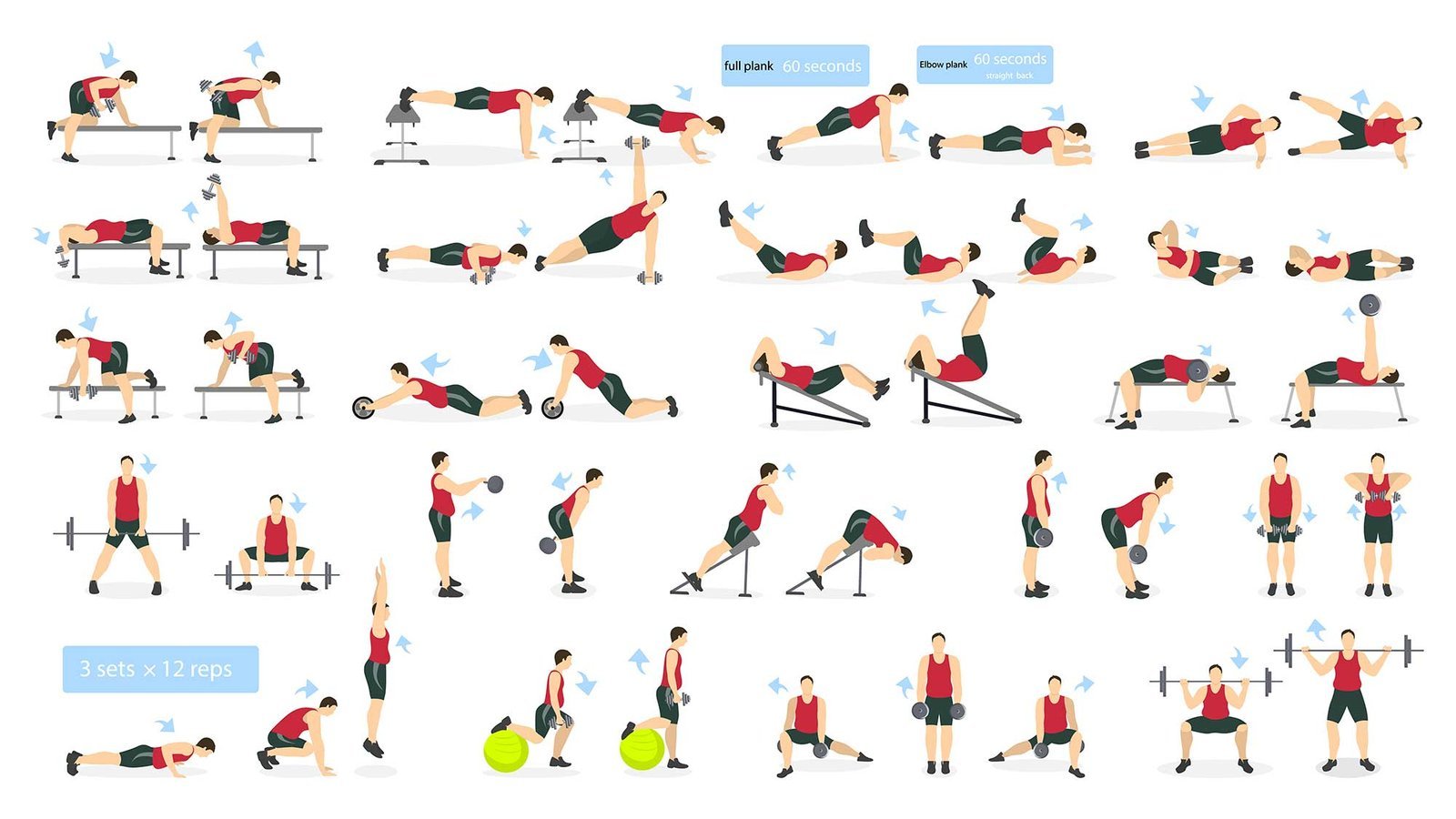
A full body workout trains every major muscle group in one session — usually 5 to 8 exercises, 2 to 4 sets each, 8 to 15 reps per set, and 45 to 60 minutes in the gym. The details below cover the order, the rest times, and the mistakes that cost you progress.
What counts as a full body workout
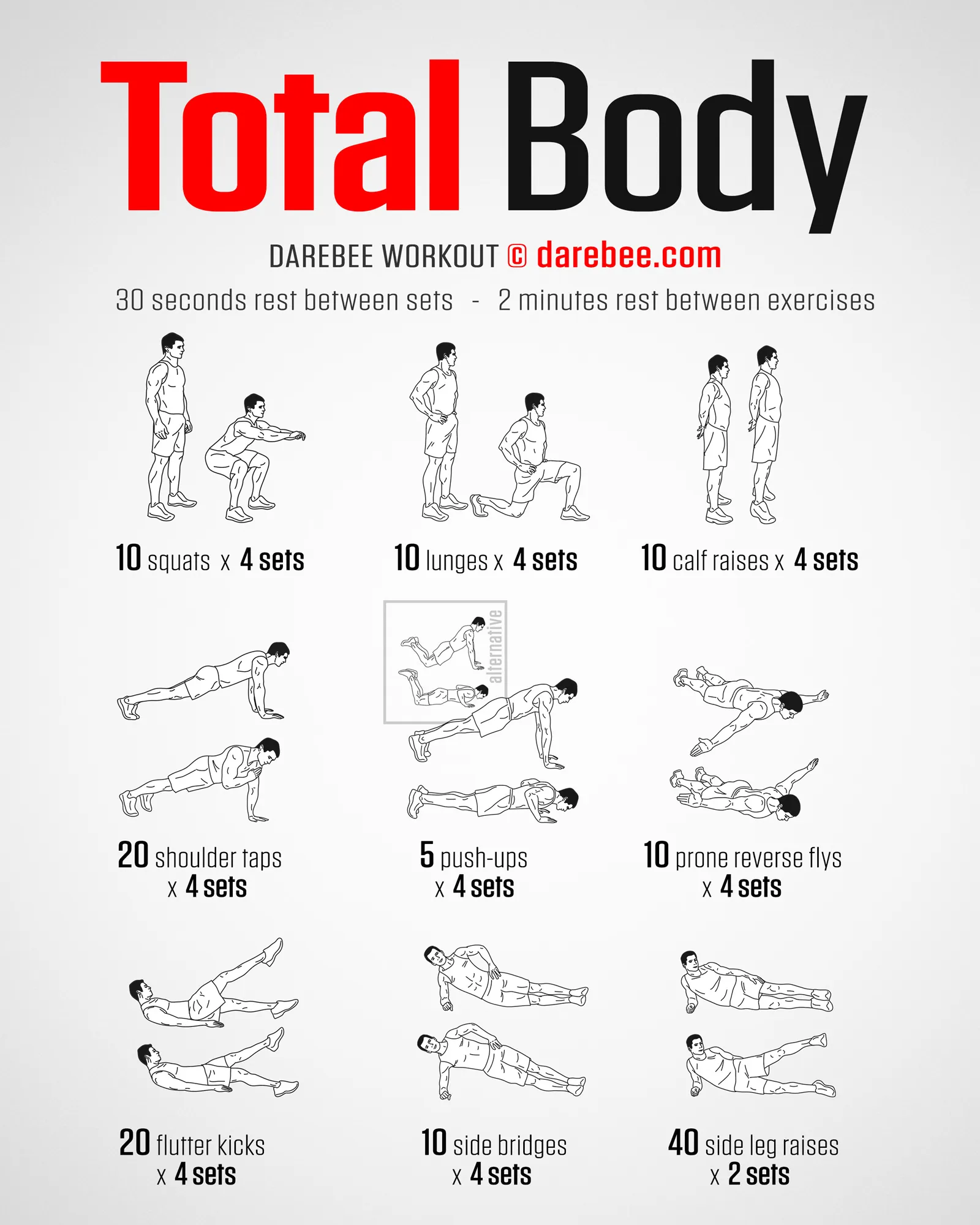
A full body workout is one training session that hits your legs, back, chest, shoulders, arms and core before you leave. You use it to build strength and muscle while training each muscle 2 to 3 times a week, instead of once.
One rule is worth knowing early: muscle grows from the total hard sets you do each week, not from how wrecked you feel after one session. The American College of Sports Medicine publishes physical activity guidelines that cover weekly strength targets.
How to run a full body workout
- Warm up 5 to 10 minutes — easy bike or brisk walk, then 2 light sets of your first exercise at about 50% of your working weight.
- Start with a big lower-body lift: squat or leg press, 3 sets of 6 to 10 reps, rest 2 to 3 minutes.
- Move to a push: bench press or overhead press, 3 sets of 6 to 10 reps, rest 2 minutes.
- Add a pull: row or lat pulldown, 3 sets of 8 to 12 reps, rest 90 seconds.
- Do a second leg movement: Romanian deadlift or leg curl, 2 to 3 sets of 8 to 12 reps.
- Finish with 2 smaller moves: lateral raise and a core exercise, 2 to 3 sets of 10 to 15 reps, rest 60 seconds.
- Cool down 5 minutes and log every weight and rep.
The judgement call is load. Pick a weight where the last 2 reps feel hard but your form still holds. If you could do 5 more reps, it’s too light; if your back rounds on rep 4, it’s too heavy.
Numbers to set before you start
These are the working ranges most programs use. Adjust by your own strength and how long you’ve trained — a true beginner starts at the low end of the sets and adds one set per week.
| Situation | What to use | How long | What to watch for |
|---|---|---|---|
| First month of training | 1 exercise per muscle group, 2 sets | 30–40 min | Soreness, not pain |
| 2 gym days a week | 6 exercises, 3 sets each | 50–60 min | Missed sessions |
| 3 gym days a week | 7 exercises, 3–4 sets | 60 min | Two hard days back to back |
| 4 gym days a week | Split into upper/lower focus | 45–55 min | Total weekly sets creeping up |
| Building strength | 3–5 reps, rest 3 min | 60–75 min | Form breaking down |
| Building muscle | 8–12 reps, rest 90 sec | 45–60 min | Rushing the rest |
| Short on time | 5 compound lifts, 2 sets | 30 min | Skipping warm-up |
| Age 50+ or returning | 10–15 reps, machines first | 40–50 min | Joint pain, not muscle burn |
What good sessions get right
Experienced lifters plan the week before they touch a bar. They count hard sets per muscle — usually 10 to 20 a week — and spread them across sessions instead of cramming them into one. That’s why their Tuesday and Friday look different, not identical.
They also order by demand. The heaviest, most technical lift goes first. Small muscles like biceps and calves come last.
What they check mid-session
Halfway through, they ask one question: is the weight still moving well? If bar speed drops hard, they cut the set short. They leave 1 to 2 reps in reserve on most sets, and only push to failure on the last set of small exercises.
What they leave alone
They don’t add exercises mid-session because they feel good, and they don’t chase a new personal best every week. Progress comes from adding a little weight or a rep every week or two.
Common problems and quick fixes
| What you notice | What it usually means | What to do first |
|---|---|---|
| Sore for 4+ days | Too much volume too soon | Cut sets by a third next session |
| No strength gain in 3 weeks | Not enough food or sleep | Add a meal and 1 hour of sleep |
| Wrist or elbow ache | Grip or bar path issue | Lower the weight, check hand position |
| Winded before muscles tire | Rest periods too short | Add 30–60 seconds between sets |
| Session runs 90 minutes | Too many exercises | Drop to 6 moves, superset the small ones |
| Bored and skipping days | Same session every time | Change exercise order, keep the pattern |
Rules and safety limits
The World Health Organization recommends adults do muscle-strengthening activity on 2 or more days a week, plus 150 to 300 minutes of moderate aerobic activity. If you have a heart condition, uncontrolled blood pressure, a recent injury or you’re pregnant, get clearance from your doctor before starting. Sharp joint pain, chest pain, dizziness or numbness means stop and see a medical professional — that’s not a training problem to push through.
Keeping progress after the first weeks
Log every session: exercise, weight, sets, reps. Keep the same program for 6 to 8 weeks, then change one thing — exercise variation or rep range — not everything. If you miss a week, restart at about 80% of your old weights for one session. The sign you’re due for a change is simple: two sessions in a row where every set feels easy and nothing moves up.
When full body training isn’t the right fit
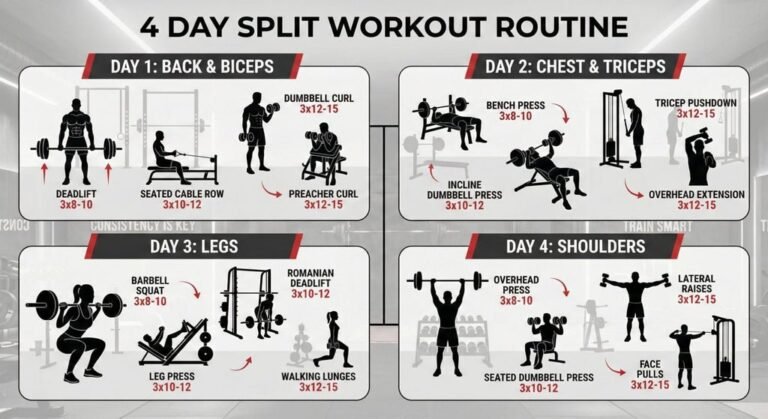
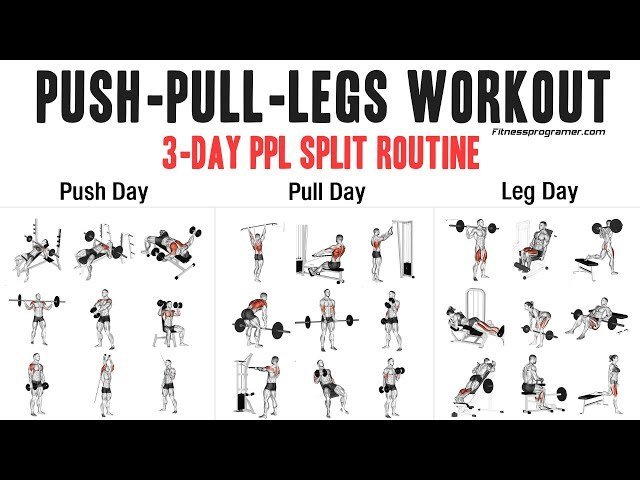
If you train 5 or 6 days a week, a split routine works better — one session can’t stay under an hour with that much volume. If you’re preparing for a powerlifting meet, you need dedicated heavy days per lift. And if you’re rehabbing an injury, a physiotherapist should set your plan, not a general program.
Related guides
Frequently asked questions
How many days a week should I do full body workouts?
Two to three days a week, with at least one rest day between sessions. Three is the sweet spot for most people. Four works only if you keep sessions short and alternate hard and easy days.
How long does a full body workout take?
About 45 to 60 minutes including warm-up, assuming 6 to 7 exercises and 3 sets each. Cut to 30 minutes by using 5 compound lifts and 2 sets. Rest times are what stretch it past an hour.
Is it safe to do full body every day?
No. Training the same muscles daily doesn’t give them time to recover, and recovery is when muscle is built. Keep at least 48 hours between sessions that hit the same muscle groups, or split your training instead.
Can beginners do full body workouts?
Yes, and it’s usually the best choice. Beginners gain strength fast with 2 to 3 sessions a week, and each muscle gets trained often enough to learn the movement. Start with 2 sets per exercise.
What should I eat before a full body workout?
A meal with carbs and protein about 2 to 3 hours before, or a small snack 30 to 60 minutes before. Keep it low in fat so it digests fast. Drink water through the session, more in hot weather.
How much rest between sets?
Two to three minutes for heavy compound lifts at 3 to 6 reps, and 60 to 90 seconds for smaller isolation exercises at 10 to 15 reps. Shorter rest saves time but lowers how much weight you can move.
What happens if I skip a session?
Nothing serious — just repeat the last session’s weights next time instead of adding more. Skip two weeks or more and restart at about 80% of your old loads for one session, then build back up.
Conclusion
Pick 6 exercises, train 3 days a week, and add a little weight or a rep every week or two. That’s the whole method. The people who get strong aren’t doing anything fancier — they just keep showing up and writing it down.

I am a certified fitness coach with over 10 years of experience helping people improve their strength, endurance, and overall health. Specializes in workout programming, weight training, fat loss, muscle building, home fitness, and evidence-based nutrition.My goal is to make fitness simple and practical through well-researched guides, honest product reviews, and actionable training advice.