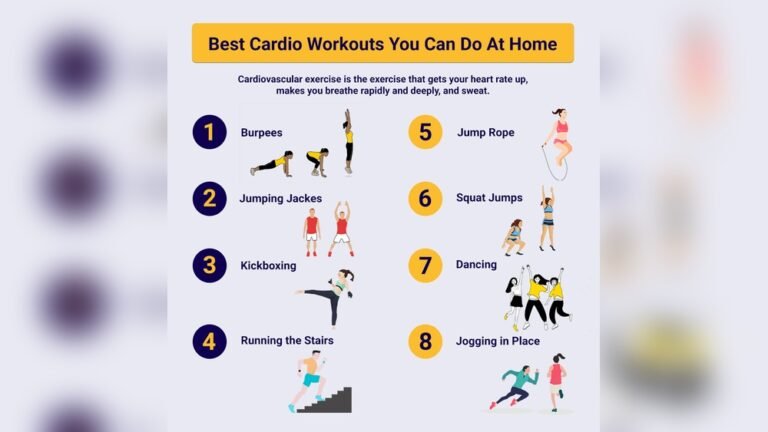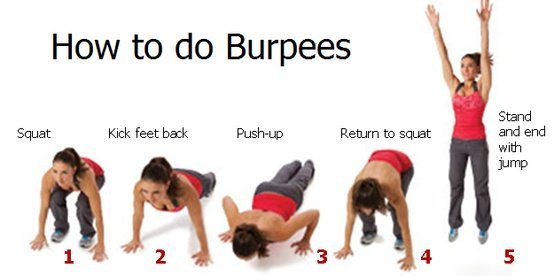
Burpees are a full-body exercise: squat, kick back to a plank, do one push-up, jump your feet forward, and leap up with your hands overhead. One rep takes most people 3 to 5 seconds. It suits anyone who wants strength and cardio in one move.
What you need before your first burpee
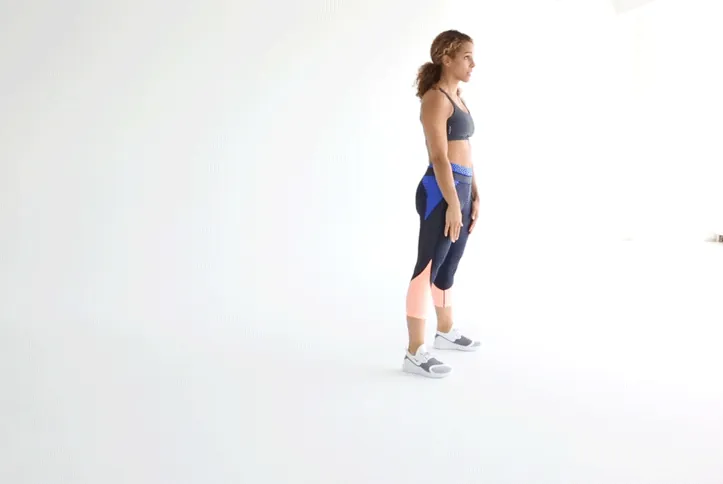
Nothing fancy here. A little floor space and a few basics are enough to start today.
- Clear floor space — about 6 feet by 3 feet, flat and free of furniture, cords, or toys.
- Athletic shoes with grip, or bare feet on a mat if your floor isn’t slippery.
- A yoga or exercise mat — useful if your wrists or knees feel the hard floor.
- Comfortable clothes you can squat and jump in without restriction.
- A water bottle within arm’s reach.
- A timer or phone app if you’re doing timed sets instead of counting reps.
- A doctor’s OK if you have heart, knee, wrist, or blood pressure issues.
A cushioned mat works fine for most people. A thick, soft mattress or rug does not — your hands sink and your wrists twist.
How to do a burpee step by step
Start slow and treat each part as its own move. Speed comes later, once the shape feels natural.
- Stand tall with feet shoulder-width apart, arms relaxed at your sides.
- Squat down and place both hands flat on the floor, just outside your feet.
-
Kick both feet back in one jump to a high plank. Keep your body in a straight line from head to heels. Careful: If your hips sag, you’ll strain your lower back. Squeeze your abs before you kick.
-
Do one push-up — chest close to the floor, elbows at about 45 degrees from your body. Tip: Skip the push-up at first if your arms are tired. A burpee without it’s still a real burpee.
-
Jump both feet forward so they land near your hands.
- Stand and jump up, reaching your arms overhead.
- Land softly with knees slightly bent, then go straight into the next rep.
Do 3 sets of 5 reps in your first week. Add 1 rep per set each week. If you can’t do a full push-up, drop to your knees for that part — it’s a standard scaling, not a shortcut. Stop if you feel chest pain, dizziness, or sharp joint pain, and see a doctor before continuing.
How burpees change with your situation
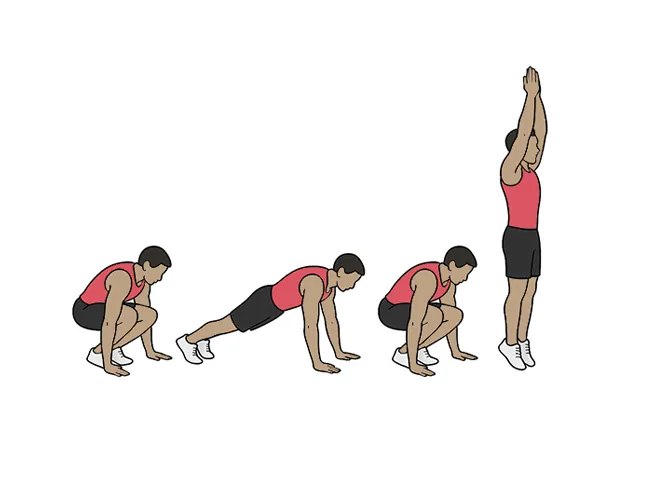
The move stays the same, but your pace, volume, and rest change with your situation.
| Your situation | Time per rep | What’s different | What to watch |
|---|---|---|---|
| Complete beginner | 6–8 seconds | No push-up, step feet back instead of jumping | Wrist and knee soreness |
| Regular gym-goer | 3–5 seconds | Full push-up, jump feet in and out | Lower back rounding |
| Short on time | 3–4 seconds | Do them in a 4-minute circuit, 20 seconds on, 10 off | Form breaks down fast |
| Bad knees or wrists | 6–10 seconds | Hands on a bench, no jump at the top | Joint pain that lasts past the session |
| Pregnant or postnatal | Varies | Talk to your doctor first — this move may not be right for you | Any pressure or discomfort |
Start with fewer reps than you think you can handle.
Checking your burpee form
A good rep looks smooth and quiet. Your body stays in one line in the plank, your feet land softly, and you can breathe through the set.
A poor rep looks jerky. Your hips sag or pike in the plank, your feet slam the floor, and your lower back aches the next day. The most common problem is rushing the plank — people drop their hips to save energy, and that’s where back pain starts.
Three things prevent it: squeeze your abs before every kick-back, keep your hands under your shoulders, and slow down until 5 clean reps feel easy.
Rules, cleanup, and how long results last
No single body sets a rule for burpees, but the American Council on Exercise lists burpees as an advanced move and recommends building a base first. Clear your floor before you start, and put the mat away after — a rolled mat is a trip hazard.
Muscle and cardio gains fade in about 2 to 4 weeks of no training. Do burpees 2 or 3 times a week to keep them. If you have a heart condition, are pregnant, or are recovering from surgery, clear it with your doctor first.
Other ways to get the same effect
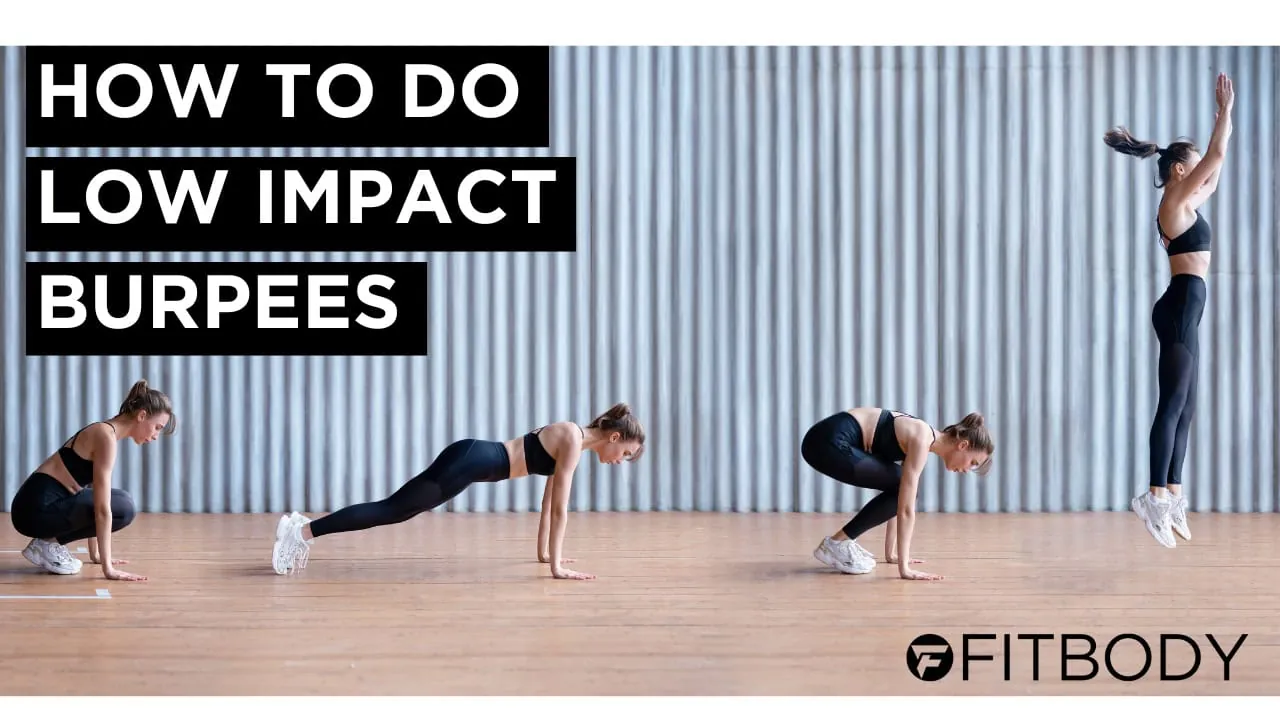
You don’t have to jump to get the benefits. These three versions work the same muscles with less impact.
The step-back burpee
Replace the jump-back with one foot at a time, and skip the jump at the top. It’s slower — about 6 to 8 seconds per rep — but much kinder to your knees and wrists.
The dumbbell thruster
Hold two light dumbbells at your shoulders, squat, then press overhead.
The mountain climber circuit
Stay in a plank and drive your knees toward your chest for 30 seconds. It’s less total-body work than a burpee but far easier on the joints and needs no equipment.
Frequently asked questions
How many burpees should I do a day?
For most beginners, 10 to 30 total reps spread across 3 sets is a solid start. Build up by 2 or 3 reps per week.
How long does a burpee workout take?
A basic session runs 10 to 15 minutes, including warm-up and rest. Longer sessions of 20 to 30 minutes are for people already comfortable with the move.
Can burpees replace running?
No. Burpees build strength and raise your heart rate fast, but running trains your aerobic system for longer efforts. Use burpees as a supplement, not a swap, if you’re training for a race.
Why do burpees make me so out of breath?
They use your legs, chest, arms, and core at the same time, so your heart has to pump hard to feed all those muscles. If you can’t speak a few words between reps, slow down.
Is it safe to do burpees every day?
It’s safe for most healthy people, but daily high-impact jumping stresses your knees and wrists. If joints ache the next morning, cut back.
What happens if I skip the push-up?
Nothing bad. You lose some chest and tricep work, but the squat, plank, and jump still train your legs and core.
Do burpees build muscle?
They build some muscle, mostly in your legs, chest, and core, but they’re not a substitute for lifting weights.
Conclusion
Burpees are simple, free, and brutally effective — but only if your form holds up. Start with 5 slow reps, add a little each week, and let your body tell you when to push and when to rest.

I am a certified fitness coach with over 10 years of experience helping people improve their strength, endurance, and overall health. Specializes in workout programming, weight training, fat loss, muscle building, home fitness, and evidence-based nutrition.My goal is to make fitness simple and practical through well-researched guides, honest product reviews, and actionable training advice.