A lunge takes 2-3 seconds down and 2-3 seconds up, for 8-12 reps per leg. Stand tall, step forward about 2 feet, and drop until both knees bend to roughly 90 degrees. It suits anyone who can already stand on one leg without wobbling.
What you need before your first lunge
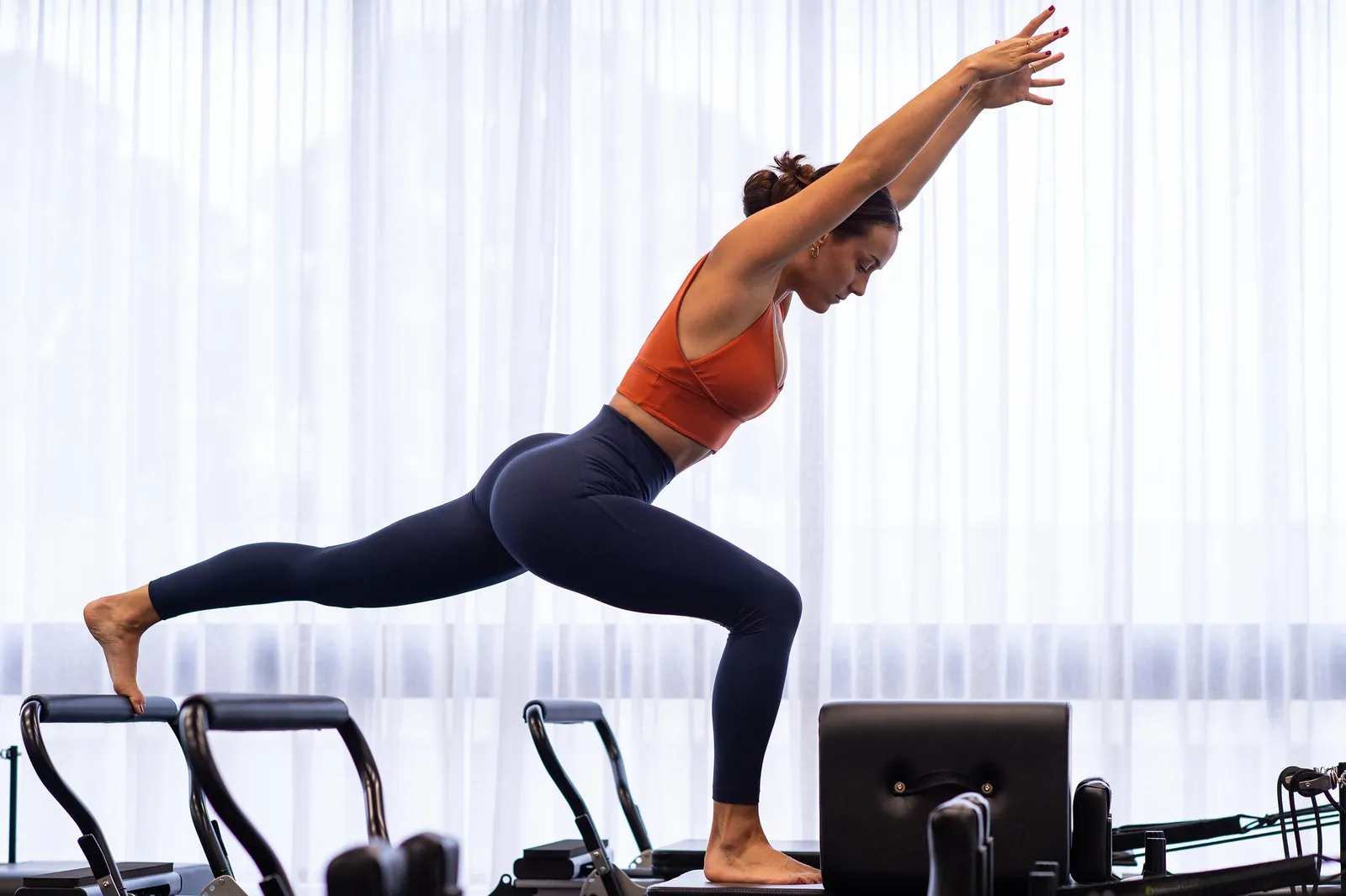
You don’t need a gym. Here’s what to have ready:
- Flat, non-slip shoes — running shoes with thick soft heels make balance harder; flat trainers or bare feet on a mat work better
- About 6 feet of clear floor — enough to step forward and back without hitting furniture
- A wall, chair or door frame — for one hand to touch if balance feels shaky
- A mirror or phone camera — to check your front knee tracks over your toes
- Water — 1-2 cups before you start
- Dumbbells, 5-20 lbs each — only once bodyweight lunges feel steady for 12 reps
- A mat — if you’re doing reverse lunges on a hard floor
A chair works as a balance aid, but a sofa is too low and soft to help.
How to do a lunge
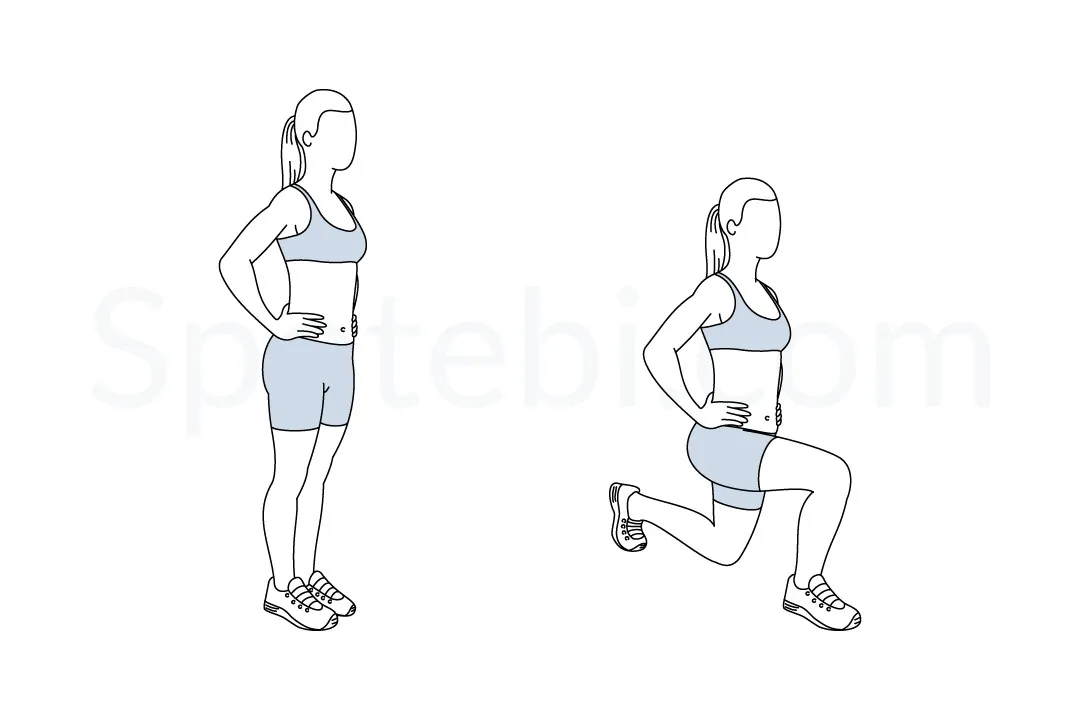
- Stand tall with feet hip-width apart. Pull your shoulders back and look straight ahead. Keep your hands on your hips or at your sides.
- Step forward about 2 feet with your right foot. Shorter steps hit your quads more; longer steps shift work to your glutes and hamstrings. Pick one and stay consistent.
- Bend both knees and lower your body straight down. Take 2-3 seconds. Stop when your front thigh is roughly parallel to the floor and your back knee is just above it.
Tip: If your front knee hurts, your step is too short. Move your front foot forward 2-3 inches and try again.
- Keep your front knee over your ankle, not past your toes. Your torso stays upright — don’t lean forward. If you’re tipping, hold a wall with one hand.
Careful: Letting the back knee slam down is the most common way people bruise it. Control the last inch.
- Push through your front heel to stand back up. Take 2-3 seconds. Squeeze your glute at the top. That’s 1 rep.
- Do 8-12 reps, then switch legs. Rest 30-60 seconds between legs. Two to three sets per leg is plenty for most people.
- Finish with a 5-minute walk or easy stretch. This helps your hip flexors and quads cool down.
Careful: If you feel a sharp pain in your knee or lower back, stop. See a doctor or physical therapist before continuing.
Lunges for your situation
The numbers above assume a healthy adult with no knee or hip issues. Here’s how the time and effort shift:
| Your situation | Time per set | What changes | What to watch |
|---|---|---|---|
| Complete beginner | 60-90 sec | Hold a wall, do 5-8 reps | Balance, not speed |
| Regular exerciser | 45-60 sec | Add 10-20 lb dumbbells | Knee tracking |
| Knee pain history | 60-90 sec | Reverse lunges only, 6-10 reps | Pain during, not after |
| Older adult (65+) | 90 sec | Chair support, 5-8 reps | Dizziness, grip |
| Athlete training power | 30-45 sec | Jump lunges, 6-8 reps | Landing softness |
Starting small and adding reps beats going heavy on day one.
How to tell you did it right
A good lunge feels like work in your thighs and glutes, not your knees. You finish 10 reps per leg with steady balance and no wobble.
A poor lunge looks like this: your front knee caves inward, your torso leans forward, and your back knee bangs the floor. Fix it by slowing down, dropping the weight, and doing 2-3 sets of 10 glute bridges before your lunges.
Rules to follow and what to do after
The American Council on Exercise lists lunges as a foundational move, but form beats volume every time.
After your set, put dumbbells back on the rack, wipe your mat, and log your reps.
Other ways to do a lunge
Reverse lunges
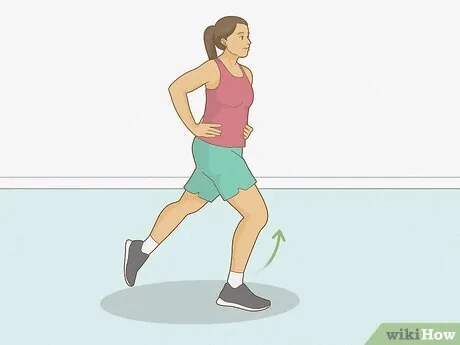
Step backward instead of forward. Easier on the knees, slightly harder on balance. Same reps and tempo, but add 5-10 seconds per set for the extra control.
Split squats
Both feet stay planted in a staggered stance. You get the same leg work without stepping. Great if you have limited space or balance issues.
Walking lunges
Step forward, lunge, then step through with the other leg. Doubles the distance covered and raises your heart rate. Best once 12 reps per leg feel easy.
Related guides
Frequently asked questions
How many lunges should I do a day?
Start with 2-3 sets of 8-12 reps per leg, 2-3 days a week. That’s 16-72 reps per leg per session.
Do lunges build muscle?
Yes. Lunges work your quads, glutes, hamstrings and calves. Muscle growth needs 2-3 sessions a week plus enough protein.
Are lunges bad for your knees?
Not if your form is right. The front knee should stay over your ankle, not past your toes.
How long should I hold a lunge?
Don’t hold it — lunge down in 2-3 seconds and up in 2-3 seconds. If you want a static hold, 20-30 seconds per leg at the bottom is a common range, but it’s harder than it sounds.
What happens if I do lunges wrong?
Your front knee caves in, your back knee hits the floor, or your torso leans forward. Slow down and drop the weight until form is clean.
Can I do lunges if I’m overweight?
Yes. Start with reverse lunges holding a wall or chair, 5-8 reps per leg. The extra body weight is already load, so skip dumbbells at first.
Is it safe to do lunges while pregnant?
Talk to your doctor first. Many pregnant women switch to supported split squats or reverse lunges later in pregnancy, because balance changes and the belly gets in the way of a deep forward step.
Conclusion
Lunges are one of the simplest leg exercises you can do anywhere, but simple doesn’t mean easy. Get the step length right, keep your front knee over your ankle, and add weight only when 12 clean reps feel boring. Two or three short sessions a week will do more for your legs than one long, sloppy one. If pain shows up and stays, see a doctor or physical therapist — that’s not something to push through.

I am a certified fitness coach with over 10 years of experience helping people improve their strength, endurance, and overall health. Specializes in workout programming, weight training, fat loss, muscle building, home fitness, and evidence-based nutrition.My goal is to make fitness simple and practical through well-researched guides, honest product reviews, and actionable training advice.