For most people, the best full body routine is 3 sessions a week, hitting every major muscle group with 1-2 sets each. It’s simple, it fits a busy week, and it builds strength fast. If you can only train twice a week, an upper/lower split wins instead.
Full body routine methods compared
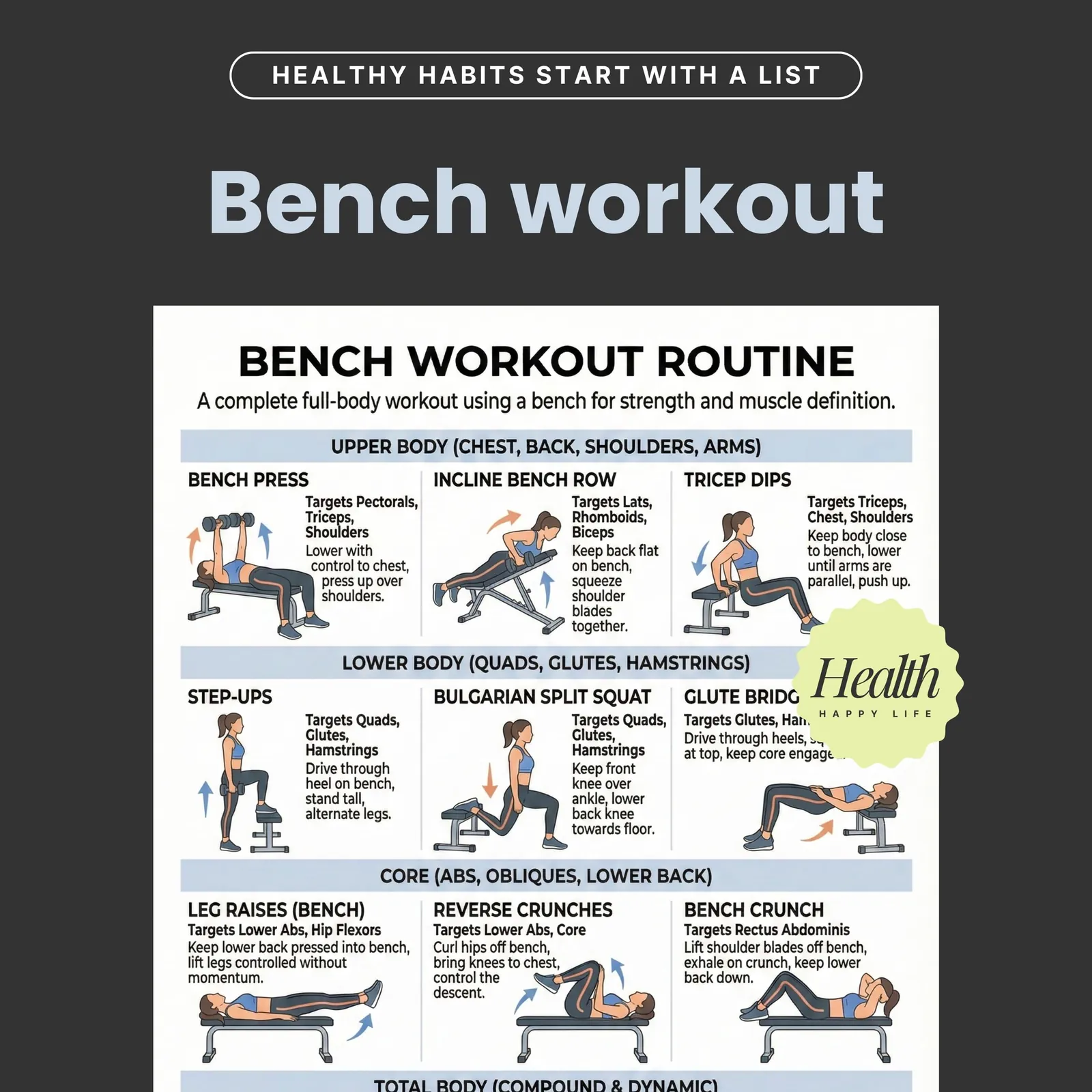
All four methods below train the same muscles. They differ in how often you train, how long each session runs, and how much planning they need. Pick the one that matches your week, not the one that sounds hardest.
| Method | How long | Effort | Cost | Best for |
|---|---|---|---|---|
| 3-day full body | 45-60 min | Medium | Low | Most people, busy weeks |
| 2-day upper/lower | 50-70 min | Medium | Low | Tight schedules |
| 4-day push/pull | 60-75 min | High | Medium | More volume, more days |
| Home dumbbell circuit | 30-40 min | Low-medium | Low | No gym access |
The 3-day full body workout
This is the default. You train Monday, Wednesday, and Friday, and each session covers your whole body. Give yourself 48 hours between sessions so your muscles recover.
- Warm up for 5 minutes — brisk walk or easy cycling.
- Squat pattern: 3 sets of 8-12 reps. Rest 90 seconds between sets.
- Push pattern: 3 sets of 8-12 reps — bench press or push-ups.
- Pull pattern: 3 sets of 8-12 reps — rows or pull-downs.
- Hinge and core: 2 sets each of 10-12 reps. Finish in 45-60 minutes.
It’s efficient and easy to track. The weakness: three sessions a week still asks for three trips, and missing one breaks your rhythm.
The 2-day upper/lower split
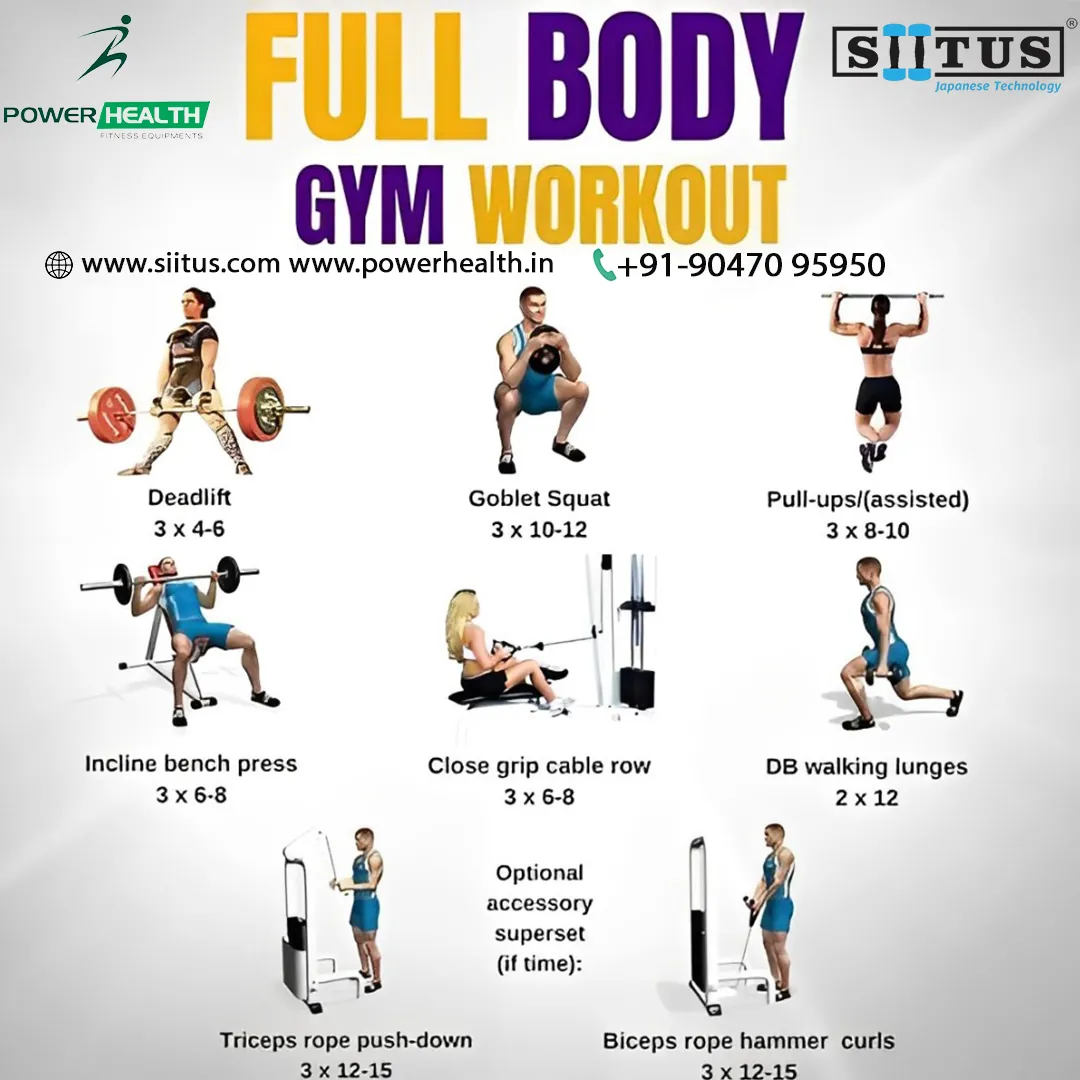
When your week only has two free slots, split your body in half. One day trains your upper body, the other trains your legs and core. You still hit everything, just less often.
- Day 1 — upper body: 4 exercises, 3 sets of 8-12 reps each.
- Day 2 — lower body and core: 4 exercises, 3 sets of 8-12 reps each.
- Rest at least 2 days between the two sessions.
- Add 1 rep per set each week until you reach 12, then add weight.
- Keep each session under 70 minutes.
The upside is real recovery time and shorter weeks. The catch: each muscle gets trained once a week, which slows progress compared to three sessions.
The 4-day push/pull routine
This one splits your body by movement. Push days cover chest, shoulders, and triceps. Pull days cover back and biceps. Legs get their own slot or join a pull day.
- Push day: 5 exercises, 3-4 sets of 8-12 reps.
- Pull day: 5 exercises, 3-4 sets of 8-12 reps.
- Repeat push and pull later in the week.
- Rest 60-90 seconds between sets; 2 minutes on heavy lifts.
- Cap each session at 75 minutes — longer isn’t better.
It gives the most volume and the fastest strength gains for people with time. The weakness is commitment: four gym days a week is where most plans fall apart.
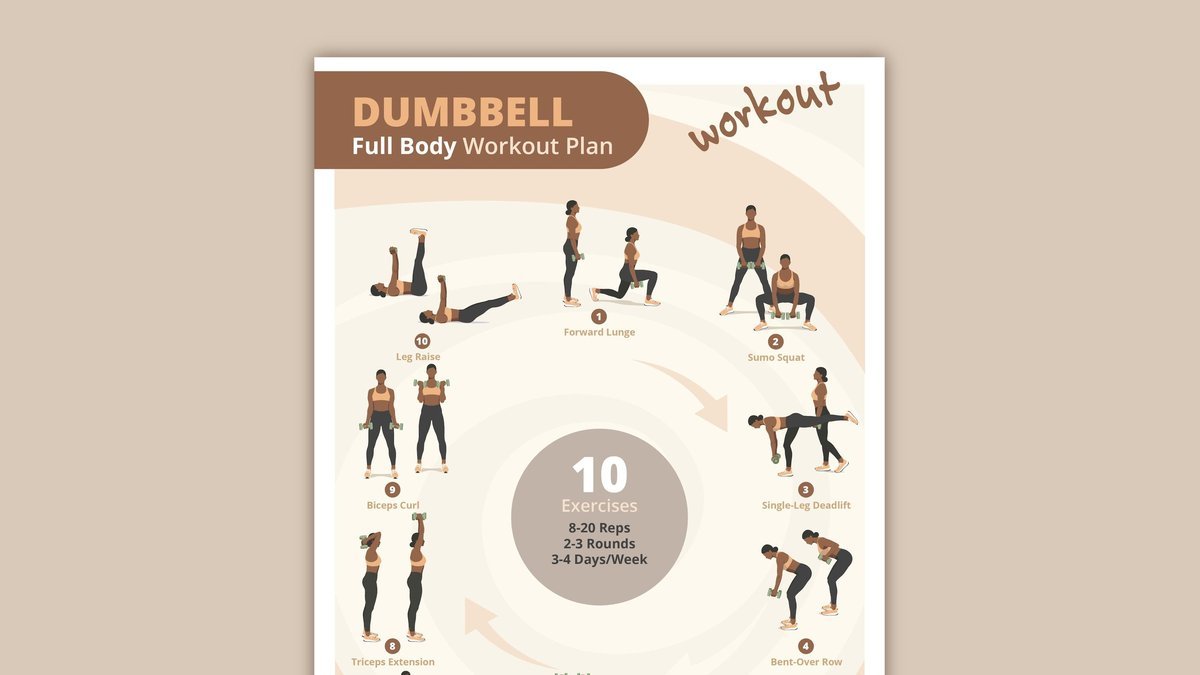
A fourth option, a home dumbbell circuit, works when you have no gym. Do 3 rounds of 8 exercises, 12 reps each, with 60 seconds rest. It’s convenient but limits how heavy you can go.
Which routine fits your week?
If you’re short on time, the 2-day upper/lower split wins — two sessions fit almost any week, and you still train every muscle. If it’s your first time lifting, start with the 3-day full body routine. The movements repeat often, so you learn form faster and see progress sooner.
If you want the best possible result and don’t mind the hours, the 4-day push/pull routine gives you more volume per muscle. The trade-off never changes: more training days means more results, but also more chances to skip. Pick the plan you’ll actually finish, not the one that looks best on paper.
Full body training rules that always apply
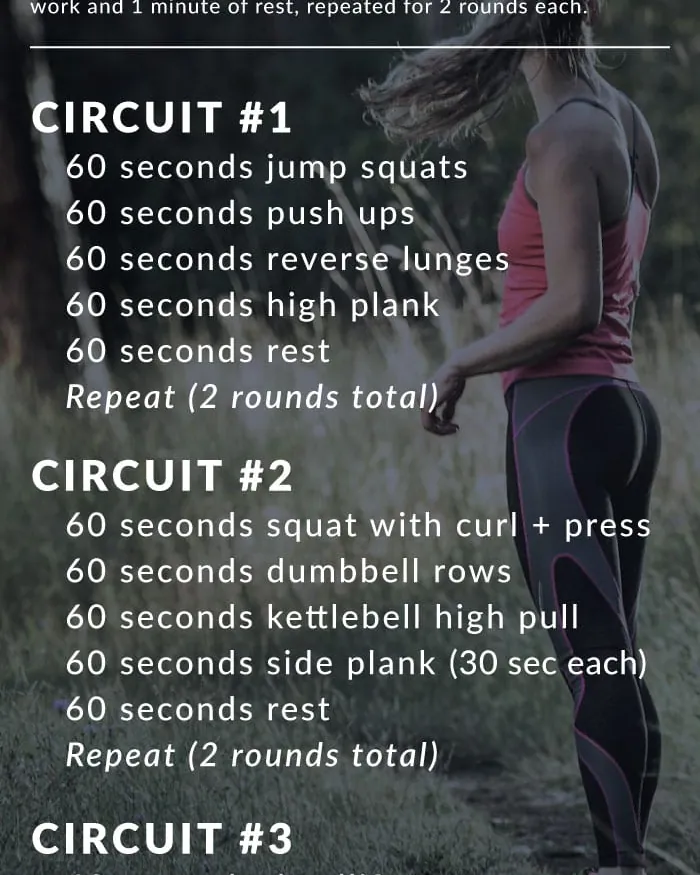
Whatever plan you choose, a few things stay the same. The Physical Activity Guidelines for Americans from the U.S. Department of Health and Human Services recommend at least 2 days a week of muscle-strengthening activity for adults. That’s your floor, not your ceiling.
Before you start, write down your exercises, sets, and reps. Check your form in a mirror or on video during week one — bad habits stick fast. Partway through, if a weight feels easy for all your sets, add a small amount next time. At the end of each session, note what you lifted. That log is how you know you’re improving.
If you have a heart condition, an old injury, or you’re pregnant, talk to your doctor before starting. A physical therapist or certified trainer can adapt any plan safely.
Related guides
- Best Weight Bench Set for Home With Weights: Ultimate Full-Body Workout Guide
- 30-Day Workout Plan for Fast Results & Total Body Fitness
Frequently asked questions
How many days a week should I do a full body routine?
Three days a week works for most people, with a rest day between sessions. Two days is enough to see progress if that’s all your schedule allows.
How long does a full body workout take?
Plan for 45-60 minutes including a 5-minute warm-up. A shorter 30-40 minute circuit works at home with lighter weights and less rest between sets.
Is a full body routine safe for beginners?
Yes, it’s one of the safest ways to start. Use light weights for the first 2 weeks, learn each movement, and add weight slowly once your form feels solid.
Can I do a full body routine every day?
No. Your muscles need about 48 hours to recover between sessions. Training the same muscles daily raises injury risk and slows your progress.
What happens if I skip a workout?
Nothing bad — just do the next session as planned. Skipping often is the real problem, so pick a schedule you can keep every week.
Why am I sore after every session?
Soreness is normal in the first weeks, especially after new movements. It fades as your body adapts. Sharp pain during a lift is different — stop and get it checked.
Do I need a gym for a full body routine?
No. Dumbbells, resistance bands, and bodyweight exercises cover every muscle group. A gym just gives you heavier weights and more variety.
Conclusion
Start with three sessions a week and give it 6-8 weeks before you judge the results. Keep a simple log, add weight when your reps feel easy, and don’t chase a perfect plan. The routine you repeat every week beats the one you quit after ten days.

I am a certified fitness coach with over 10 years of experience helping people improve their strength, endurance, and overall health. Specializes in workout programming, weight training, fat loss, muscle building, home fitness, and evidence-based nutrition.My goal is to make fitness simple and practical through well-researched guides, honest product reviews, and actionable training advice.