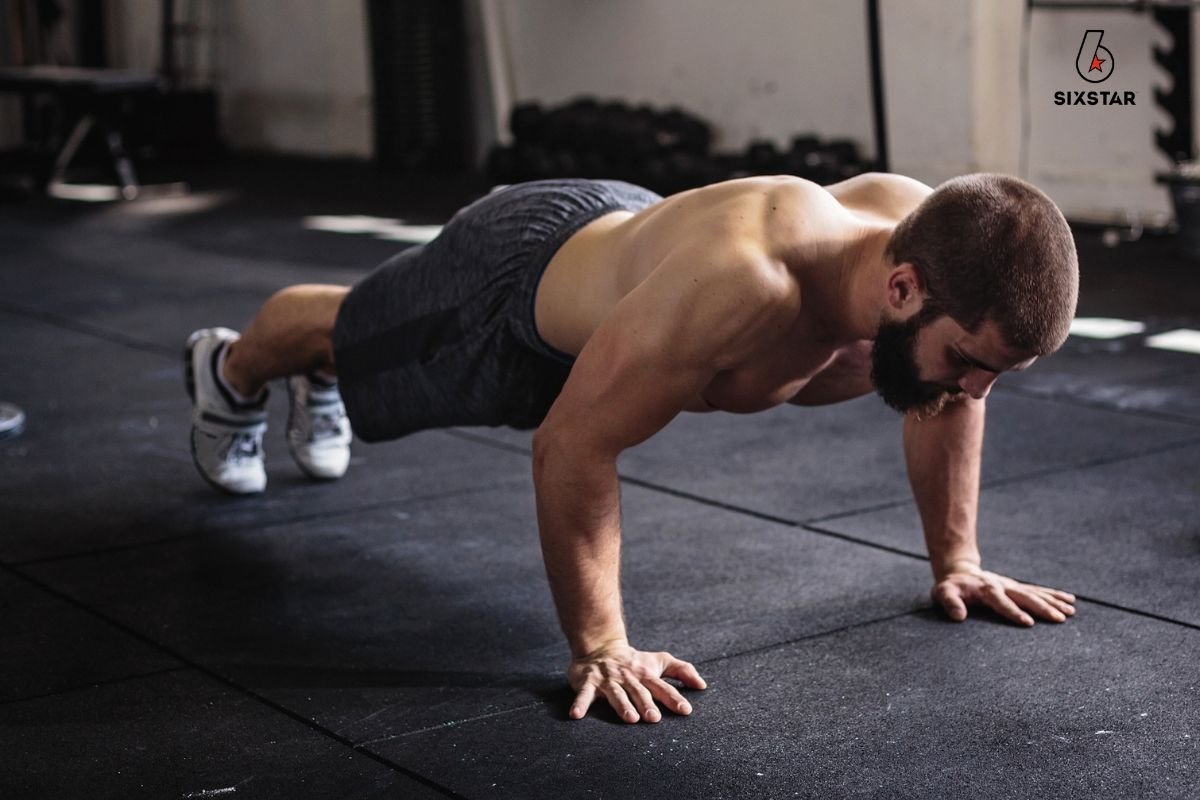
Push-ups build upper-body strength with nothing but your body weight and floor space. Do 3 sets of 8–15 reps, resting 60–90 seconds between sets, and keep your body in one straight line from head to heels.
What you need before you start
You don’t need a gym or a machine. Just a few basics in front of you.
- A clear floor space about 2 meters long and 1 meter wide — enough room to lie flat with your arms out.
- A yoga mat or folded towel if your floor is hard tile or concrete. A thin mat is better than a thick, soft one.
- A wall, bench, or sturdy chair if you can’t do a full push-up yet. These are your easier starting points.
- Comfortable clothes that let your shoulders move freely. Tight shirts restrict your range.
- Water within reach. You’ll want it between sets.
- A phone timer for your rest periods, so you don’t guess at 60 seconds.
A bench works fine as an incline; a soft bed does not, because your hands sink and your wrists bend too far.

- Instant Home Studio in Any Room: Go ahead and stretch out like never before. Just unroll to transform any room into your…
- Unmatched Performance: Known, trusted and loved by over 250,000 shoppers like yourself. Our unique, sticky, textured, no…
- Extra Thick & Ultra Comfortable: The perfect balance of squishy comfort and stable support. Our 8mm high-density, double…
How to do push-ups step by step
- Set your hands slightly wider than shoulder-width, fingers spread, middle fingers pointing forward. Place them under your shoulders, not your face.
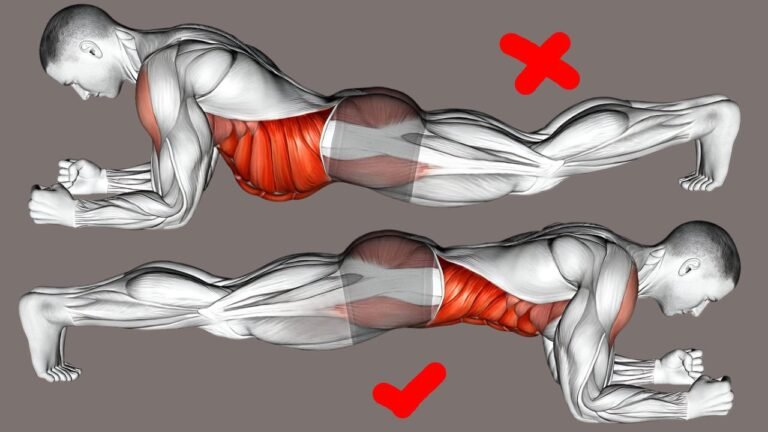
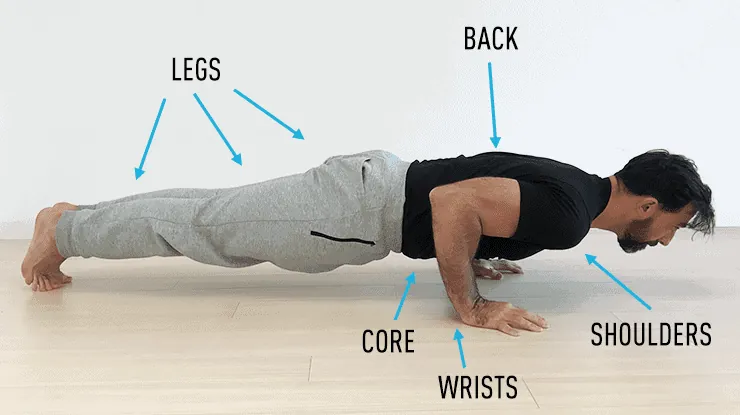
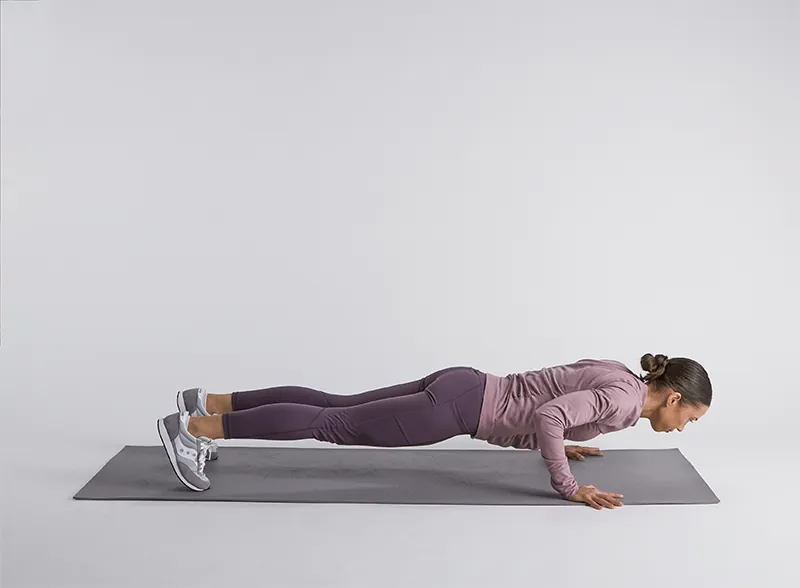
- Step your feet back until your body forms one straight line from head to heels. Squeeze your glutes and brace your abs like someone’s about to poke your stomach.
-
Lower your body for about 2 seconds until your chest is roughly a fist’s height off the floor. Keep your elbows at about 45 degrees from your ribs, not flared out to 90. Careful: Letting your hips sag puts strain on your lower back. If your hips drop, stop the set.
-
Press back up for about 1 second, pushing the floor away. Exhale as you rise.
-
Finish the set at 8–15 reps. If you can’t reach 8 with good form, switch to an incline. If you can pass 15 easily, slow your lowering to 3 seconds. Tip: Quality beats quantity every time. Five clean reps beat twenty sloppy ones.
-
Rest 60–90 seconds, then repeat for 3 sets total. On your first week, 2 sets is enough.
- Stop when form breaks. When your hips sag or your elbows flare, the set is over — not when you feel tired.
If you feel sharp pain in your shoulder or wrist, stop and see a doctor or physical therapist. Push-ups shouldn’t hurt a joint.
How the work changes with your level
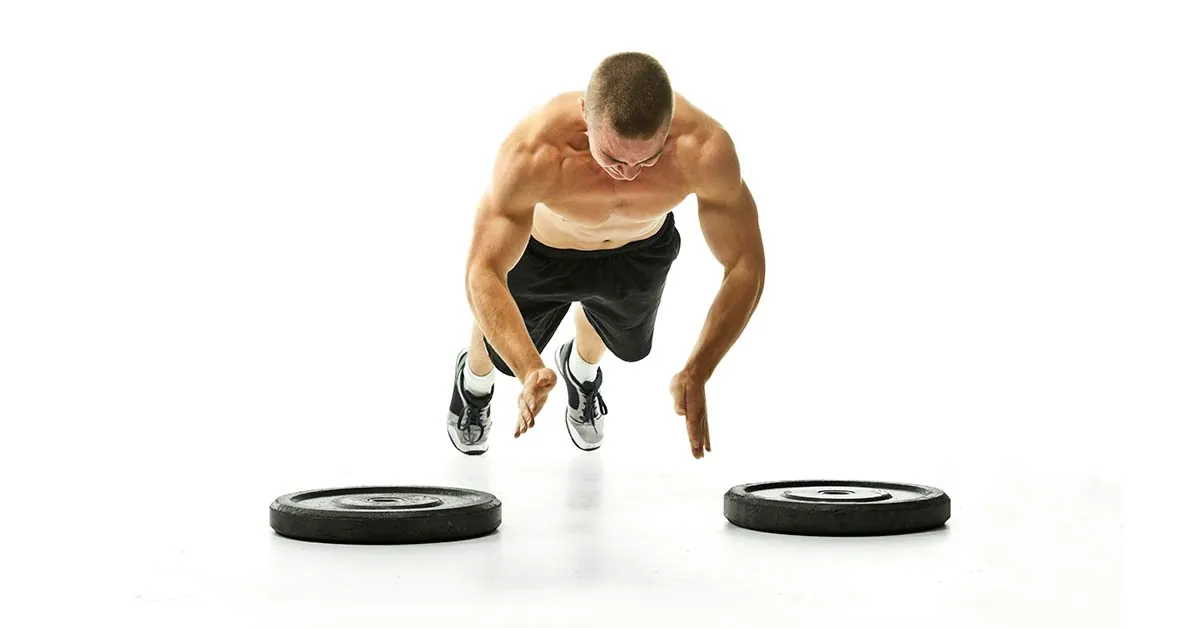
The same movement gets harder or easier depending on your starting point and the surface you use. Here’s how the effort shifts.
| Your situation | Time per set | What changes | What to watch |
|---|---|---|---|
| Wall push-up | 20–30 sec | Easiest angle, least load | Keep heels down, body straight |
| Incline on a bench | 30–45 sec | Moderate load on chest and arms | Don’t let hips drop toward the bench |
| Full push-up on floor | 40–60 sec | Full body weight | Elbows at 45°, core braced |
| Feet elevated on a chair | 50–70 sec | More load on shoulders | Wrists and shoulders take more stress |
| One-arm or weighted | 60–90 sec | Highest load, advanced only | Needs months of base strength first |
Start with the easier version and add difficulty only when you can hit 15 clean reps. Overshooting on day one usually means sore shoulders and a week off.
How to tell you did it right
A good set looks controlled from start to finish. Your body stays in one line, your chest nearly touches the floor, and your last rep looks like your first. You’ll feel tired in your chest, triceps, and shoulders.
Slow the down phase to 2–3 seconds, keep your core braced, and stop the set the moment your form slips. Those three habits fix most of it.
Rules and what to do after
The U.S. Department of Health and Human Services physical activity guidelines recommend at least 2 days a week of muscle-strengthening activity for adults.
After each session, note your reps so you can add one or two next time. Give the same muscles 48 hours before working them hard again. Strength gains usually show up within a few weeks of consistent practice.
Other ways to build the same strength
Use a resistance band
A band adds resistance at the top of the push. It makes the movement harder without extra body weight, and it’s cheap and portable. Sets take slightly longer because you set up the band each time.
Work with a certified trainer
A trainer watches your form and adjusts your program weekly. This costs money, but it’s the fastest route if you have an injury history or want to fix a stubborn form problem safely.
Try dumbbell bench press
A bench and dumbbells let you load the same muscles with less wrist and shoulder stress. It needs gym access or home equipment, and it isn’t a direct replacement for the core work a push-up gives you.
Frequently asked questions
How many push-ups should I do a day?
For most adults, 3 sets of 8–15 reps, 2–3 days a week, is plenty. Daily max-out sets raise your injury risk. Rest days matter as much as training days.
Can push-ups build muscle without weights?
Yes. Bodyweight push-ups build chest, shoulder, and triceps strength. To keep growing, elevate your feet, slow the tempo, or add a band.
Why do my wrists hurt during push-ups?
Wrist pain usually comes from hands placed too far forward or a soft surface. Try push-up handles or fists, and keep hands under your shoulders. If pain continues, see a doctor.
Is it safe to do push-ups every day?
Not at full effort. Your muscles need about 48 hours to recover from hard sets. Train lighter movements daily, but do hard sets 2–3 times a week.
What happens if I only do push-ups?
You’ll build pushing strength but leave your back, legs, and pulling muscles weak. That imbalance can pull your shoulders forward over time. Add rows, squats, and a hinge movement to balance it out.
How long until I see results?
Most people notice easier reps in 2–4 weeks and visible change in 6–8 weeks. Your timeline depends on your starting strength, sleep, and diet.
Conclusion
Push-ups are simple, but they reward patience. Get your form right first, add reps slowly, and give your muscles time to recover. That’s the whole method.

I am a certified fitness coach with over 10 years of experience helping people improve their strength, endurance, and overall health. Specializes in workout programming, weight training, fat loss, muscle building, home fitness, and evidence-based nutrition.My goal is to make fitness simple and practical through well-researched guides, honest product reviews, and actionable training advice.