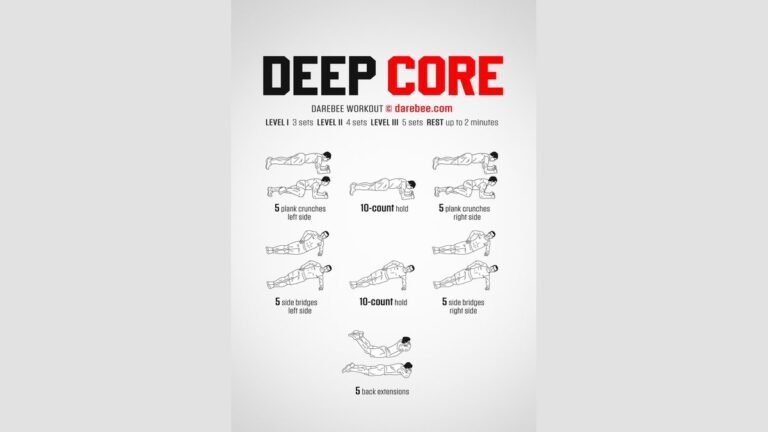
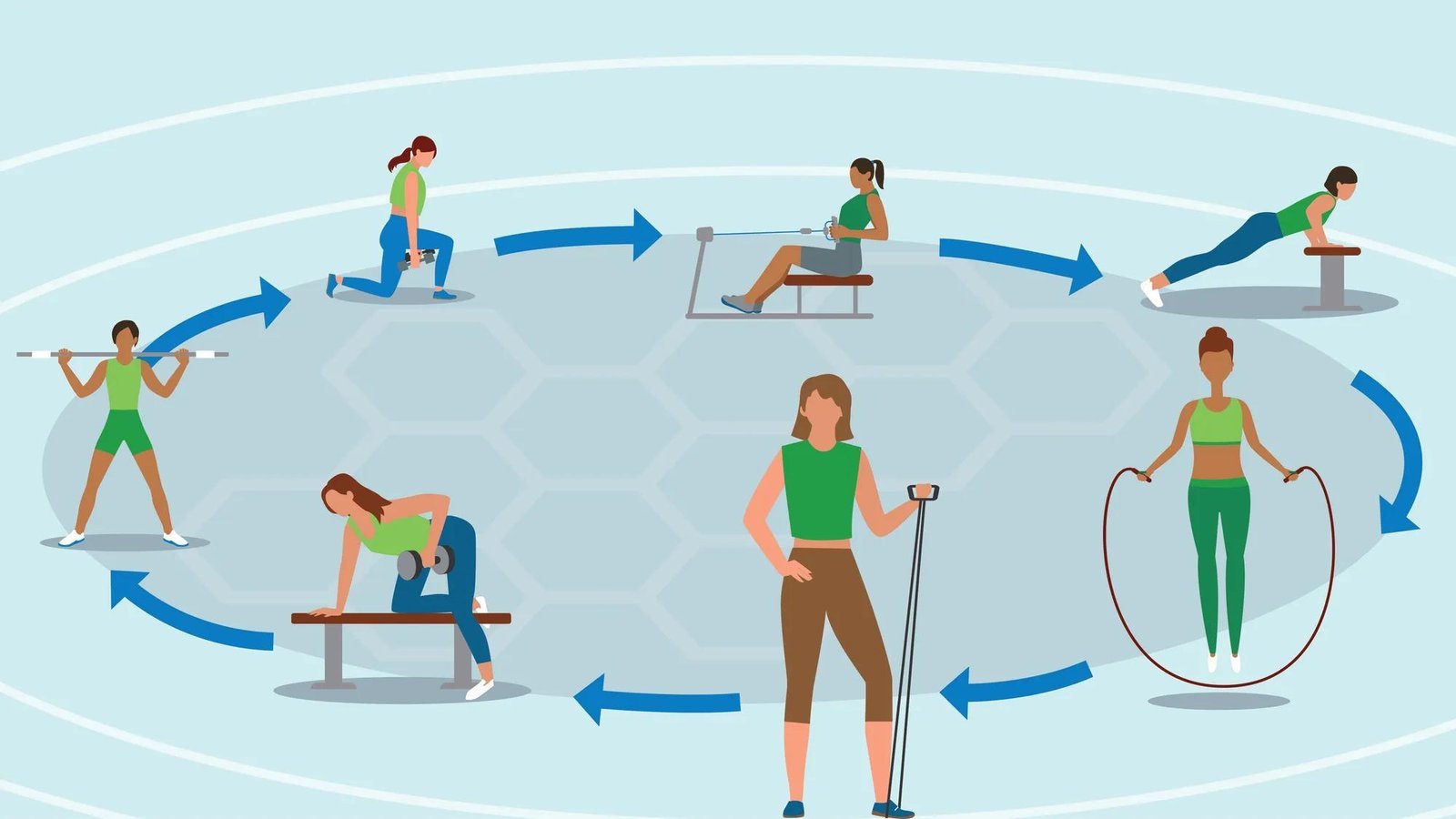
Circuit training is a workout where you move through a set of exercises back to back, with short rests between them. Most circuits run 30-60 seconds per move, 2-4 rounds total, and take 20-40 minutes. This guide covers the exact steps, the numbers that matter, and when a different approach works better.
What is circuit training?

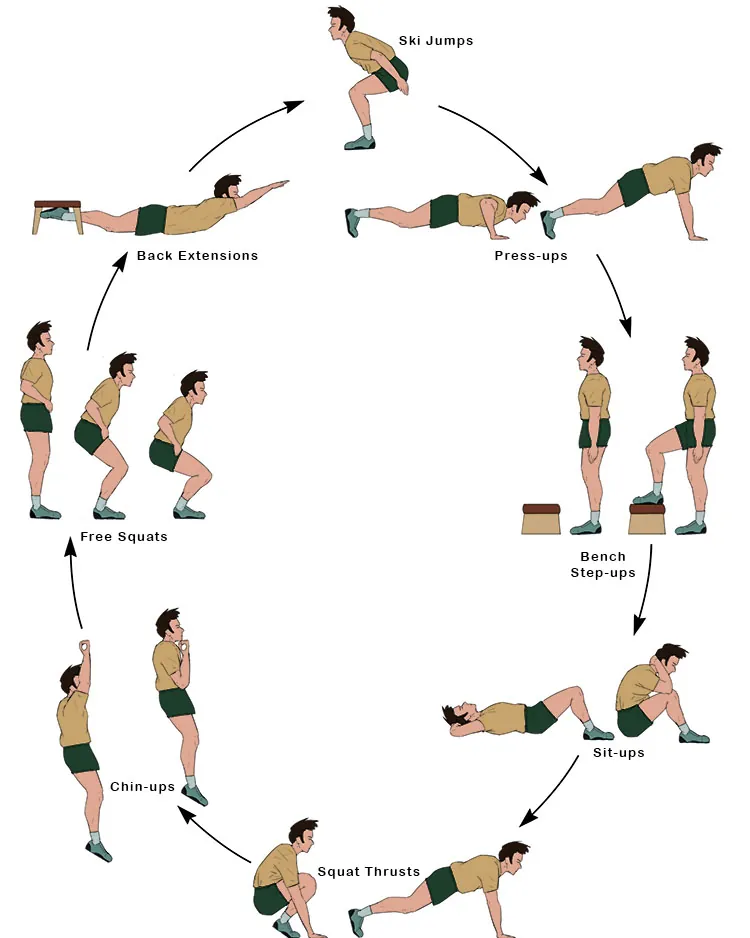
Circuit training means doing several exercises in a row — usually 6 to 10 — with little or no rest between them. You finish one round, rest, then repeat. It’s used for general fitness, fat loss, and building stamina, and it suits people short on time.
The common misconception is that it’s only for weight loss. It isn’t. A circuit built around bodyweight moves trains strength and heart health at the same time.
One rule worth knowing: your heart rate stays higher during a circuit than during normal strength training, because the rest periods are short.
How to run a circuit step by step
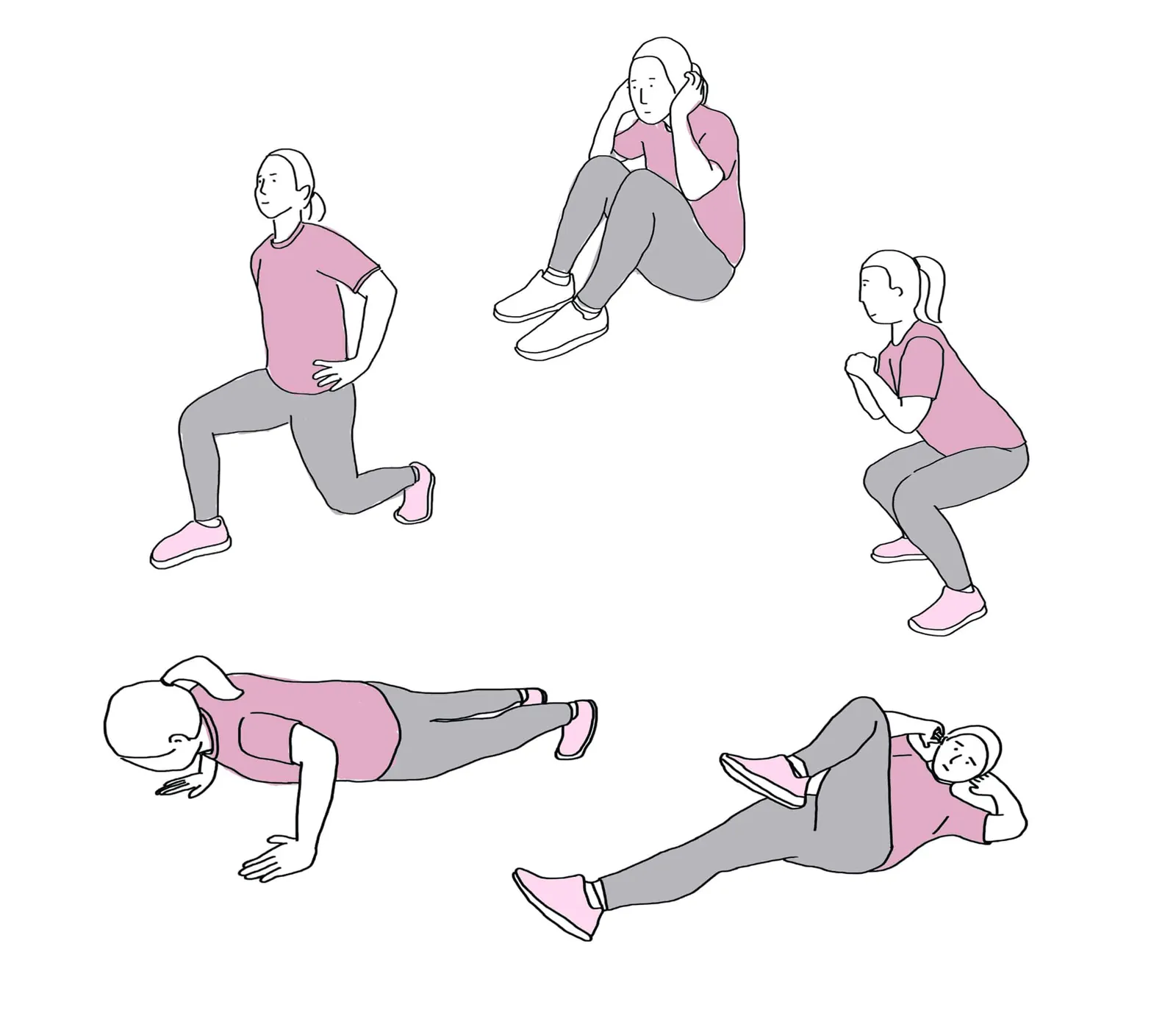
- Pick 6 exercises — for example squats, push-ups, lunges, rows, planks, and jumping jacks. One per major muscle group.
- Warm up for 5 minutes with light movement like walking or arm circles.
- Do each exercise for 40 seconds, then rest 20 seconds before the next one.
- Finish all 6 exercises. That’s one round — it takes about 6 minutes.
- Rest 60-90 seconds. Then repeat for 2-4 rounds total.
- Cool down for 5 minutes with slow stretches.
The single judgement call is picking a weight or pace you can hold for all rounds. If round one leaves you gasping, round three will fall apart and your form goes with it. Start lighter than you think you need.
If you have a heart condition, joint injury, or you’re pregnant, get clearance from a doctor before starting. A physical therapist can adapt exercises if a movement hurts.
Key numbers for your circuit
The table below covers the main setups. Times assume a moderate fitness level — if you’re new, start at the lower end and add time as it gets easier.
| Situation | What to use | How long | What to watch for |
|---|---|---|---|
| Complete beginner | Bodyweight only, 4 moves | 20 sec work, 40 sec rest | Stop if form breaks |
| General fitness | 6 moves, light weights | 40 sec work, 20 sec rest | Keep breathing steady |
| Fat loss focus | 8 moves, minimal rest | 45 sec work, 15 sec rest | Don’t skip the warm-up |
| Strength focus | 5 moves, heavier weights | 30 sec work, 60 sec rest | Rest fully between rounds |
| Short on time | 4 moves, 2 rounds | 10-15 min total | Don’t rush the warm-up |
| Older adults | 5 moves, chair support | 30 sec work, 30 sec rest | Hold a wall if needed |
What separates good circuits from bad ones
Experienced people plan the order before they start. They put the hardest move first, when energy is highest, and pair upper and lower body so no muscle gets hit twice in a row. That single habit keeps the whole circuit doable.
They also check in halfway. If breathing is out of control by round two, they drop the weight or add 15 seconds of rest.
What they leave alone matters too. They don’t add exercises mid-circuit, and they don’t chase a personal best every session.
Common problems and quick fixes
| What you notice | What it usually means | What to do first |
|---|---|---|
| Dizzy mid-round | Breathing too shallow | Slow down, rest 60 sec |
| Knee pain on squats | Knees caving inward | Push knees out over toes |
| Can’t finish round 3 | Started too heavy | Drop weight next session |
| Bored by week 2 | Same moves every time | Swap 2 exercises |
| Sore for 4+ days | Too much, too soon | Cut to 2 rounds |
The rules that apply
There’s no single law covering circuits, but two bodies matter. The American College of Sports Medicine recommends at least 150 minutes of moderate activity per week for adults — a 30-minute circuit three times a week fits inside that.
Keeping it working afterwards
Write down your circuit — exercises, times, and weights — so you can repeat it. Change 1 or 2 exercises every 4-6 weeks to keep progress going. Stop and rest if you feel sharp pain, and see a doctor if it doesn’t settle within a few days.
When not to do circuit training
Skip it if you’re training for maximum strength — long rests and heavy singles work better. If you’re rehabbing an injury, a physiotherapist should guide your plan instead.
Frequently asked questions
How long should a circuit training session last?
Most sessions run 20-40 minutes, including warm-up and cool-down. Beginners should aim for 20 minutes with 2 rounds; fitter people can push to 40 minutes with 4 rounds.
Is circuit training safe for beginners?
Yes, if you start light and keep rests long. Use bodyweight moves for the first 2-3 weeks, then add weights once your form holds through every round.
How many days a week should I do it?
Three days a week works for most people, with a rest day between sessions.
Can circuit training build muscle?
It can build some muscle, mainly if you use weights and rest 60 seconds between rounds.
What happens if I skip the warm-up?
Your injury risk goes up, especially for knees and shoulders. A 5-minute warm-up raises muscle temperature and prepares your joints for the work ahead.
Why am I sore after my first circuit?
Soreness comes from new movements your muscles aren’t used to. It usually fades in 2-3 days. Light walking or stretching helps; another hard session doesn’t.
How often should I change my circuit?
Every 4-6 weeks is enough for most people.
Conclusion
Start with 2 rounds, keep the weights light, and let your form decide when to add more. The circuit that gets done twice a week beats the perfect one you never start.

I am a certified fitness coach with over 10 years of experience helping people improve their strength, endurance, and overall health. Specializes in workout programming, weight training, fat loss, muscle building, home fitness, and evidence-based nutrition.My goal is to make fitness simple and practical through well-researched guides, honest product reviews, and actionable training advice.